PANZER IV
the workhorse of the German Wehrmacht
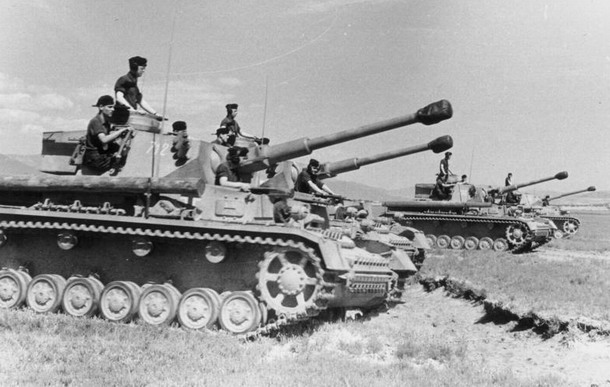
a group of PzKpfw IV Ausf. G medium tanks, source: Bundesarchiv_Bild_101I-175-1266-05, Wikimedia, Creative Commons, edited
The medium tank Panzerkampfwagen IV (abbreviated PzKpfw IV or Panzer IV) receives nowhere near the attention and recognition afforded to its more famous and heavier "brothers" named after big cats. Yet the significance of the tank bearing the Roman numeral IV for the German army was enormous, and the machine can boast several remarkable distinctions. The Panzer IV was the only German tank whose production continued throughout the entire Second World War. It was also the most numerous German tank — and it should be stressed that we are talking about the most numerous tank specifically, not the most numerous German armoured fighting vehicle overall, where that distinction clearly belongs to the assault gun StuG III. The PzKpfw IV rightly deserves to be called the workhorse of the Wehrmacht by historians, for it truly carried an enormous burden of the fighting effort.
The Backbone Tank
The Panzer IV was planned from the very beginning of its development as one of two backbone tank types for the emerging German Panzerwaffe. Its role was to provide fire support to the Panzer III. The lighter "threes" were armed primarily with anti-tank guns (initially 37 mm, later 50 mm calibre) and their purpose was to destroy enemy armoured vehicles. The heavier Panzer IV, on the other hand, was meant to deal with targets that were beyond the range or calibre of the Panzer III. Typical targets for the Panzer IV were to be enemy anti-tank and field artillery positions, light fortifications, and enemy infantry. In this sense, the Panzer IV was essentially intended to partially substitute for conventional artillery. This role was reflected in its armament — the short-barrelled KwK 37 L/24 cannon of 75 mm calibre, a weapon that was not particularly effective at penetrating armour but performed well in the role of a light howitzer.
The different roles of the Panzer III and the Panzer IV can be nicely illustrated by comparing the performance of their weapons. The 37 mm gun fitted to the lighter Panzer III was designed for accurate direct fire against other tanks, typically at ranges of around 500 metres. A 37 mm round had no particular destructive power against soft targets — the 37 mm high-explosive shell SprGr.Patr. 18 weighed only 620 grams and contained a mere 26 grams of explosive. By contrast, the 75 mm gun of the Panzer IV had an effective range of around two kilometres (with a maximum range sometimes quoted as high as 6.2 km), and its high-explosive round SprGr.Patr. 34 weighed 5.74 kg, of which a full 690 grams was explosive filler. The Panzer IV could therefore engage and destroy an enemy anti-tank gun from a safe distance and clear the way for the lighter Panzer III. This was precisely how the two types were intended to cooperate within armoured divisions.
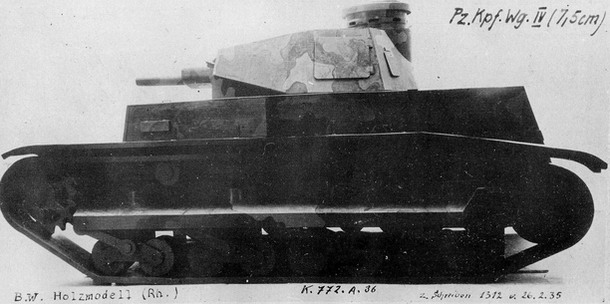
wooden full-scale model of the Begleitwagen built by Rheinmetall in February 1935, source: Flickr.com with permission of the publishing user, edited
The requirement for a new medium tank was most likely drawn up in January 1934, and in February of that year it was submitted to the firms Krupp and Rheinmetall (some authors claim that MAN was also approached, but this is not true and stems from confusion with the later VK 20.01 project). Army officials took into account the lessons learned from trials of the not particularly successful Neubaufahrzeug prototype when drafting the specification. The negative experience with the Neubaufahrzeug included the use of an aircraft engine, the rear placement of the drive sprocket, the large dimensions, and the overall mechanical complexity. The newly specified tank was therefore to be smaller and simpler, with front-mounted drive sprockets and a Maybach engine of type HL 100 TR developed specifically for this purpose. It was to be armed with one 75 mm gun and two machine guns — one in the main turret and one in the hull.
Regarding the official designation of the new tank project, several different names can be encountered in the literature. Initially the project was reportedly referred to as the verbesserten Neubaufahrzeug — that is, the improved Neubaufahrzeug — which clearly referred back to the earlier project mentioned above. The name was later changed to Begleitwagen, usually abbreviated as B.W. The word Begleitwagen literally means "escort vehicle" and in fact accurately describes the new tank's mission — to accompany and support the lighter Panzer III. A large number of authors, however, interpret the abbreviation B.W. quite differently, reading it as Bataillonsführer Wagen (battalion commander's vehicle). This interpretation is almost certainly wrong, and most reliable sources work with the name Begleitwagen. The tank's most historically well-known designation, Panzerkampfwagen IV (abbreviated PzKpfw IV), was apparently not assigned until April 1936. Even so, the abbreviation B.W. continued to be used in parallel with PzKpfw IV for years to come.
Both firms, Rheinmetall and Krupp, delivered their proposals for the new tank during the course of 1934 — at this stage, of course, only in the form of drawings. Krupp in fact prepared two variants of its design, designated B.W. I and B.W. II, which differed in their running gear arrangement. Krupp's B.W. I had eight small road wheels on each side, sprung by leaf springs, while the B.W. II had six larger wheels on each side, suspended using torsion bars. After reviewing the proposals, the ordnance office apparently decided to split the contract between the two companies, much as it had done with the sister tank Panzer III. Rheinmetall was to continue developing the hull and chassis, while Krupp was to be responsible only for the turret with armament — and in fact two turrets were needed, since Rheinmetall's design called for a main gun turret and a small secondary machine gun turret (see below).
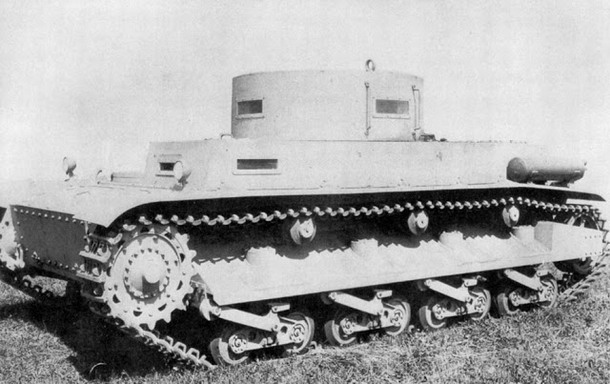
Rheinmetall's Begleitwagen prototype, delivered for testing in May 1936, source: Flickr.com with permission of the publishing user, edited
In February 1935, Rheinmetall delivered a full-scale wooden mock-up of its vehicle, and in the same month signed a contract with the ordnance office for the construction of an evaluation prototype — without turrets for the time being and built from unarmoured steel. Krupp, however, was clearly unwilling to accept the prospect of merely supplying turrets instead of winning the full tank contract, as had happened to them with the sister Panzer III. The company's management began to lobby the ordnance office intensively, arguing that Krupp was capable of designing and building the entire tank, and doing so far better than the competition. This effort evidently paid off, and Krupp was given the chance to demonstrate its capabilities. In July 1935 an order arrived for the construction of one evaluation prototype of the B.W. I variant, followed in October 1935 by a second order for a prototype in the B.W. II variant. The comparative trials were therefore to involve three vehicles: one Begleitwagen prototype from Rheinmetall, and the B.W. I and B.W. II prototypes from Krupp.
The First Prototype
Rheinmetall completed its prototype in May 1936. The road wheels, including the suspension system, were taken over from the older Neubaufahrzeug tank. Rheinmetall's Begleitwagen was to have two turrets. The main one, fitted with a gun and a coaxial machine gun, was to sit in the centre of the vehicle on top of the crew compartment. The second, smaller turret with a machine gun was to be mounted in the right front portion of the hull. The prototype was, however, delivered for trials without any turrets. A counterweight was installed in place of the main turret to simulate its mass during driving tests. The opening for the secondary machine gun turret was simply covered with a steel plate (the location where the machine gun cupola was to be mounted is clearly visible in the photograph HERE, source: Flickr.com with permission of the publishing user).
Although Rheinmetall's Begleitwagen showed a certain kinship with the older Neubaufahrzeug, its basic layout already conformed to what would become the later German engineering standard. That is to say, the engine was located at the rear of the tank, the gearbox at the front of the hull, and the fighting compartment with turret roughly in the middle. One interesting detail is worth mentioning. A large access opening for servicing the gearbox was cut into the front glacis plate of the hull. This opening occupied nearly the entire front wall of the hull and was normally closed by a large bolted armour plate hinged at its lower edge. From a maintenance perspective this was a very practical arrangement, but from a combat standpoint, having such a configuration on one of the most exposed parts of the tank was rather unfortunate.
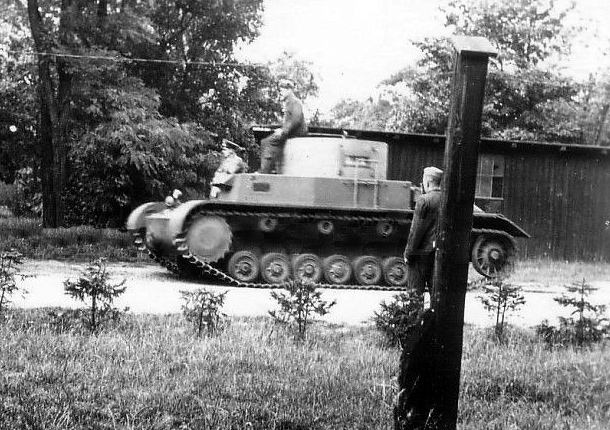
Krupp's B.W. I prototype, completed in April 1936, undergoing driving trials without its combat turret (note the original drive sprocket, identical to the B.W. II prototype), source: Flickr.com with permission of the publishing user, edited
The Rheinmetall prototype underwent driving trials, after which a number of improvements were made, particularly at the rear of the vehicle. The prototype received a new rear idler wheel, and the rear section of the mudguard was redesigned. The outer armour skirt above the road wheels was shortened so that it no longer covered the idler wheel, and the exhaust mufflers were relocated from the mudguards to the rear wall of the hull. The modified Rheinmetall Begleitwagen can be seen in the photograph HERE. Although Rheinmetall was in essence the favourite to win the contract for the new tank, its design was ultimately not selected, and the single prototype built was most likely scrapped at a later date.
Krupp, which had found itself in the position of a mere turret supplier at the outset of the competition, was now clearly determined to put its best foot forward. The first B.W. I prototype was therefore completed by Krupp's workers on 30 April 1936 — roughly a month ahead of the competition. Rather than a secondary machine gun turret, Krupp's engineers decided to mount the machine gun in a ball mount set directly into the front wall of the hull, which proved to be a considerably more effective solution. Somewhat later, Krupp also delivered the second ordered prototype with a different running gear arrangement, designated B.W. II.
During the summer of 1936, all three prototypes (one from Rheinmetall and two from Krupp) underwent thorough military trials. During these initial tests, all three vehicles were most likely still without their turrets and armament, so the evaluations focused primarily on their driving characteristics. Krupp's B.W. I covered more than two thousand kilometres during the trials and emerged as the clear winner. Even so, a whole range of minor and major changes and improvements was proposed, and the prototype continued to evolve. It received a new Maybach HL 108 TR engine, a new gearbox, new drive sprockets, and above all was finally fitted with its combat turret and armament. By December 1936, the army was satisfied and signed a contract with Krupp for the delivery of the first production series of 35 tanks. During negotiations with the manufacturer, this first batch was referred to as 1./B.W., but the army formally designated the new vehicle Panzerkampfwagen IV (7.5 cm) (Vs.Kfz. 622) Ausführung A, or more simply PzKpfw IV Ausf. A.
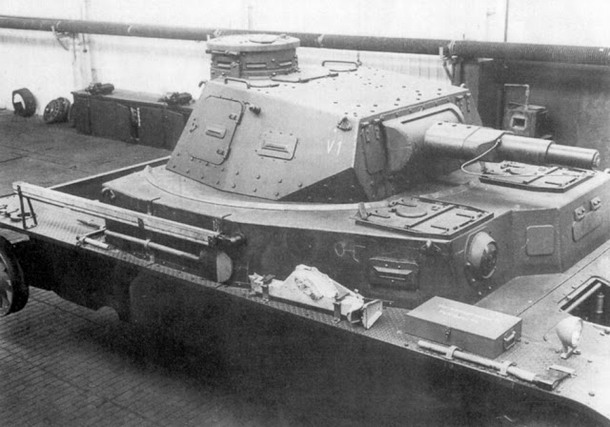
the modified Krupp B.W. I prototype fitted with its combat turret, source: Flickr.com with permission of the publishing user, edited
Ausführung A
Following the signing of the contract in December 1936, the workshops and drawing offices of Krupp were busy preparing for the start of series production. In the process, a number of further minor design changes and refinements were made. At first glance the B.W. I prototype with its combat turret and the first series-production PzKpfw IV Ausf. A appeared almost identical, but there were in fact numerous small differences. Some of them can be spotted with a little effort in photographs — among others, the commander's cupola, the driver's vision port cover, and two rows of rivets running around the full circumference of the turret at its base (these differences can be seen in the comparison photograph HERE, source: Flickr.com with permission of the publishing user). The first two completed Panzer IV Ausf. A tanks were accepted by the army in November 1937. Production of the remaining 33 ordered vehicles continued until June 1938. The Panzer IV Ausf. A tanks received chassis numbers from 80101 to 80135.
The PzKpfw IV was built on a chassis with eight road wheels of 470 mm diameter on each side. The road wheels were solid with rubber rims for smoother travel. They were twin wheels, with the track guide horn running between the two discs. The road wheels were suspended in pairs. On each side of the hull, four brackets were bolted to the chassis pan. Each bracket connected to two swing arms, each carrying one road wheel. The two swing arms were joined by a quarter-elliptic leaf spring. The upper run of the track was supported by four return rollers of 250 mm diameter, also fitted with rubber rims. At the very front was the toothed drive sprocket, and at the rear the spoked idler wheel. The tank was fitted with tracks 380 mm wide (though the 380 mm figure refers to the connecting pins, while the track links themselves were only 360 mm wide). Each track consisted of 99 links.
The front of the hull pan was joined by a steeply angled plate with three large cutouts. The side cutouts were covered by hinged access panels and provided maintenance access to the steering brakes. The larger central cutout with its bolted cover gave access to the gearbox. Rising from this plate was the front wall of the crew compartment, which in this version was offset — its left section, behind which the driver sat, jutted forward. The purpose of this stepped front wall was most likely to give the driver a view to the right, which he would otherwise have had no means of seeing.
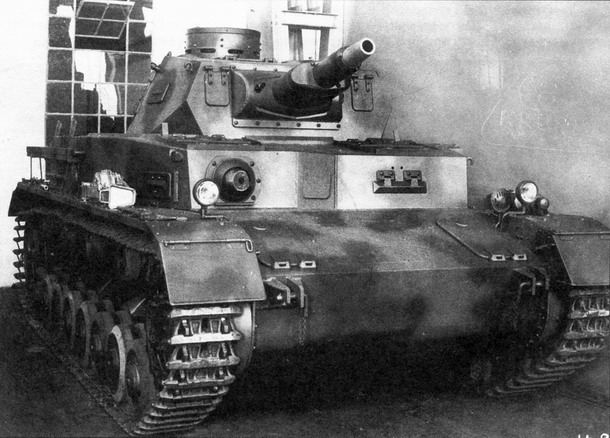
a series-production Panzer IV Ausf. A tank, source: Flickr.com with permission of the publishing user, edited
Directly ahead of the driver was his main vision port. Outside the combat zone the driver left the port open for better visibility. In danger, however, he closed it with a simple flap and observed the surroundings through a binocular periscope via two small holes drilled into the front wall just above the flap. The driver also had two additional observation openings. The first was in the left side wall of the crew compartment; it was openable, and its cover incorporated a vision slit. The second was to the driver's right, in the offset portion of the front wall, and could also serve as a firing port for a personal pistol.
To the right of the driver sat the radio operator, who also served as the machine gunner. The driver's and radio operator's positions were separated by the gearbox and the radio set. The radio operator maintained the tank's communication with headquarters and other vehicles in the unit, and was also responsible for operating the hull machine gun mounted in a ball mount directly in front of him. The radio operator's position was offset slightly rearward compared to the driver. Both the driver and the machine gunner had their own individual overhead hatches located directly above their seats, each closed by a two-part hatch cover. Beneath the radio operator's folding seat, a circular emergency escape hatch of 425 mm diameter was cut into the hull floor.
From the front wall, the crew compartment gradually widened outward to extend essentially over the outer edge of the tracks. At the rear, the side walls of the compartment stepped down in a narrower engine deck. This housed a water-cooled, petrol-powered twelve-cylinder Maybach HL 108 TR engine of 10.8 litres displacement, developing a maximum output of 250 horsepower at 3,000 rpm. Virtually the entire roof of the engine section consisted of hinged covers providing maintenance access to the power unit and cooling system. Large grilled vents were set into the sides of the engine compartment. Air for engine cooling was drawn in through the vent on the left side, passing through the radiator core, then around the engine block itself, and was expelled on the right side of the tank — already warmed — by a pair of large fans located there. The exhaust with its large muffler was mounted on the rear wall of the engine compartment.
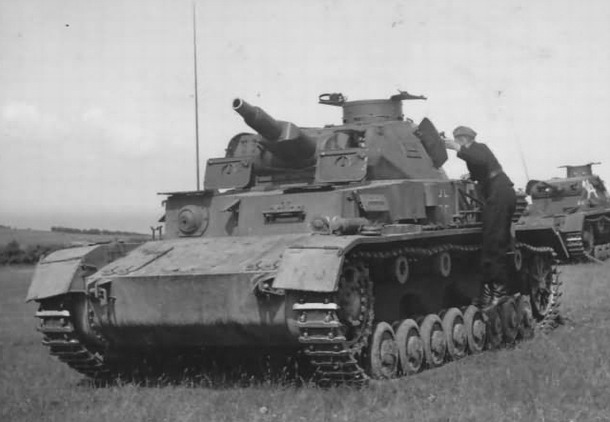
PzKpfw IV Ausf. A, source: worldwarphotos.info with permission of the operator, edited
The engine itself was mounted longitudinally, slightly to the right of the tank's centreline. A driveshaft connected the engine to the gearbox, running beneath the floor of the turret to the gearbox at the front of the fighting compartment, positioned between the driver's and radio operator's seats. The Panzer IV Ausf. A used a Zahnradfabrik SFG 75 gearbox with five forward gears and one reverse. In addition to the main Maybach power unit, the engine compartment also housed an auxiliary two-cylinder DKW engine. This engine drove an electric generator that supplied current for the electric turret traverse mechanism. The DKW engine had its own entirely separate fuel tank holding 18 litres. It also had its own exhaust outlet, positioned on the rear wall above the main engine's exhaust muffler (photograph HERE, source: Flickr.com with permission of the publishing user). The auxiliary engine was therefore completely independent of the main power unit and its fuel supply. This meant that the electric turret traverse could function even with the main engine switched off.
Fuel for the main engine was stored in three interconnected tanks. Some publications quote the individual tank capacities as 205, 139 and 109 litres, giving a total of 453 litres. Most authors, however, cite a total fuel capacity of 470 litres (possibly because they include the 18-litre auxiliary tank for the DKW engine). For simplicity we will use the majority figure, i.e. that the Panzer IV carried 470 litres of petrol. A full load of fuel was sufficient to cover approximately 210 km on road and around 130 km cross-country.
A fully traversable combat turret was mounted on the roof of the crew compartment. The turret ring had a diameter of 1,680 mm and its centre was offset slightly to the left of the hull's longitudinal axis. The front wall of the turret was inclined at 80 degrees from the horizontal. Most of the front wall was occupied by the gun mantlet, also housing the coaxially mounted machine gun. To the left of the mantlet, a small hole in the front wall accommodated the gunner's sight optics. On either side of the front wall there were also observation ports with openable covers, which were kept firmly closed under combat conditions.
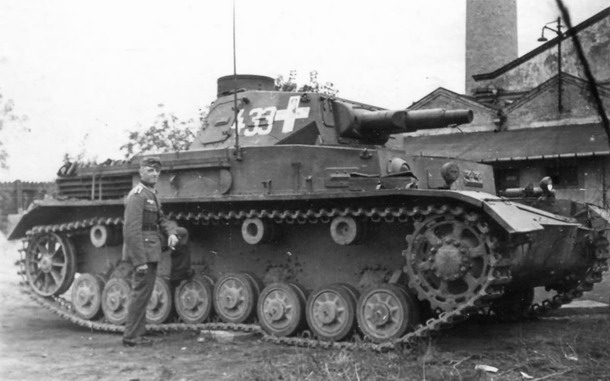
PzKpfw IV Ausf. A during the Polish campaign, source: worldwarphotos.info with permission of the operator, edited
Each side wall of the turret featured one vision slit and one entry hatch. The hatch door also contained an additional vision slit. During longer road marches outside the combat zone, soldiers were fond of sitting in the open side hatches. The side walls were angled at 65 degrees from the horizontal. The rear wall of the turret had two closable pistol ports for the crew's personal weapons. In the turret roof there was a large rectangular opening with a cover used for ventilating the interior, particularly when firing. If this was insufficient for ventilation, the crew could also partially open the side hatches and lock them in that position. The turret roof also featured two circular openings for flag signalling. The commander's cupola was at the rear of the turret, fitted with eight vision ports arranged around its circumference. The cupola was the highest point of the tank (not counting the raised antenna) and gave the commander the best possible view of the battlefield. The cupola tube also extended into the rear wall of the turret. The cupola had an entry hatch at its top for the commander, closed by a two-part cover.
An external gun mantlet was bolted to the front wall of the turret. The mantlet was fixed to the front wall and did not move up and down with the gun barrel. A sufficiently large opening therefore had to be cut into it to allow the vertical movement required for aiming. This opening was filled by the internal gun mask, which was in turn rigidly connected to the gun itself (a photograph to help understand the arrangement can be found HERE, source: Flickr.com with permission of the publishing user). To the right of the gun barrel, a coaxially mounted MG 34 machine gun was installed in the mask. The gun mount allowed vertical movement between -10 and +20 degrees. Traverse was provided by rotating the entire turret, so the horizontal range was unlimited. In connection with turret traverse, one interesting detail is worth mentioning. The driver's position was equipped with two coloured indicator lights that lit up when the turret was positioned such that the gun barrel extended beyond the outline of the tank. The driver could thereby tell the position of the combat turret and know to be careful when passing trees, buildings or other obstacles.
The main armament of the Panzer IV Ausf. A was the KwK 37 L/24 cannon of 75 mm calibre. The number after the slash in the weapon designation indicates the approximate barrel length, not in absolute units but as a multiple of the calibre. In this case, roughly 24 × 75 mm (the actual barrel length was 177 cm). Shells fired from such a short barrel could naturally not achieve any remarkable muzzle velocity. This was reflected in the gun's limited effectiveness against armoured targets. The armour-piercing round K.Gr. rot Pz, weighing 6.8 kg, left the barrel at only 385 m/s. At a range of 500 metres, this projectile could penetrate sloped armour 39 mm thick, and at 1,000 metres it could manage 35 mm.
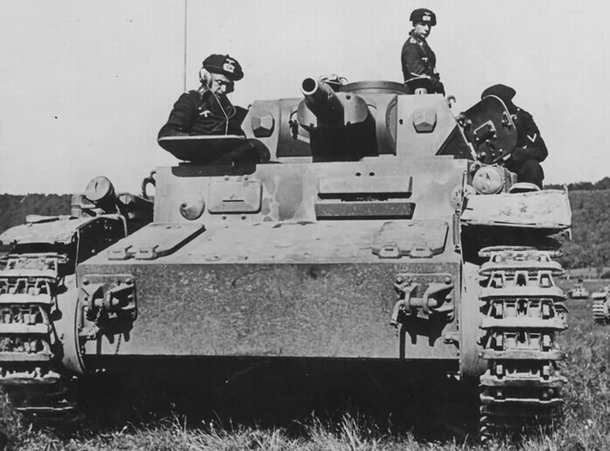
PzKpfw IV Ausf. B, source: worldwarphotos.info with permission of the operator, edited
These are not impressive numbers, but nor were they intended to be. The Panzer IV was not designed to destroy armoured targets — quite the opposite, it was to specialise in so-called soft (i.e. unarmoured) targets, with high-explosive rounds SprGr.Patr. 34 as its primary ammunition. Even so, new types of anti-tank ammunition were introduced in later years to improve the ability of the KwK 37 L/24 to deal with enemy tanks. Specifically these were the shaped-charge rounds Gr 38 Hl, Gr 38 Hl/A, Gr 38 Hl/B and Gr 38 Hl/C. The most powerful of these (Gr 38 Hl/C) could penetrate armour up to 100 mm thick (some sources even quote up to 115 mm).
For aiming, the gunner used the TZF 5b sight (TZF = Turmzielfernrohr) with 2.5× magnification. The sight lens had a diameter of 5 mm and protruded through a small circular hole in the front wall of the turret, just to the left of the external gun mantlet (photograph HERE, source: Flickr.com with permission of the publishing user). To the right of the gun, a coaxially mounted MG 34 machine gun of 7.92 mm calibre was installed. The ammunition load carried aboard the Ausf. A was 122 rounds for the gun and 3,000 rounds for both machine guns.
According to some sources, standard battle tanks of the Panzer IV Ausf. A were equipped only with the Fu 2 radio receiver, along with the internal intercom. This would mean that a standard tank was capable only of receiving, not transmitting, radio messages. Only the tanks designated as platoon commanders' vehicles (one out of four in a platoon) would then have been equipped with a radio transmitter. Most sources, however, agree that PzKpfw IV tanks were fitted from the very first variant with the Fu 5 set, which combined both receiver and transmitter. The radio sets were housed in cages suspended from the roof of the fighting compartment above the gearbox. They were, of course, operated by the radio operator/machine gunner already mentioned. The communications equipment also included a two-metre rod antenna mounted on the right side of the crew compartment. The antenna could be lowered from inside the tank if there was a risk of damage, for example when passing through a forest. When lowered, the antenna rested in a protective wooden trough (photograph HERE, source: Worldwarphotos.info with permission of the operator).
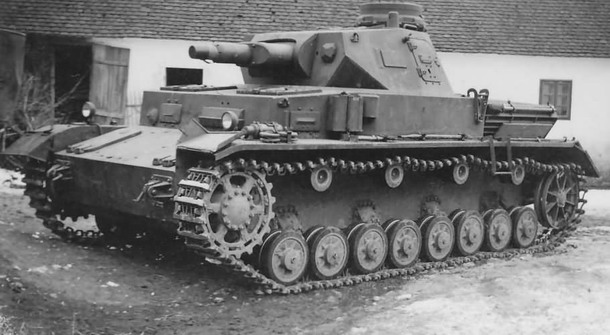
PzKpfw IV Ausf. B, source: worldwarphotos.info with permission of the operator, edited
The tank's crew consisted of five men, and the division of roles and positioning of stations followed the German standard applied to all series-produced tanks beginning with the Panzer III. They were the driver and radio operator/machine gunner seated side by side in the front of the fighting compartment, and the gunner, loader, and commander, who had their stations in the combat turret. The gunner sat to the left of the gun, the loader to the right, and the commander behind the gun breech.
The PzKpfw IV Ausf. A was protected by relatively thin armour. The front, side, and rear walls of the hull were welded from plates only 14.5 mm thick. The roof plates of the hull were 10 mm thick, and the floor of the chassis pan only 8 mm. As for the turret walls, some sources attribute the same 14.5 mm thickness as the hull, while others state 20 mm. The turret roof was most likely only 10 mm. The armour thickness was calculated to resist armour-piercing rifle bullets of 7.92 mm calibre — the designers had no greater ambitions in this regard. As for the total weight of the vehicle, two figures are most commonly cited: 17.3 tonnes and a round 18 tonnes. The maximum speed the tank could achieve was 32.4 km/h on road.
As already noted, only 35 Panzer IV Ausf. A tanks were built in total, the last of which were delivered in June 1938. Production took place at the Krupp Grusonwerk factory in Magdeburg. These tanks participated in the occupation of Bohemia and Moravia, the fighting in Poland, the Benelux countries and France. According to some sources, the "A" variants remained in service into 1941, meaning they may theoretically also have participated in the attack on the Soviet Union.
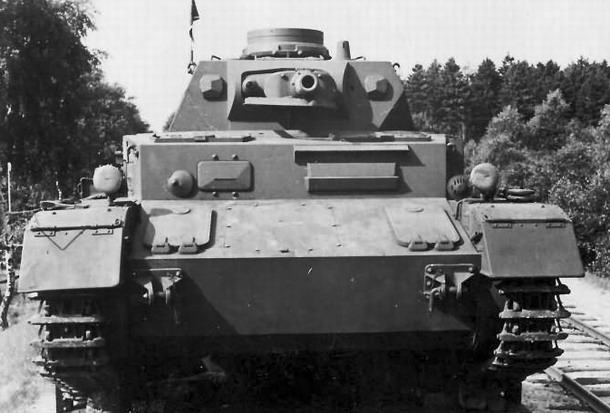
PzKpfw IV Ausf. C tank, source: worldwarphotos.info with permission of the operator, edited
Photographs exist of a Panzer IV Ausf. A fitted with supplementary 30 mm frontal armour on the hull glacis. This armour was routinely fitted to later variants and its use on an Ausf. A is highly unusual — it may well have been a field modification carried out on just a single example. This modified Ausf. A can be viewed in the photograph HERE, source: Flickr.com with permission of the publishing user (note how the additional armour rounds off the otherwise sharp edge of the hull nose).
Ausführung B
The order for the second production series of the Panzer IV was placed as early as October 1937, covering 42 vehicles (some sources say 45). The manufacturer's designation for vehicles from this second series was 2./B.W., but the army designated them Panzerkampfwagen IV Ausf. B.
A whole range of improvements was made compared to the previous variant. The front wall of the crew compartment was now a flat, unstepped plate. The thickness of this wall increased to 30 mm, sufficient to resist fire from a 20 mm cannon. The driver's vision port was now closed by a more robust two-part cover, the so-called Fahrersehklappe 30. The radio operator also received a new vision port. The hull machine gun was no longer built into the front wall of the crew compartment; instead, only a closable port was provided, through which the barrel could be extended when needed. The hatches above the driver's and radio operator's heads were now single-piece, opening forward.
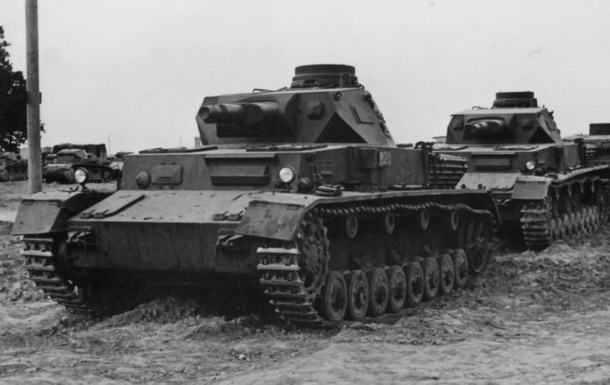
PzKpfw IV Ausf. C tanks, source: worldwarphotos.info with permission of the operator, edited
It was not only the front wall of the crew compartment that was strengthened, but also the front of the hull and turret, both uniformly brought up to 30 mm (compared to 14.5 mm on the Ausf. A). At the same time, the fighting compartment was made somewhat narrower compared to the previous variant, so that its side walls no longer extended as far over the tracks. The interior space was of course reduced somewhat as a result, accommodating only 80 rounds of main gun ammunition (versus 122 in the Ausf. A). On the other hand, this helped minimise the weight increase caused by the heavier armour. The PzKpfw IV Ausf. B weighed either 17.7 or 18.5 tonnes, depending on the source.
Changes were made to the turret as well. The external gun mantlet was of a new design, as were the vision port covers in the front turret wall. The side entry hatches in the turret were now fitted with a small opening for firing personal pistols. The two closable pistol ports in the rear turret wall were also newly designed. A readily noticeable novelty was the commander's cupola, adopted from the Panzer III Ausf. B. One of the two flag-signalling openings in the turret roof (specifically the left one) received a new raised conical cover. At the top of this cover was a small aperture through which the tank crew could send light signals to another tank using pre-arranged codes or Morse code. Below the main gun, a metal frame appeared, intended to deflect the radio antenna when the turret traversed, preventing the gun barrel from damaging it (this frame was also retrofitted to a number of Ausf. A tanks).
Further significant changes were made under the engine deck. The Panzer IV Ausf. B received a new Maybach HL 120 TR engine of 11.9 litres displacement, producing 300 horsepower at 3,000 rpm. The gearbox was also new — the Zahnradfabrik SSG 76 with six forward gears and one reverse. The more powerful engine and newer gearbox allowed the tank's top speed to be increased to a full 42 km/h. Typical road speed was, however, only around 25 km/h, and cross-country speed around 20 km/h.
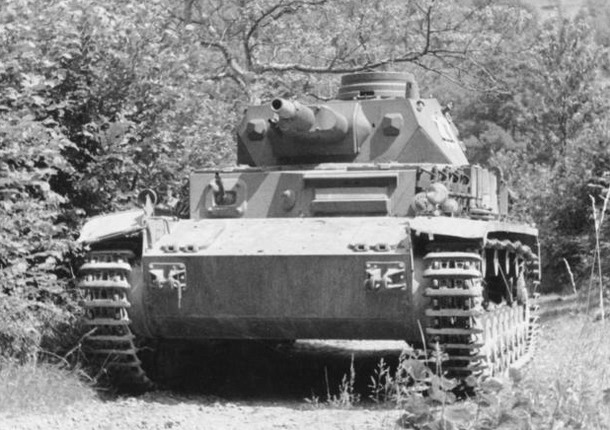
PzKpfw IV Ausf. D reverted to the stepped front crew compartment wall and received a new external gun mantlet, source: Bundesarchiv_Bild_146-1981-070-15, Wikimedia, Creative Commons, edited
Production of the Ausf. B ran from May to October 1938, and the tanks carried chassis numbers 80201 to 80242. During production, tanks began to be fitted with a rack for five smoke dischargers mounted on the rear wall of the hull. The dischargers could be triggered from inside the crew compartment by means of a steel cable. When the tank found itself in serious danger, the crew would fire a smoke discharger and quickly disappear behind a smoke screen. Another small feature introduced during production was a visor above the driver's vision port to protect it from rain. For completeness, one further modification should be mentioned — one applied retrospectively after production had ended. In spring 1940, most surviving tanks were fitted with supplementary 30 mm armour on the hull front.
Ausführung C
The third production variant naturally bore the designation Ausf. C (the manufacturer's designation was 3./B.W.). The army expected no major innovations from this variant, but simply an increase in the number of tanks produced. As a result, the Panzer IV Ausf. C differed from the previous variant in only a few details. Armament, armour, weight, speed — all remained identical to the older Ausf. B. In practice, the only distinguishing feature by which Ausf. C tanks can be identified in photographs is the protective sleeve for the turret machine gun barrel (as seen, for example, in the photograph HERE, source: Worldwarphotos.info with permission of the operator).
Production of the Panzer IV Ausf. C ran from October 1938 to August 1939. Of the 140 tanks ordered, 134 were completed as full tanks; the remaining 6 chassis served as the basis for the construction of special bridge-laying vehicles, so-called Brückenleger (bridge-layers), which will be discussed later. The Ausf. C tanks carried production numbers 80301 to 80440. During production, among other changes, the engine was replaced: the original Maybach HL 120 TR gave way to the updated Maybach HL 120 TRM, which however produced the same output (300 hp at 3,000 rpm). Some Ausf. C tanks that survived into spring 1940 were retrofitted with supplementary 30 mm armour on the hull front (a photograph of an Ausf. C with reinforced armour can be viewed HERE, source: Flickr.com with permission of the publishing user).
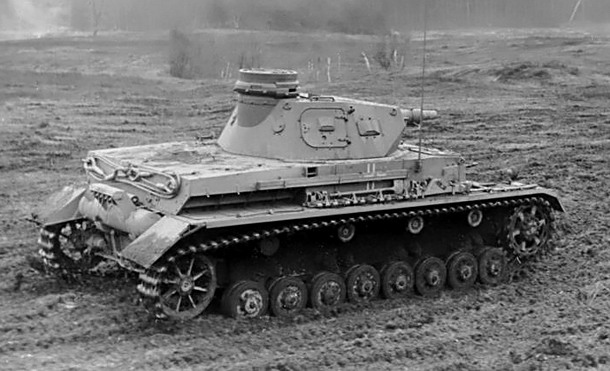
the commander's cupola tube on the PzKpfw IV Ausf. D still protruded into the rear turret wall, source: Bundesarchiv_Bild_101I-124-0211-18, Wikimedia, Creative Commons, edited
There is photographic documentation of a Panzer IV Ausf. B or C being deployed in France as late as June 1944! It was most likely a vehicle from some training centre or reserve depot, pressed into service by the Germans in their desperate attempt to field as many combat-capable machines as possible against the Allied invasion, regardless of their obsolescence.
Ausführung D
The ordnance office placed an order for the fourth production series as early as July 1938. This series was designated 4./B.W. and Krupp Grusonwerk was contracted to deliver a total of 200 vehicles. In December 1938, however, the order was expanded by a further small production run designated 5./B.W., comprising 48 tanks. The army designated all these tanks as Ausf. D.
For reasons that are not entirely clear, the Panzer IV Ausf. D reverted to the stepped front crew compartment wall, similar to the very first production variant, the Ausf. A. A hull machine gun ball mount was incorporated into the right side of the front wall. The most visually striking difference was the new gun mantlet. Earlier versions of the tank had an internal mantlet which, if even slightly damaged in combat, risked jamming. The mantlet on the Ausf. D was therefore redesigned as an external type, formed by a curved steel plate 35 mm thick (the new external mantlet is clearly visible in the photograph HERE, source: Flickr.com with permission of the publishing user). The armour on the side and rear walls of both the hull and turret was increased from 14.5 mm to 20 mm.
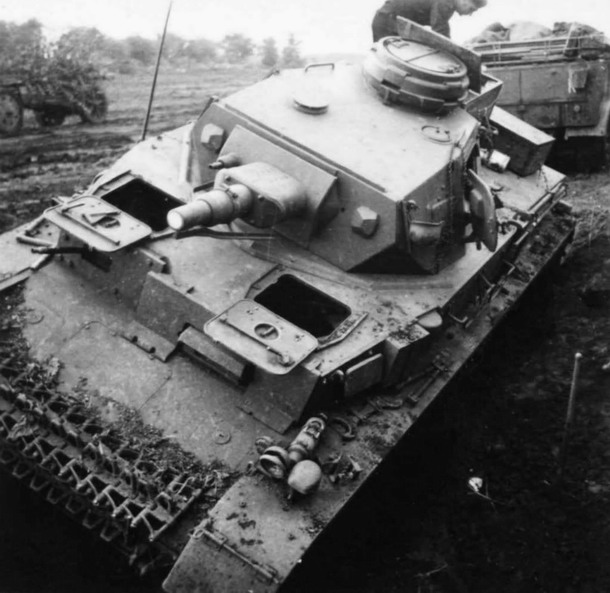
PzKpfw IV Ausf. E — note the new driver's vision port cover, the new commander's cupola, and the supplementary armour on the crew compartment front, source: Flickr.com with permission of the publishing user, edited
Production of the Ausf. D ran from October 1939 to October 1940, with chassis numbers 80501 to 80748. Of the 248 vehicles ordered, 232 were completed as full tanks; the remaining 16 chassis were used for the construction of bridge-laying tanks (Brückenleger). Production and subsequent service of the Ausf. D were accompanied by efforts to increase the level of armour protection. Photographs of these vehicles show various combinations of several types of supplementary armour. One was a 30 mm plate bolted to the hull front (recognisable in photographs by the way it rounds off the otherwise sharp edge of the hull nose). Some vehicles also show supplementary armour on the front and sides of the crew compartment, the sides of the hull above the road wheels, and sometimes even on the turret front (photographs e.g. HERE, source: Flickr.com with permission of the publishing user, or HERE, source: Flickr.com with permission of the publishing user). It is reported that on the last 68 tanks of the Ausf. D run, the main frontal hull armour was actually increased from 30 to 50 mm outright. The heavier armour naturally increased the tank's weight to a round 20 tonnes. Curiously, this had no apparent effect on either speed or range.
In July and August 1940, 48 Panzer IV Ausf. D tanks were converted into submersible tanks, so-called Tauchpanzers (more on these later). Some Ausf. D tanks that survived into July 1942 were reportedly retrofitted with the long-barrelled KwK 40 L/43 gun. Whether these were subsequently used in combat or only for crew training is not clear.
Ausführung E
In October 1940, the fifth variant of the Panzer IV entered production, designated Ausf. E (the manufacturer's designation was 6./B.W.). By April 1941, a total of 200 had rolled out of the Krupp Grusonwerk factory in Magdeburg. The front wall of the crew compartment remained stepped, as on the previous variant. The Panzer IV Ausf. E received a newly designed drive sprocket, and the road wheel configuration was also slightly changed. The driver's vision port was closed by a new type of armoured cover, adopted from the Panzer III Ausf. G. The rear of the turret was modified so that the commander's cupola no longer intruded into the rear wall, as had been the case on earlier variants. The cupola itself was also new — again adopted from the Panzer III Ausf. G. The Panzer IV Ausf. E had only one signal opening in the turret roof, and instead of a ventilation slot, an electric fan was now installed in the turret roof.
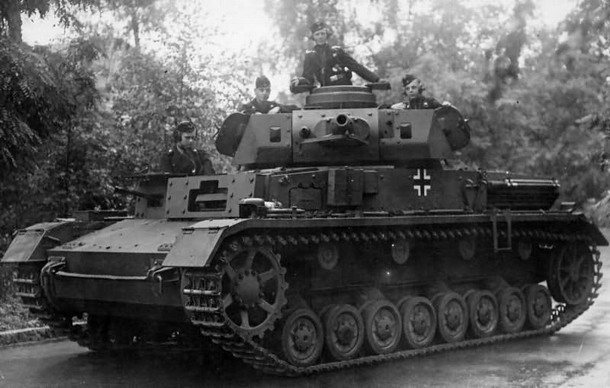
PzKpfw IV Ausf. E with full supplementary armour including the turret front, source: Worldwarphotos.info with permission of the operator, edited
While the frontal hull plate of the Ausf. E was 50 mm thick, the crew compartment front remained only 30 mm, which the army soon came to regard as insufficient. A large proportion of Ausf. E tanks therefore received supplementary armour on the crew compartment front (30 mm) and sides (20 mm). Partial supplementary armour of 20 mm was also added to the hull sides above the road wheels. Some Panzer IV Ausf. E tanks were later fitted with an additional frontal plate (Vorpanzer) over the crew compartment and turret front.
From March 1941, tanks were retrofitted with stowage boxes for rations and personal kit, hung on the rear wall of the combat turret. Some Ausf. E tanks that survived to July 1942 were "upgraded" to a newer standard — they received wider tracks and wider wheels, and above all were re-armed with the long-barrelled KwK 40 L/43 gun. Whether these were subsequently used in combat or served only for crew training is open to question, as surviving photographs show them specifically as training vehicles (photographs e.g. HERE (source: Worldwarphotos.info) or HERE (source: Waralbum.ru)). The Panzer IV Ausf. E reached a weight of 22 tonnes — two tonnes heavier than the preceding Ausf. D — but speed and range remained unchanged.
Ausführung F
The sixth production variant of the Panzer IV carried the manufacturer's code 7./B.W. and the army designation Ausf. F. The primary requirement for this variant was a further increase in armour protection. The front wall of the crew compartment reverted once again to a flat, unstepped design — this time, however, 50 mm thick. The stronger front plate was accompanied by a newly designed driver's vision port, the so-called Fahrersehklappe 50, and a new ball-mount for the hull machine gun, the Kugelblende 50. The turret front was also brought up to 50 mm. As a result, the tank was now resistant to direct fire from weapons up to 37 mm calibre. The side walls of the hull, crew compartment, and turret were also reinforced, from 20 to 30 mm, and the same applied to the rear wall of the combat turret.
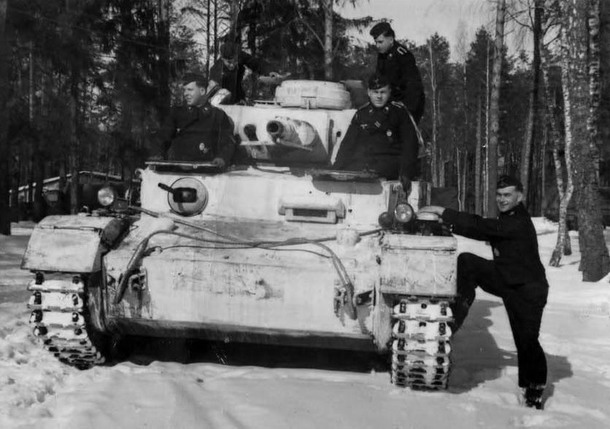
PzKpfw IV Ausf. F with the flat crew compartment front wall and the new hemispherical hull machine gun ball mount, source: Flickr.com with permission of the publishing user, edited
The increased armour protection naturally resulted in a weight increase, and the tank now weighed 22.3 tonnes. Compared to the preceding Ausf. E fully equipped with supplementary armour, this was a relatively modest increase of only 300 kg, but it was already beginning to cause problems. As the overall weight grew, so did the ground pressure — the ratio of weight to the area of track in contact with the ground. If nothing were done, the ground pressure of the Panzer IV Ausf. F would have exceeded 0.92 kg/cm², which was relatively high and risked the tank sinking excessively in soft ground. The designers therefore decided to reduce ground pressure by increasing the tank's contact area with the ground — in the simplest way possible, by using wider tracks. The Ausf. F thus received new tracks 400 mm wide (compared to 380 mm on the previous variant), reducing ground pressure to an acceptable 0.88 kg/cm². The wider tracks required corresponding changes to both the drive and road wheels. The idler wheel was also of a new design, welded from tubular sections. Remarkably, neither the top speed nor the fuel consumption were adversely affected by the increased weight.
The steering brake access panels on the Ausf. F were fitted with newly designed ventilation openings for improved brake cooling. The main engine exhaust on the rear wall of the hull received a new, smaller muffler. The auxiliary engine exhaust — powering the turret traverse — also got a new smaller muffler, no longer mounted above the main engine's exhaust but alongside it (comparison photograph HERE, source: Worldwarphotos.info with permission of the operator). Vents were cut into the engine deck for improved ventilation, protected by grilles for added safety (comparison photograph HERE, source: Flickr.com with permission of the publishing user). The entry hatches in the turret side walls received new two-piece doors. The front section of these doors incorporated a vision port, the rear section a closable pistol port. A portion of Panzer IV Ausf. F tanks that survived to July 1942 were retrofitted with the more powerful long-barrelled KwK 40 L/43 gun.
In April 1941, German engineers began considering how to maximise the operational range of the Panzer IV. This was part of the preparations for the forthcoming invasion of the Soviet Union, with the goal of enabling tanks to make long overland marches across the vast Russian countryside without depending on fuel supply convoys. There was no room inside the tank for additional fuel tanks. Attaching supplementary tanks to the outside was deemed too dangerous — they would present an easy target for enemy fire and any spilled petrol would likely set the entire vehicle alight. The solution was to carry additional fuel in a wheeled trailer towed behind the tank. An unknown number of Ausf. F tanks were therefore modified to tow such a trailer. The trailer had a single axle of conventional wheels and carried two 200-litre fuel drums. Some sources suggest the drums were connected to the tank so the engine could draw fuel directly from them. Far more likely, however, is that there was no piping or hose between the drums and the tank, and the crew simply hand-pumped the fuel into the tank's own tanks once its internal reserves were exhausted. It was not an elegant solution, but it worked. The fire risk from the exposed petrol drums was nonetheless considerable, and it is no surprise that this modification never became widespread.
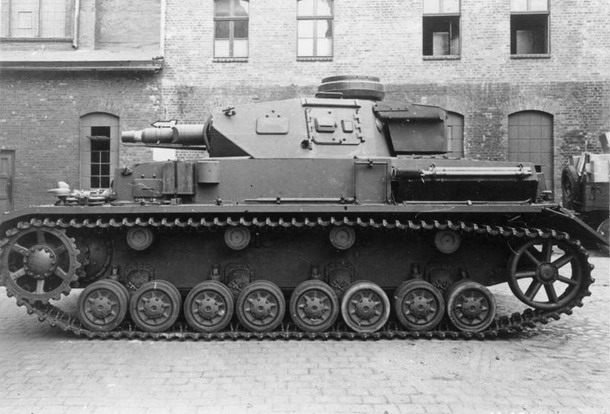
PzKpfw IV Ausf. F — the commander's cupola tube no longer protruded from the rear turret wall, making it easy to hang a tool stowage box there, source: Bundesarchiv_Bild_146-1979Anh.-001-10, Wikimedia, Creative Commons, edited
Production of the Panzer IV Ausf. F began at the Krupp Grusonwerk factories in April 1941 and continued until February 1942. The original order was for a mere 128 tanks but was subsequently expanded to 900 vehicles. Such a number would have been beyond the capacity of Krupp Grusonwerk alone, so two additional firms were progressively brought into production: Vomag (Vogtländische Maschinenfabrik AG) from Plauen in Saxony, and Nibelungenwerke from St. Valentin in Austria. Both joined relatively late, however, so their contribution to the total number produced was not decisive. Specifically: Krupp Grusonwerk built 393 tanks, Vomag 64 tanks, and Nibelungenwerke only 13 tanks.
Ausführung G
Total production of the Panzer IV Ausf. F thus reached 470 units — which makes it clear that the order for 900 tanks was not fulfilled. The reason was straightforward. In June 1941, German forces had invaded the Soviet Union and found themselves facing the Russian T-34 and KV tanks, against which German vehicles simply lacked sufficient firepower. In response, the Germans urgently worked on developing new tank types (Tiger and Panther) while simultaneously deciding to re-arm existing Panzer III and Panzer IV tanks with more powerful guns. Analysis showed that the lighter Panzer III simply could not accommodate a gun of more than 50 mm calibre, so the main effort was to focus on re-arming the Panzer IV.
On 18 November 1941, the ordnance office placed an urgent order with Krupp and Rheinmetall for the development of a new gun for the Panzer IV. The new weapon was to be based on the anti-tank gun PaK 40 L/46 of 75 mm calibre, on which Rheinmetall had been working since 1939 and which had been successfully completed in November 1941. Under the collaboration agreement, Rheinmetall was responsible for the weapon's internal engineering modifications, while Krupp was responsible for the external adaptations needed to install the gun into the existing Panzer IV turret.
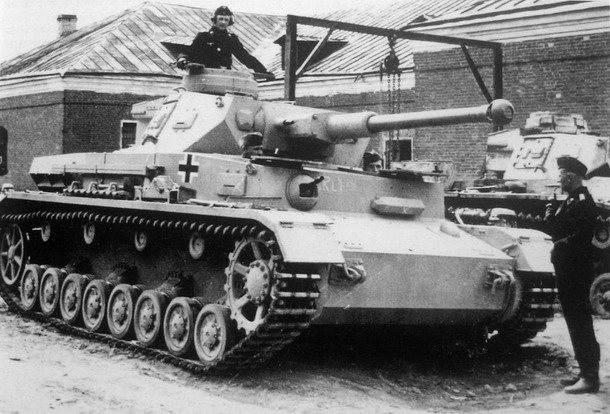
an early PzKpfw IV Ausf. G (temporarily also known as Ausf. F2) — note the distinctive single-chamber muzzle brake, source: Flickr.com with permission of the publishing user, edited
Rheinmetall's engineers had to solve two fundamental problems. As it turned out, the cartridge chamber of the anti-tank PaK 40 was too long — during the recoil following a shot, it simply would not fit within the tank turret. A similar issue arose with the original ammunition for the PaK 40, which was also too long for practical handling inside the turret. To illustrate: the standard PaK 40 armour-piercing round, Panzergranate 39, measured an extraordinary 969 mm in length (716 mm for the cartridge case and 253 mm for the projectile itself). The tank version of the gun therefore required newly developed ammunition with a shorter but wider cartridge case, and a correspondingly shorter but wider chamber.
The resulting new gun for the Panzer IV was designated 7.5 cm KwK 40 L/43. Compared to the original PaK 40 L/46, its chamber was approximately 20 cm shorter (hence the reduction in barrel length expressed as a multiple of calibre from L/46 to L/43, which was measured including the chamber). The new Panzergranate 39 round for this tank gun was only 776 mm long (compared to the original 969 mm). The projectile itself remained the same; all the changes were made to the cartridge case.
As soon as the new gun was ready, it was immediately introduced into the ongoing production of the Panzer IV Ausf. F. Specifically, in March 1942, the first 80 vehicles armed with the new KwK 40 L/43 rolled off the production line. The re-arming of the Panzer IV came unexpectedly in the middle of the seventh production series, so technically these were still Ausf. F tanks. However, the modification was so substantial that a way had to be found to distinguish them. Before production began, a special designation was introduced: PzKpfw IV Ausf. F – Umbau (or 7./B.W. – Umbau) (Umbau = conversion). Far more widely used was the later designation PzKpfw IV Ausf. F2, which is the one cited by most historians. The name Ausf. F2 was indeed officially adopted, but only temporarily — from March to July 1942. In July 1942, the ordnance office definitively ruled that tanks from the 7th production series armed with the KwK 40 L/43 were to be designated the same as the 8th production series, i.e. Ausf. G. To summarise: production of the Panzer IV Ausf. F ended in February 1942, and production of the Panzer IV Ausf. G began in March 1942. The transitional name Ausf. F2 became widespread in the literature primarily because it appeared in two official army manuals issued during the period of its temporary validity (between March and July 1942).
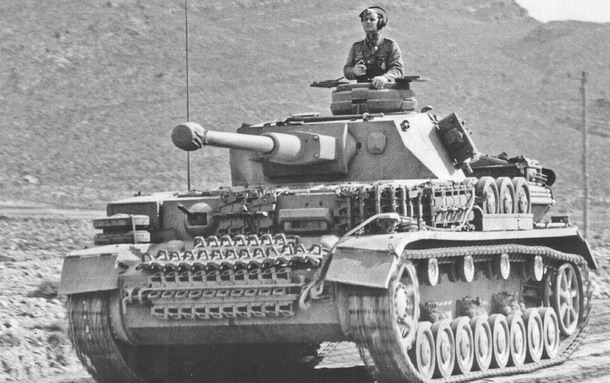
PzKpfw IV Ausf. G in Africa, source: Flickr.com with permission of the publishing user, edited
The transition to the new KwK 40 L/43 gun not only brought a decisive increase in the destructive power of the Panzer IV but effectively changed its overall combat role. Recall that in the original division of roles, it was the lighter Panzer III that was responsible for destroying enemy armour, while the Panzer IV was merely to provide it with fire support. Now, however, it was precisely the Panzer IV that was able to destroy armoured opponents far more effectively than its lighter companion.
The New KwK 40 Gun
The standard armour-piercing round Panzergranate 39 fired from the Panzer IV with the KwK 40 L/43 weighed 6.8 kg, left the gun barrel at 740 m/s, and at a range of 1,000 metres could penetrate sloped homogeneous armour 82 mm thick (approximately 86% more than the Panzer III achieved with comparable ammunition). The tungsten-cored Panzergranate 40 for the new Panzer IV gun weighed 4.1 kg and, with a muzzle velocity of 920 m/s, could penetrate armour up to 87 mm thick at one kilometre (approximately 128% more than the equivalent round from the Panzer III).
Let us also look briefly at the accuracy the new KwK 40 L/43 achieved in practice. Trial results are available showing the probability of hitting a target 2.5 metres wide and 2 metres tall — roughly corresponding to the frontal silhouette of a tank. The data shows that the most accurate round was the Panzergranate 39. Using this round, the probability of hitting the above target at 500 metres was 100%; at 1,000 metres it was still an impressive 99%; it then fell to 77% at 1,500 metres and 48% at two kilometres. It should be noted that these figures were obtained on a firing range, not in the field. Nevertheless, in combat practice it was true that an experienced gunner could generally hit a target at one kilometre with the first shot.
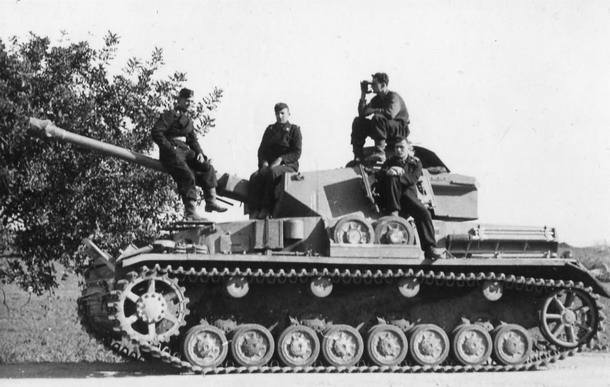
PzKpfw IV Ausf. G and its crew, source: Worldwarphotos.info with permission of the operator, edited
Alongside the gun itself, the mantlet was also changed, as it now had to protect the larger recoil mechanism. The gun cradle was naturally new as well, as were the ammunition stowage bins. The KwK 40 L/43 was fitted with the TZF 5f sight with 2.5× magnification and a 24-degree field of view. The gun's vertical elevation range remained the same as the older L/24 — from -10 to +20 degrees. The ammunition load aboard the Panzer IV Ausf. G was 87 rounds for the gun and 3,150 rounds for the machine guns. For longer marches, the gun was locked to the turret roof so the barrel would not swing during travel. In this locked position the barrel pointed upward at 16 degrees (it is very commonly seen at this angle in photographs).
An interesting feature of the gun was its maximum recoil indicator. Essentially this consisted of a guide channel with a scale mounted on a protective plate on the left side of the gun breech housing. A sliding stop was set in the guide channel. When the gun recoiled after firing, it pushed the stop rearward. If the gunner fired in rapid succession, the recoil mechanism had insufficient time to fully reset, and the recoil length progressively increased. To prevent the recoil from exceeding the safe maximum and potentially damaging the gun, there was this stop with its scale. As sustained rapid fire pushed the stop ever further back along the scale, it would eventually reach a mark labelled Feuerpause! At that point, the gunner had to cease fire and allow the gun to "rest" for a moment. Incidentally, the Feuerpause mark on the scale corresponded to a recoil length of 505 mm.
Production of the Ausf. G ran from March 1942 to June 1943, with a total of 1,930 units built — more than all six preceding variants combined. Of this total, 530 vehicles were produced as part of completing the 7th production series, and 1,400 as the 8th series (8./B.W.). As before, production was shared between Krupp (907 tanks), Vomag (436 tanks), and Nibelungenwerke (587 tanks).
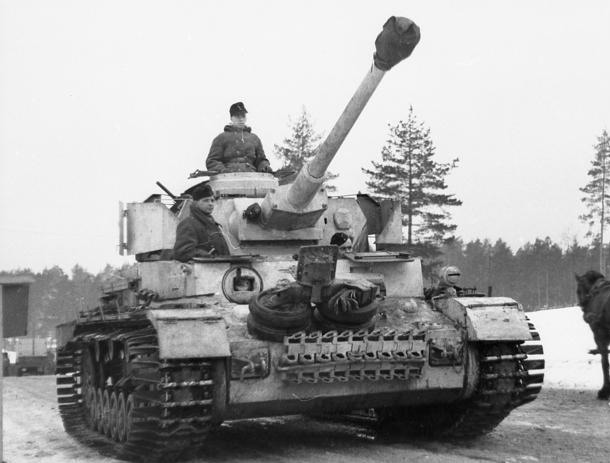
PzKpfw IV Ausf. G with additional turret armour and wide winter tracks, source: Bundesarchiv_Bild_101I-725-0190-18, Wikimedia, Creative Commons, edited
Over the 16 months of production, a whole series of improvements and simplifications were of course introduced. As early as April 1942, the vision ports in the side walls of the turret were eliminated, along with the frontal turret vision port to the right of the gun. The aim was to simplify production and simultaneously remove a weak point in the armour. From May 1942, the crew compartment front was reinforced with bolted-on 30 mm plates, and the same supplementary armour was sometimes also added to the hull front. This addition entered series production gradually and was extended to all newly completed tanks from January 1943. From June 1942, spare track links began to be hung on the hull front plate, serving not only as replacement for damaged links but also as a form of additional protection.
On the first tanks fitted with the KwK 40 L/43 gun, an unusual single-chamber spherical muzzle brake was used. From September 1942 it was replaced by the more familiar double-chamber type. From February 1943, triple-barrelled smoke discharger launchers were fitted on both sides of the turret (these were later removed, as they occasionally fired off when struck by small arms fire from enemy infantry). In February 1943 the driver's observation periscope, previously mounted above his main vision port, was also eliminated as a production simplification. The two small holes for its optics were blanked off, and later ceased to be drilled at all. In March 1943 the signal opening in the turret roof was discontinued. From April 1943, tanks began to be fitted with supplementary side armour around the hull and turret, the panels of which were generally known as Schürzen (skirts). In April 1943 the longer version of the gun with a more production-friendly rifled barrel, designated KwK 40 L/48, was introduced. From May 1943, tanks began to be fitted with additional Filzbalgfilter air filters for the engine — two cylindrical sheet-metal canisters mounted on the right-side mudguard, connected to the engine by tubes and using felt for air filtration. These filters are clearly visible in the photograph HERE (source: Waralbum.ru with permission of the operator). The Panzerkampfwagen IV Ausf. G weighed 23.6 tonnes.
Ausführung H
The 9th production series of the Panzer IV (9./B.W.) began entering production from May 1943. The army designated this variant Ausf. H. Production of the last Ausf. G and the first Ausf. H tanks overlapped in time, and according to many authors, late-production Ausf. G tanks received some components from the new variant — for example the commander's cupola with a one-piece hatch, or the new drive sprockets.
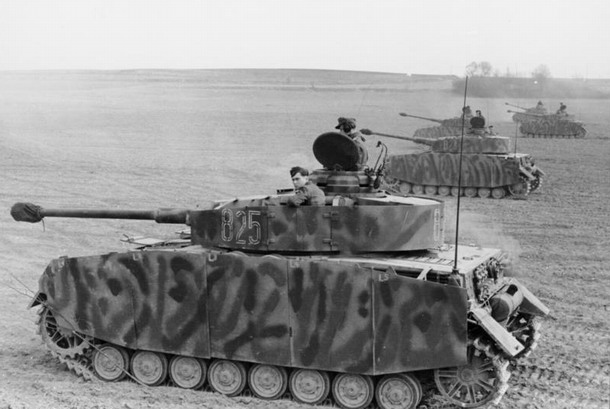
a group of PzKpfw IV Ausf. H tanks, source: Bundesarchiv_Bild_101I-298-1759-25, Wikimedia, Creative Commons, edited
The main innovation of the Panzer IV Ausf. H was the upgrade of the final drives that distributed the driving force from the gearbox to the actual track drive sprockets. The original final drives had been designed for a tank of around 18 tonnes. The progressive addition of armour and armament had, however, pushed the weight of the Panzer IV to over 23 tonnes in the Ausf. G and a full 25 tonnes in the forthcoming Ausf. H, thus reaching the limits of the existing design. The new final drives for the Ausf. H were therefore both strengthened and given lower gear ratios. This did result in a reduction in maximum speed, but by only 4 km/h (from 42 to 38 km/h), which was entirely acceptable.
Another innovation on the Ausf. H was reinforcement of the turret roof plate — from 10 mm to 16 mm in the front half, and as much as 25 mm in the rear half where the commander's cupola was located. There were also more visible changes: new drive and idler sprockets with lightened spokes, the relocation of the radio antenna from the right side of the crew compartment to the left side of the engine deck, and a one-piece hatch on the commander's cupola.
The Ausf. H tanks were fitted from the outset exclusively with the long-barrelled KwK 40 L/48 gun. This weapon used the same ammunition as the preceding KwK 40 L/43 generation, but thanks to the longer barrel, muzzle velocity — and thus armour penetration (and likely accuracy and effective range) — was slightly improved. The principle is that as long as the projectile is inside the barrel, it continues to accelerate under the force released by the burning propellant charge. Once it leaves the barrel, it begins to decelerate. So, all else being equal, the longer the barrel, the more time the projectile spends in it and the more it accelerates. The Panzergranate 39 projectile of 6.8 kg, already mentioned, achieved a muzzle velocity of 750 m/s from the KwK 40 L/48 and could penetrate sloped armour up to 85 mm thick at one kilometre. The tungsten-cored Panzergranate 40 left the barrel at 930 m/s and could penetrate armour up to 97 mm thick at the same range.
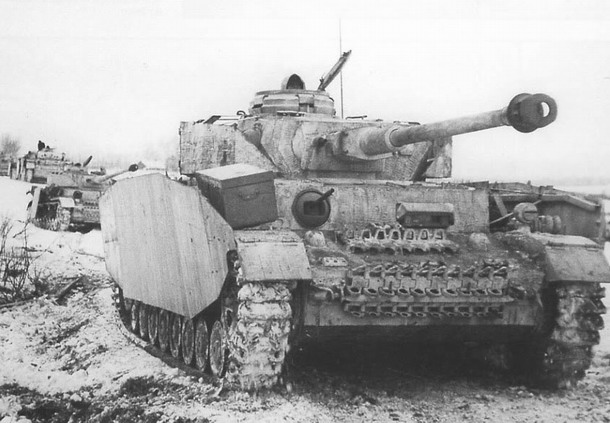
PzKpfw IV Ausf. H (or Ausf. J) in winter camouflage, source: Flickr.com with permission of the publishing user, edited
Production of the Panzer IV Ausf. H ran until February 1944 and totalled 2,322 units. Initially all three established manufacturers participated — Krupp Grusonwerk, Vomag and Nibelungenwerke. Krupp, however, ended tank production in December 1943 to switch to producing the StuG IV assault gun (before doing so, its Magdeburg factories had completed 379 Panzer IV Ausf. H tanks). The leading producer was Nibelungenwerke, which delivered a total of 1,250 Ausf. H tanks.
From June 1943, the armour plates on the hull and crew compartment front were increased to a full 80 mm. Around the same time, the openings for vision ports in the sides of the crew compartment ceased to be cut, as these were already rendered virtually useless by the increasingly widespread use of side skirt armour, and they simply added to production costs. From September 1943, tanks began to receive Zimmerit anti-magnetic paste coating, intended to protect them against magnetic mines. In October 1943, the road wheels received new, production-simplified hub caps. In the same month, return rollers without rubber rims were introduced to conserve increasingly scarce rubber. In December 1943, a new and stronger method of interlocking the front and side plates of the crew compartment was adopted. Shortly before the end of Ausf. H production in February 1944, the Filzbalgfilter additional air filters were discontinued.
The final improvement worth mentioning was the introduction of a new close-defence weapon against enemy infantry, the so-called Nahverteidigungswaffe. This was essentially a grenade launcher whose firing mechanism was mounted inside beneath the turret roof, with the barrel opening through the turret roof. As well as anti-personnel shrapnel grenades, it could also fire smoke grenades, and even a signal pistol could be fired through the barrel. The Nahverteidigungswaffe was introduced on the Panzer IV from January 1944, but deliveries of the launchers fell behind from the start, so some tanks had to be completed without them, with the prepared hole in the roof simply covered by an armour plate.
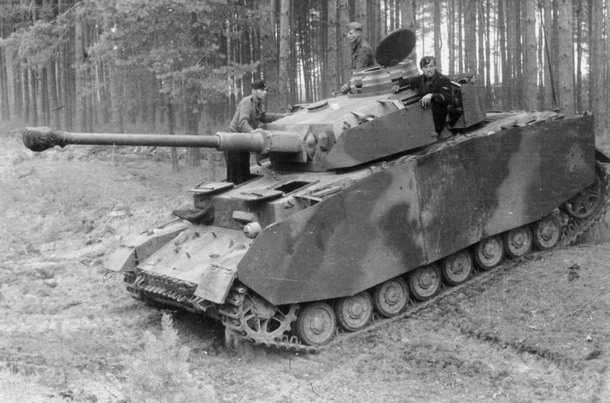
PzKpfw IV Ausf. H (or Ausf. J), source: Bundesarchiv_Bild_101I-695-0406-03, Wikimedia, Creative Commons, edited
Ausführung J
In February 1944, the tenth — and final — production variant of the Panzer IV appeared, designated Ausf. J (or 10./B.W.). The main change again took place inside the tank, where the electric motor powering the turret traverse mechanism was removed. The turret could now only be traversed manually. At the same time, the manual mechanism was modified to allow selection between two speeds — a faster ratio for large changes of direction, and a slower one for precise gun aiming.
By eliminating the electric turret drive, the designers aimed primarily at reducing production costs, since removing the electric motor also eliminated the auxiliary DKW petrol engine and the electric generator. The external consequence of this change was that the rear wall of the hull no longer bore the exhaust muffler of the auxiliary engine that was characteristic of earlier variants (Ausf. J tanks can therefore be unambiguously identified in photographs only when viewed from the rear).
The freed-up space in the engine compartment created by removing all the above-mentioned components was used for an additional fuel tank of 210 litres capacity (not installed in all tanks, however, due to various technical complications). It might seem somewhat paradoxical that the Germans decided to fit a larger fuel tank at a time when they were already struggling with fuel shortages. On the other hand, the logic was sound — increasing the tank's range reduced its dependence on supply convoys, which in turn saved costs and time.
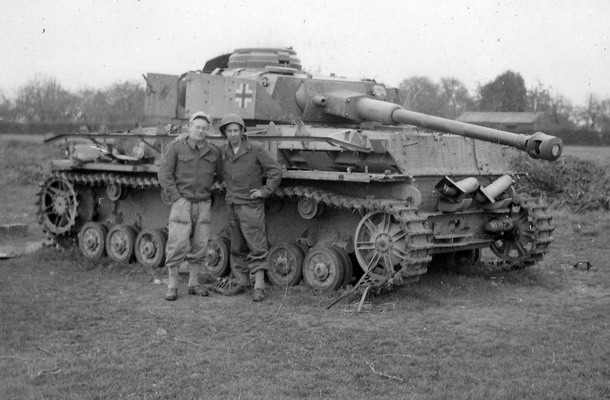
PzKpfw IV Ausf. J — this variant can be safely identified by the exhaust arrangement, source: Flickr.com, Public domain, edited
Production of the Ausf. J began at both Vomag and Nibelungenwerke factories, but as early as May 1944, Vomag's capacity was transferred to production of the Jagdpanzer IV tank destroyer, and Panzer IV production there ended definitively. Between February and May, Vomag workers had managed to complete 180 Panzer IV Ausf. J tanks. From that point on, the Panzer IV was produced by a single factory — the Austrian Nibelungenwerke. That company rose to the challenge admirably, and for the next three months maintained a monthly output of 300 tanks (essentially the same as before). From September 1944, however, output fell sharply as a result of Allied bombing of various German factories supplying essential components for the Panzer IV. Production continued until the very end of the war, but the monthly output never again exceeded two hundred tanks. In April 1945, only around 50 vehicles were completed. A total of approximately 3,150 Ausf. J tanks were built, making it by far the most numerous Panzer IV variant.
The Ausf. J also went through a series of modifications during its production run, all sharing the common thread of simplifying and reducing the cost of manufacture — which was all the designers could realistically aim for at that stage of the war. In May 1944, the vision ports and pistol ports in the turret side doors were eliminated, as the surrounding Schürzen skirt armour had made them essentially useless. From June 1944, brackets for a simple 2-tonne hand-operated crane were welded to the turret roof, allowing tasks such as lifting out the entire engine while in the field. This was intended to make larger repairs to the power unit possible without having to withdraw the tank to a workshop. From July 1944, the turret ventilation fan received a new, more robust cover.
From August 1944, the large exhaust muffler on the rear wall of the hull was discontinued and replaced by two considerably simpler pipes connected directly to the exhaust manifold and directed upward. The tank was noisier without the muffler and more prone to visible muzzle flashes at night (which compromised concealment), but this was an acceptable trade-off for reduced production cost. From September 1944, alongside the solid-plate Schürzen skirt armour, frames filled with wire mesh were also introduced (reportedly nicknamed Thoma Schürzen). This was a cheaper solution but worked more or less effectively — for instance against shaped-charge warheads it was just as good as solid steel plates. In October 1944, the hull side walls were partially extended forward and drilled through to create towing cable attachment eyes (photograph HERE, source: Waralbum.ru with permission of the operator). In the same month, a new commander's cupola hatch was introduced — no longer hinged upward but rotating sideways, similar to the Tiger tank. In December 1944, the number of return rollers supporting the upper run of the track was reduced from four to three.
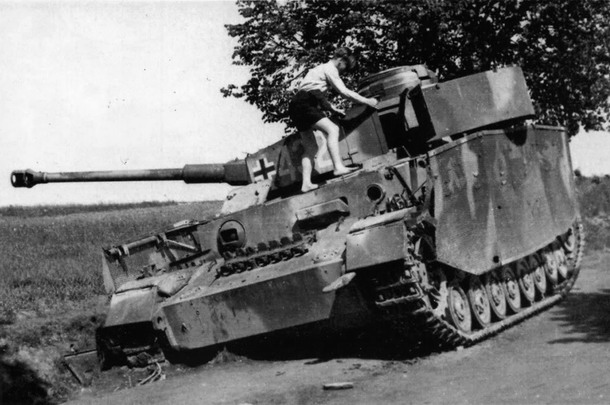
an abandoned PzKpfw IV Ausf. J with wire mesh side skirts — the variant can be safely identified in this photograph by the design of the towing cable attachment eyes, source: Flickr.com, Public domain, edited
The weight of the Panzer IV Ausf. J was 25 tonnes — unchanged from the preceding Ausf. H. Fuel capacity increased from 470 to 680 litres, and with it the tank's range — up to 320 km on road and 210 km cross-country. All other characteristics, including speed, armament, and ammunition load, remained unchanged.
Command Tanks
Given the large number of units produced, it will surprise no one that the Panzer IV also served as the basis for many specialised vehicles. Among the less exotic of these was the command version, which at first glance differed little from a standard tank. Command tanks (Panzerbefehlswagen) were intended to allow armoured unit commanders to move safely close to the front line, maintain a clear picture of the current battlefield situation, and react quickly by issuing orders and calling for support from other units (such as air support). The command Panzer IVs were produced from March to July 1944 by modifying used standard tanks — 88 were converted in this way. A further 17 were built as entirely new vehicles based on series-production Panzer IV Ausf. J tanks.
In command tanks, the turret machine gun (normally positioned to the right of the gun) was removed, and the freed space was used for an additional radio set. Other equipment was also added — an electric generator, a transformer, and circuit breakers. Because of these new components, the main gun ammunition supply had to be reduced from the normal 87 to 72 rounds. The Panzerbefehlswagen IV (Pz.Bef.Wg. IV) existed in two versions: one with the equipment code Sd.Kfz. 267 and another designated Sd.Kfz. 268. Both versions differed in the combination of radio sets carried. The more common Sd.Kfz. 267 was equipped with Fu 5 and Fu 8 sets for communication with ground units. The Sd.Kfz. 267 was used by commanders from company to regimental level. The Fu 8 set enabled voice communication at ranges of up to around 20 kilometres, and up to 40 km in Morse code. The Fu 8 was accompanied by a rod antenna with a star-shaped end (Sternantenne D), mounted either on the left side of the engine deck or on the right side of the hull rear wall. The second antenna, for the Fu 5, was a plain 2-metre rod installed on the turret roof in place of the Nahverteidigungswaffe grenade launcher. The second command version, Sd.Kfz. 268, carried Fu 5 and Fu 7 sets and was used for communication and coordination with air support. The Fu 7, operating on VHF, had a range of around 50 km for voice and up to 70 km in Morse code.
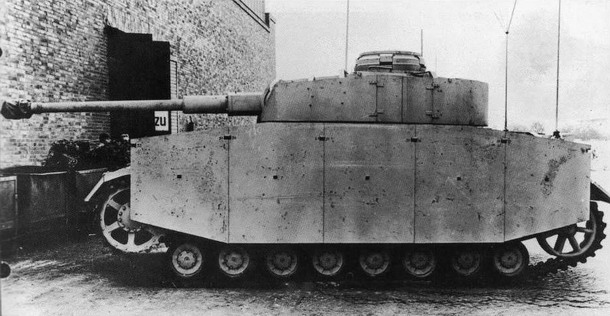
command Panzerbefehlswagen IV Ausf. G, source: Flickr.com with permission of the publishing user, edited
A distinctive feature of the command tank was the T.S.R. 1 observation periscope, which extended through an opening in the turret roof, to the left of and in front of the commander's cupola. Through this tall, slender periscope, the vehicle commander could safely observe the surroundings without needing to open the hatch (this is clearly visible in the photograph HERE (source: Public domain)). The Pz.Bef.Wg. IV retained both its main gun and the hull machine gun, so it could engage in combat as a regular tank when necessary. The crew was five men: the commander, a communications officer (who also served as the gun layer), the driver, and two radio operators (one of whom also served as the loader).
Panzerbeobachtungswagen
Another specialised variant of the Panzer IV was the Panzerbeobachtungswagen IV, which served as an observation vehicle for artillery forward observers. The first evaluation example was built in January 1944. The turret machine gun was removed to make room for additional equipment, which consisted mainly of three radio sets — Fu 8, Fu 4, and Fu.Spr.f — along with a new electric generator GG400, a navigational observation compass, and an artillery firing table stand. The observation tank carried three antennas: one on the turret roof, one on the left side of the engine deck, and one on the right side of the hull rear. The most visible distinguishing feature of the Panzerbeobachtungswagen IV is its commander's cupola, adopted from the StuG III Ausf. G assault gun. This was lower than the standard Panzer IV cupola and had seven vision ports around its circumference. It was used because its construction allowed extension of a binocular artillery periscope SF14 through the closed hatch via a small dedicated aperture. The vehicle commander could thus observe a target without having to expose his head through an open hatch. The other observation device was the T.S.R. 1 periscope, which extended through an opening in the turret roof to the left of the commander's cupola, just as on the Panzerbefehlswagen IV.
The observation vehicle's crew consisted of the commander — who was also the primary observer — an assistant observer who also served as the gun layer when needed, a driver, and two radio operators, one of whom also served as the loader. The vehicle retained both its main gun and the hull machine gun and could therefore engage in combat as a standard tank if necessary. Panzerbeobachtungswagen IVs served battery commanders of self-propelled artillery units equipped with the Wespe and Hummel, relaying target position information and directing the fire of the gun crews. Series production of the observation tanks was formally initiated in April 1944, when ten brand-new tanks were set aside for conversion at the Nibelungenwerke factory. The first complete Panzerbeobachtungswagen IV, however, was not finished until July 1944. Production continued until March 1945. The total number of vehicles built is variously cited as 90, 96, or even 133. Some historians say the observation tanks were produced by converting existing standard tanks; others say they were built from new. Either way, all Panzerbeobachtungswagen IVs were almost certainly based on the Ausf. J variant. In photographs, the observation tank can be identified essentially only by its commander's cupola, as seen for example HERE (source: Flickr.com) or HERE (source: Flickr.com).
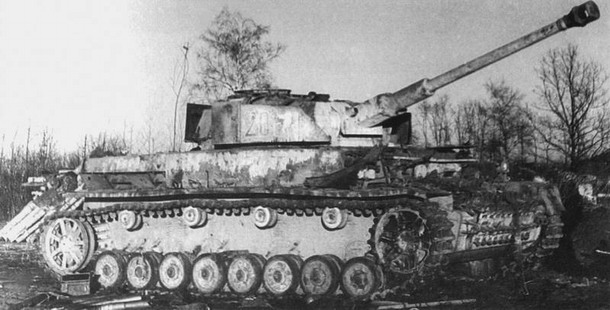
a destroyed Panzerbeobachtungswagen IV observation tank, source: Flickr.com with permission of the publishing user, edited
Submersible Tank
In 1940, the Germans began making entirely serious preparations for a seaborne invasion of Great Britain. For this operation, codenamed Seelöwe, the army needed tanks that could be deployed directly from the sea and be immediately ready for combat. Two solutions were in principle available — a floating tank and a submersible tank. The floating option was suitable for light tanks of the Panzer II type. The medium Panzer III and Panzer IV, however, were already too heavy, and the more suitable solution for these was conversion into submersible tanks. Initial experiments were conducted on Panzer III tanks, and only once the engineers had a clearer picture of what modifications were needed did conversions of Panzer IV tanks begin.
All entry and exit hatches in the hull and turret, signal openings, pistol ports, the covers of service access panels for the engine, gearbox, and brakes — all of these were sealed with either rubber gaskets or tar paper. The driver's vision port was covered with a sheet metal cover fitted with a glass panel. A perforated frame was welded around the hull machine gun ball mount, to which a rubber cover was bolted. A small window of transparent film in this cover allowed the machine gunner to aim. A similar frame was welded around the entire front wall of the turret, and to this a large rubber mask was bolted, covering the gun barrel, machine gun, and other openings. This too had a small transparent film window for gun aiming. The commander's cupola received its own rubber "cap" with transparent windows. Around the turret ring, a rubber inflatable collar was laid, which when inflated sealed the gap. Air for the crew and engine was supplied through a pipe rising from the turret roof. One-way valves were fitted to the exhaust outlets to prevent flooding. The engine cooling system was also adapted to account for the flooding of the space around the coolant tanks.
According to some authors, the rubber mask on the turret was to be blown off by small explosive charges after the tank emerged from the water, so it could enter combat immediately. Photographs, however, do not show any sign of charges for blowing off the mask. On the contrary, the vision windows in the rubber masks on the turret and hull machine gun suggest the tank was capable of moving and fighting even with them in place. The Tauchpanzer presumably simply drove ashore and transitioned smoothly into combat with all its special equipment still fitted. The first shot from the gun or machine gun would simply tear the mask at the relevant point, allowing the gunner to fire at will. The only thing required was to deflate the collar around the turret ring so the turret could traverse freely.
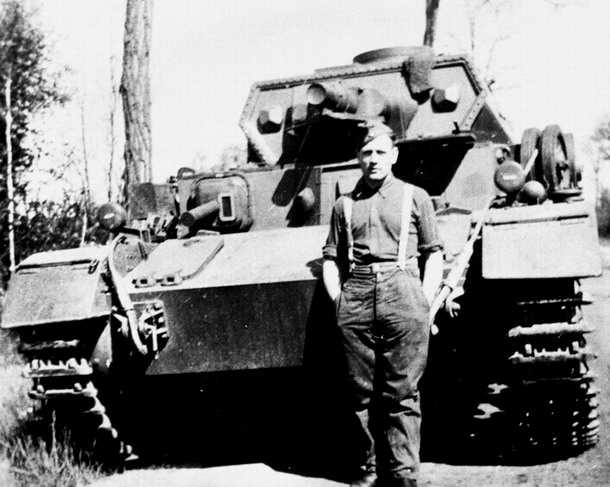
a Tauchpanzer IV submersible tank — note the sealed hull machine gun ball mount, source: Flickr.com with permission of the publishing user, edited
The tanks were to be transported to the coast on cargo ships and released into the sea at an appropriate distance from shore — either by driving down a ramp or by crane. By August 1940, the Wehrmacht had 48 Tauchpanzer IVs at its disposal, converted from Ausf. D and E tanks. Operation Seelöwe was called off in October 1940, but the Tauchpanzers were still deployed in combat — in June 1941 during Operation Barbarossa. These vehicles were used in river crossings of the Bug on the frontier, and somewhat later on the Dnieper river.
Hydrostatic Drive
Let us also mention a few lesser-known modifications of the tank that never entered production and never reached wider public awareness. One of these was a prototype equipped with a hydrostatic drive system, built in 1944 by Zahnradfabrik of Augsburg. The principle of hydrostatic drive is that hydraulic fluid (oil) circulates under high pressure in a closed circuit, transferring torque from the source to the target component. Essentially, at one "end" of the system, oil is pumped by a pump (mechanical motion is converted to fluid energy), and this fluid then drives a hydraulic motor at the "other end" (fluid pressure is converted back to mechanical motion). In essence, this is a means of transferring energy without a conventional mechanical gearbox.
Zahnradfabrik chose a Ausf. G tank as the basis for their experiment. The gearbox was removed. The original Maybach HL 120 TRM engine was retained and drove two high-pressure oil pumps. The oil from the pumps then drove two hydraulic motors (essentially a pump operating in reverse). These hydraulic motors were connected directly to the drive sprockets, which — unlike on a conventional tank — were located at the rear (where the standard Panzer IV had its idler wheels).
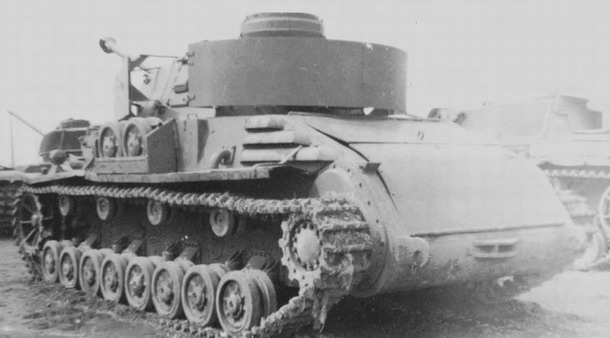
the Panzer IV prototype with hydrostatic drive, source: Flickr.com with permission of the publishing user, edited
The new drive was also reflected in a complete redesign of the driver's controls. Gone were the gearbox, the gear lever, and the large steering brake drums. Even the conventional steering levers (known colloquially as "tomatoes") disappeared, replaced by something resembling motorcycle handlebars. Several new gauges indicating system pressure were added to the instrument panel. The entire rear of the hull was also redesigned and now had a sloped configuration. The drive sprockets were new, and so were the front wheels, which apparently took over the function of track tensioning. Drawings of the tank from October 1944 reportedly even showed sloped frontal armour, similar to the Panther — which would indeed have been feasible for this vehicle, since neither a gearbox nor large steering brake mechanisms were present at the front.
The main advantage of the hydrostatic drive was supposed to be smooth acceleration and deceleration, since there was no mechanical gearbox. Theoretically it was also expected to reduce fuel consumption. Although no test records from the prototype trials have survived, it can be assumed that the designers' expectations were not met, or that production of a tank with this drive system would have been too costly. Either way, the modified Panzer IV never entered series production, and only a single prototype was ever built. After the war this prototype fell into American hands and was taken overseas. In 1946 the Americans subjected it to thorough testing, which they did not complete due to breakdowns and the unavailability of spare parts.
Bridge-Laying Tank
As early as February 1939, the army command approached the ordnance office with a request for the construction of a bridge-laying tank, or Brückenleger. The vehicle was to be based on the Panzer IV chassis and carry a 9-metre bridging section. Development and production were entrusted to Krupp Grusonwerk, with an order for 20 vehicles. Six Ausf. C chassis and 16 Ausf. D chassis were set aside for this purpose. For the construction of the first evaluation prototype, however, Krupp used the chassis of the old B.W. II prototype from 1936, with its six torsion-bar suspended road wheels. In November 1939, Krupp reported the completion of four "series" bridge-layers and requested that construction of the remaining 16 be undertaken by Magirus — which apparently was agreed, and by April 1940 the army had accepted all 20 ordered vehicles. These were designated Brückenleger IV b (why "b" specifically is unclear; I can only assume the evaluation prototype on the B.W. II chassis was "a"). As part of the conversion, the combat turret and gun were of course removed. The hull machine gun, however, was retained. The Brückenleger was crewed by only two men.
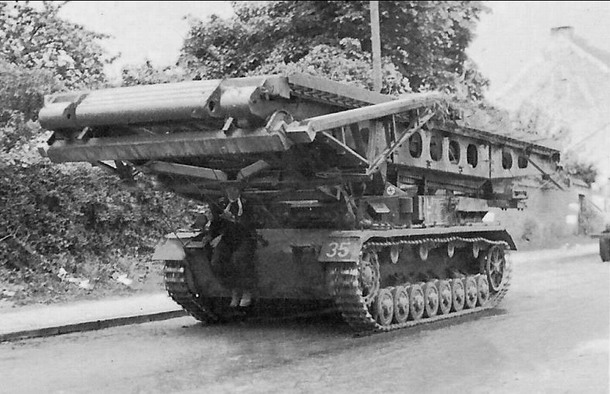
the bridge-laying Brückenlegerpanzer IV, source: Flickr.com with permission of the publishing user, edited
All 20 bridge-laying tanks were distributed in groups of four to the engineer companies of five tank divisions (1st, 2nd, 3rd, 5th, and 10th Panzer Divisions). With these units, the bridge-layers participated in the campaign in France in May 1940. There, however, they did not distinguish themselves, and in June 1940 the army decided to withdraw these vehicles and have them converted back into combat tanks. Krupp was given one more chance to rework four Brückenlegers with a better-designed bridge span. These four vehicles were delivered in January 1941 and designated Brückenleger IV c. All of them were subsequently assigned to the 3rd company of the engineer battalion of the 3rd Panzer Division and sent to the Eastern Front. At least one successful deployment of the bridge-laying tanks on the Eastern Front is documented — on 25 June 1941, when infantry used the laid bridge to cross an unspecified body of water. This was not enough to convince the army to order further Brückenlegers, and the vehicles produced were most likely gradually withdrawn as they wore out (note: significantly different versions of the history of these vehicles exist in the literature; we follow the version described in Panzer Tracts No. 14).
Infantry Assault Bridge
Essentially in parallel with the development of the bridge-laying tank, work was underway on a similar vehicle intended primarily for infantry use. This too was to be based on the Panzer IV and fitted with an extendable walkway by which infantry could cross artificial and natural obstacles. The vehicle, designated Infanterie Sturmsteg (something like "infantry assault footbridge"), was developed by the firm Magirus, based on the Ausf. C tank. Development dragged on and the four ordered vehicles were ultimately delivered somewhere between December 1940 and June 1941 (other sources state only two were ordered, with a planned delivery date of February 1940). All were subsequently assigned to the 3rd company of the engineer battalion of the 3rd Panzer Division and sent to the Eastern Front.
When fully extended, the walkway could reach around 50 metres, and the tank therefore had to brace itself against a folding support beam when fully extended. The walkway was fairly narrow, so soldiers could only cross it in single file. If space allowed two Infanterie Sturmsteg vehicles to be positioned side by side, it was possible to lay planks between their extended walkways and create a considerably wider crossing — though this was already a fairly complex operation. At least one successful deployment of the Infanterie Sturmsteg on the Eastern Front is documented — on 16 July 1941, when infantry used the extendable bridge to cross a 28-metre-wide body of water. No further reports of deployment are known, and the four vehicles produced were most likely gradually phased out as they wore out.
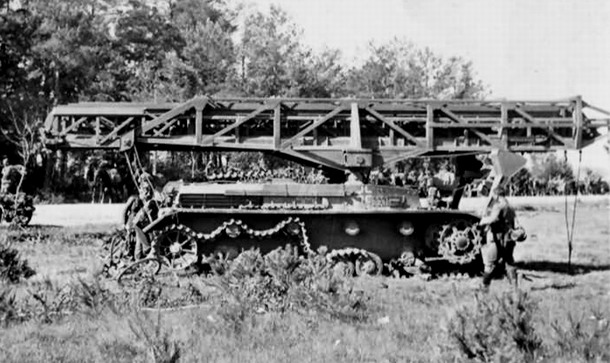
a wrecked Infanterie Sturmsteg auf Fahrgestell PzKpfw IV infantry assault bridge vehicle, source: worldwarphotos.info with permission of the operator, edited
Ammunition Carrier
From as early as 1937, the firm Rheinmetall had been working on the development of the heavy Karl self-propelled mortar of 600 mm calibre. The engineers quickly realised they would need an ammunition carrier capable of transporting the enormous weight of the projectiles, and their attention turned to the heaviest available tank — the Panzer IV. Between 1939 and 1941, Rheinmetall produced a total of 13 ammunition carriers built on Ausf. D, E, and F chassis. Although it may not have been the official designation, the vehicle is most commonly referred to as the Munitionsschlepper für Karl Gerät 040. The original tank's combat turret was removed and a cargo area enclosed by steel plating was created in the rear of the superstructure. This area could carry four 600 mm rounds, each weighing around two tonnes. The side panels of the cargo area could be partially opened outward. The cargo area was at least partly covered by a fixed roof, with the remainder capable of being covered by a waterproof tarpaulin.
An electric crane was installed in front of the cargo area for handling the rounds. The crane had a lifting capacity of 2.5 tonnes and a maximum reach of 3.4 metres — sufficient to pass a round directly onto the loading ramp of the Karl gun. Electricity for the crane was supplied by a generator connected to the auxiliary DKW engine (the same type that in standard tanks powered the turret traverse). The crew consisted of four men: the driver, the crane operator, and two assistants. Inside the vehicle, however, there was only one seated position — the driver's. The rest of the crew sat on a wooden bench hung on the rear wall of the cargo area. Some of the ammunition carriers were later modified to carry the new 54 cm rounds for the next-generation Gerät 041 guns.
Other Modifications
The first thoughts about re-arming the Panzer IV with a more powerful gun arose as early as May 1941, in response to the unpleasant experience gained fighting French heavy tanks. At that time, the Germans were pinning their hopes on the new KwK 39 L/60 gun of 50 mm calibre, which was being tested for the lighter Panzer III (essentially an adapted version of the PaK 38 anti-tank gun). Krupp was tasked with building a test prototype of a Panzer IV armed with this gun by November 1941, using an Ausf. D tank as the starting point. In November 1941, just as the prototype with the 50 mm gun was completed, the entire concept was reconsidered and further development cancelled. In the meantime, Germany had invaded the USSR and quickly understood that not even the KwK 39 L/60 would save their tanks. It also became apparent to army officials that it made no sense to arm both main types (the Panzer III and the Panzer IV) with the same weapon, and that the Panzer IV was capable of carrying something better. The single prototype of the Panzer IV Ausf. D with the 50 mm gun was nonetheless subjected to trials in the winter of 1941/42, and was subsequently apparently re-armed with the original 75 mm weapon (photograph HERE, source: Flickr.com).
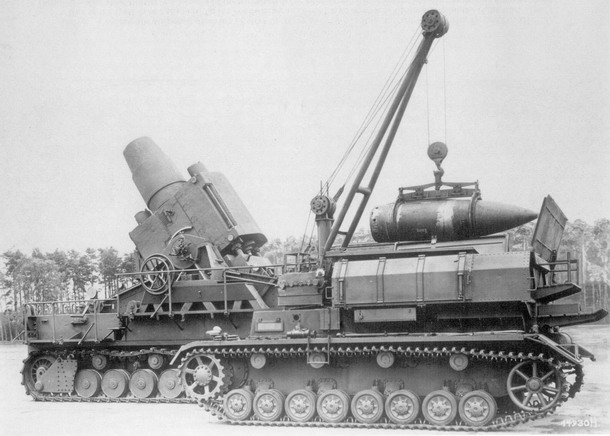
PzKpfw IV as an ammunition carrier for the 600 mm Karl mortar, source: Flickr.com with permission of the publishing user, edited
In November 1944, Krupp analysed the possibility of re-arming the Panzer IV with the KwK 42 L/70 gun from the Panther tank. It turned out, however, that this weapon simply could not be installed in the existing Panzer IV turret. A proposal was therefore made to mount a new turret on the tank hull — the so-called Schmallturm, developed specifically for the Panther. Sadly, that route was also a dead end: the Schmallturm was too heavy for the Panzer IV hull and chassis.
Documented in a number of rare (and not particularly high quality) photographs is a field installation of the 50 mm PaK 38 anti-tank gun on a Panzer IV chassis. In one of the photographs, a specific structure is visible on the hull front of this vehicle. Most historians conclude that this conversion was based on a worn-out Brückenleger IV c bridge-layer or on an Infanterie Sturmsteg assault bridge vehicle, and that the structure at the front is the remains of the bridge beam or extendable ladder after removal. Mechanics in an unknown field workshop stripped the original Brückenleger IV c or Infanterie Sturmsteg down and mounted a towed PaK 38 anti-tank gun, complete with its original gun shield and part of the trail structure, onto the bare turreted hull. The gun shield was the only thing that offered the crew any form of protection. The surviving photographs were clearly taken in winter on the Eastern Front (a knocked-out and snow-covered T-34 is visible in the background). Judging by the poor clothing of the soldiers on board, it was most likely the winter of 1941/42. This improvised "tank destroyer" was a desperate attempt to obtain at least some kind of self-propelled combat vehicle capable of defeating the frontal armour of the T-34 (and the PaK 38 was, at the turn of 1941 and 1942, among the few German weapons that could manage this). The vehicle was most likely built in a single example and no details of its deployment are known (photograph HERE, source: Flickr.com).
Another curiosity documented in photographs is a Panzer IV fitted with a rocket launching cage. Virtually no information is available about this vehicle. It was clearly only a prototype, most likely built on an Ausf. C chassis. The original combat turret was removed and replaced by a rotating platform. At the front of this platform was a small box-like turret with entry hatches in the side walls and a vision port and machine gun in the front wall. At the rear of the platform was a launching frame for four rockets, probably of 280 mm calibre with high-explosive warheads. When the prototype was built, tested, and with what results I have been unable to determine; what is clear is that the modification never entered production.
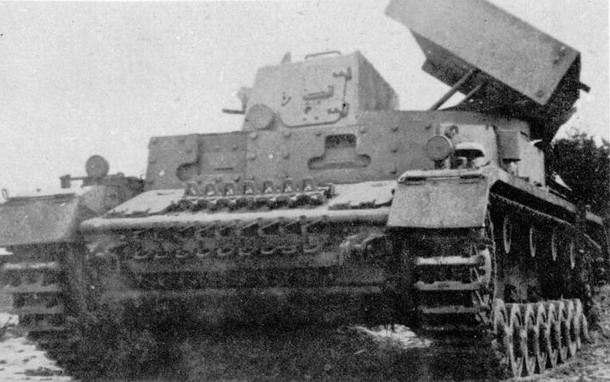
PzKpfw IV, apparently on an Ausf. C chassis, converted into a self-propelled rocket launcher, source: Flickr.com with permission of the publishing user, edited
As the Third Reich's military situation worsened, the Germans felt an increasingly acute fuel shortage and were forced to seek further and further economies. This extended even to the training tanks on which future crews were trained. Several such vehicles were converted to run on compressed gas. The tanks were not fitted with a wood gas generator (as was often the case with other similarly converted vehicles) but simply carried cylinders of ready-made gas. Photographs show various configurations, mostly with gas cylinders lying side by side or stacked on the tank's rear. The photographs make clear that these modifications were generally very simple, with little emphasis on tidy workmanship. In 1944, however, an attempt was apparently made to standardise the design of the gas-powered training tank. A prototype was built on a Panzer IV Ausf. H chassis, carrying four vertical gas cylinders standing side by side valve-down in a special bracket on the rear edge of the engine deck. The vehicle had no combat turret and was apparently intended only for driver training. The design does not appear to have been adopted, however, and only a single prototype was ever built.
From October 1944, battle-damaged tanks began to be converted into recovery and maintenance vehicles known as Bergepanzer IV. For this purpose the combat turret was removed and the opening in the hull was covered by wooden cladding incorporating a hatch. Brackets for a 2-tonne hand-operated tube-section crane were welded to the hull roof. With this crane it was possible, for example, to lift a damaged engine out of another vehicle. The disassembled crane sections were stored in brackets on the left side of the hull, alongside the towing bars. On the right side of the hull, a heavy wooden beam was stowed, used for pushing other vehicles out of trouble. The hull interior was presumably used for tools, spare parts, and other equipment. Official Bergepanzer IVs numbered apparently only 21 (though 36 is also cited). Further examples were certainly produced unofficially in field workshops, for instance from tanks with irreparably damaged turrets. The Bergepanzer IV had a crew of only two men: the driver and the commander.
Very similar in appearance to the Bergepanzer IV was the ammunition carrier Munitionspanzer IV. Here too the turret was absent, with the opening closed by a sheet metal cover. The interior was adapted for carrying 150 mm ammunition for the Brummbär assault vehicle. Ammunition carriers were certainly also produced unofficially in field workshops. With these unofficial conversions, the distinction between recovery and ammunition vehicles tended to blur — a unit simply modified a damaged tank and used it as a general-purpose workhorse.
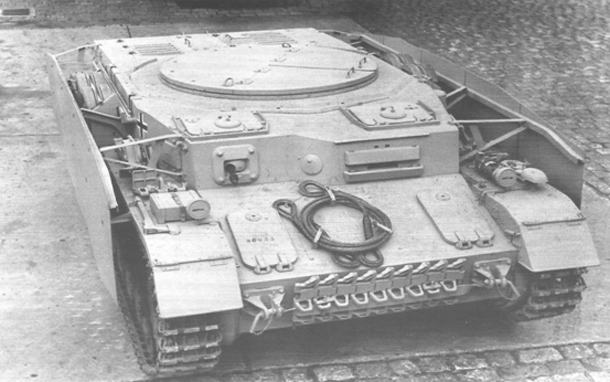
Munitionspanzer IV (or possibly Bergepanzer IV?), source: Flickr.com with permission of the publishing user, edited
A single-example modification of the Panzer IV was built for mine-clearing. Beams were attached to the front of a standard Ausf. C tank, with two heavy steel rollers at their ends. These rollers detonated anti-tank mines at a safe distance in front of the tracks, clearing a path. A further roller was attached to the rear of the tank to cover the space between the tracks. The tank could thus clear a lane approximately equal to its own width. Series production of this vehicle was never initiated, for reasons that remain unclear (a photograph of the tank with its mine-clearing equipment can be viewed HERE, source: Flickr.com).
One further interesting use of the Panzer IV chassis is documented in photographs. In a desperate attempt to obtain any usable weapon, a Flak 36 anti-aircraft gun of 88 mm calibre was apparently installed on a tank chassis in some field workshop or repair depot. The weight of the gun and the powerful recoil forces meant an enormous stress on the medium tank chassis. Everything other than the gun therefore had to go. Not only the combat turret disappeared, but also the superstructure beneath it. The chassis pan was covered by a steel plate, on which a rotating pedestal with the bare gun was mounted. There was nothing here that might give the gun crew even the false impression of protection from enemy fire. At a collection point for German combat vehicles assembled near Plzeň after the war, two examples of this unusual vehicle were photographed. Each was based on a different chassis variant, and one of them had some form of improvised armour above the driver's compartment compared to the other. The photographs show that the gun retained its full horizontal and vertical traverse. These vehicles were most likely never used in combat and were presumably scrapped. A photograph of the described vehicle can be viewed HERE (Public domain).
The final Panzer IV modification worth mentioning was a tank fitted with an interleaved road wheel arrangement (so-called Schachtellaufwerk). The prototype of this vehicle was built in 1940, when similar experiments were also being conducted with the Panzer III chassis. According to some authors, two prototypes were built. However, this is where the vehicle's history ends — no further examples were produced. The built prototype (or prototypes) apparently served out their days with training units. One of them is even captured in a photograph taken in the yard of a training unit at Wünsdorf.
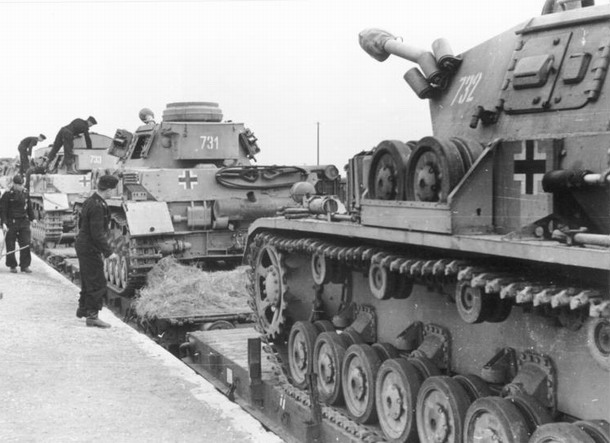
PzKpfw IV Ausf. G tanks being transported by rail to the front, source: Bundesarchiv_Bild_101I-175-1264-06, Wikimedia, Creative Commons, edited
Organisation
As stated in the introduction, the Panzer IV was created primarily to support the lighter Panzer III on the battlefield. Both vehicles were therefore to be deployed side by side, and this was reflected in the structure of the armoured divisions. According to the organisational model of September 1939, the core of an armoured division (Panzer Division) was one armoured brigade (Panzer Brigade), which consisted of two armoured regiments (Panzer Regiment), each with two armoured battalions (Panzer Abteilung). Each tank battalion comprised four tank companies (Panzer Kompanie), of which three were designated as light (leichte Panzer Kompanie) and one as medium (mittlere Panzer Kompanie).
Within this organisation, Panzer IV tanks belonged to the medium company, so let us focus on its composition. The medium company consisted of four platoons (Panzer Zug), though — to make things less straightforward — not all platoons were identical. The first platoon was a so-called light platoon (leichte Zug), consisting of five Panzer II tanks. The remaining three platoons were equipped with Panzer IV tanks, four per platoon. A further two Panzer IVs served at the medium company's headquarters, and one more was held in the battalion's reserve detachment.
This means that an entire tank battalion at full establishment had only 15 Panzer IV tanks (4 each in the three platoons of the medium company + 2 at the medium company's headquarters + 1 in the reserve detachment). Given that the regiment had two battalions, one regiment had 2 × 15 = 30 Panzer IVs. An armoured division with two regiments should theoretically have had 2 × 30 = 60 Panzer IVs. On the outbreak of the Second World War, Germany had five nominally full-strength armoured divisions (plus other smaller units), and it can be said straightaway that Panzer IV numbers in those divisions were nowhere near their paper strength. These divisions therefore still had to rely in Poland on light tanks of the Panzer I and Panzer II types.
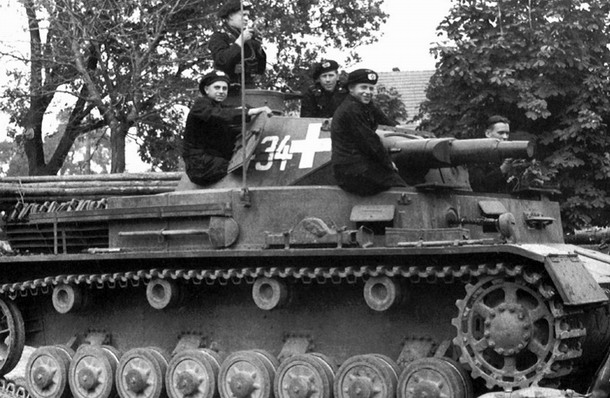
PzKpfw IV Ausf. A during the Polish campaign, source: Flickr.com with permission of the publishing user, edited
During the war, the organisational structure of the armoured divisions was revised several times. The first major change came in 1940 after the conclusion of the French campaign. Experience from Poland and France showed that an armoured division with two regiments was simply too large to command effectively. Divisions were therefore to have only one regiment in future, while the regiment's internal organisation remained the same. The representation of Panzer III and Panzer IV increased, while light types Panzer I and Panzer II decreased (so that actual numbers began to approach paper strength). The 1940 organisational change effectively halved the number of tanks in a division — though on the other hand, more divisions could be formed.
With the arrival of the Panzer IV Ausf. G in 1942, it became clear that the future of the Panzerwaffe lay with the Panzer IV rather than with the lighter Panzer III as originally planned. Production of the Panzer IV therefore began to grow, and when the new medium tank Panther entered production in 1943, it was time to revise the armoured division's organisational structure once more. The division retained a single regiment of two battalions. Each battalion had four companies of four platoons each. Each platoon was to have 5 tanks, giving a company 20 tanks in combat platoons plus 2 at company headquarters, for a total of 22 per company. A battalion thus had 88 tanks in four companies, plus 5 tanks in a separate reconnaissance platoon, and the battalion headquarters had a further 3 command tanks — a grand total of 96 tanks per battalion. The mid-1943 organisational model envisaged one battalion in each division being equipped with Panzer IV tanks and the other with Panthers. It hardly needs emphasising that these were again paper strengths, and in practice divisions could only dream of such equipment levels.
In 1944, the organisational model was revised again. The number of tank platoons per company was reduced from four to three, bringing the number of tanks per company down from 22 to 17 (three platoons of five, plus two at company headquarters). A tank battalion now had 76 tanks. It remained the rule that one battalion per division was to be equipped with Panzer IVs and the other with Panthers. Panthers, however, were never produced in sufficient numbers to meet demand, and the Panzer IV thus remained the backbone of the German Panzerwaffe to the very end of the war. Alongside tank divisions, Panzer IVs were of course also assigned to many other formations, whether Panzergrenadier units or various improvised battle groups.
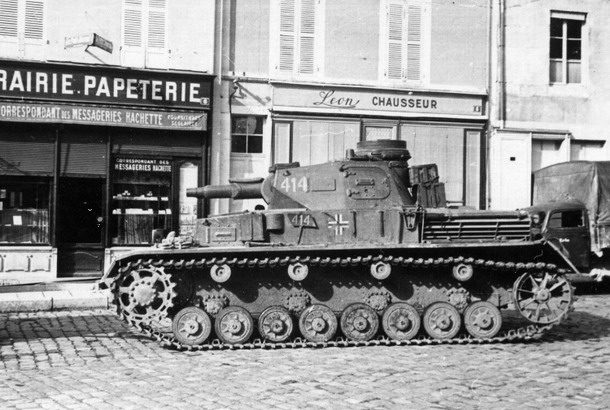
PzKpfw IV in a captured French town, May 1940, source: Waralbum.ru with permission of the operator, edited
Combat Deployment
When on 1 September 1939 the Germans invaded Poland and thereby triggered the Second World War, they had a total of 211 Panzer IV tanks of variants Ausf. A, B, and C (the figures 197 or 198 are also cited). All or virtually all of them were most likely committed to the attack on Poland. The total number of German tanks deployed in Poland was around 2,690, so the Panzer IV accounted for less than 8 percent (the vast majority were light types Panzer I and Panzer II). The Panzer IV was deployed in Poland in the role for which it was created. The 75 mm gun proved sufficiently effective at destroying artillery and other obstacles to armoured formations and infantry; the destruction of Polish armoured vehicles was left wherever possible to the lighter Panzer III. When the Germans tallied their losses on 10 October, they counted 76 combat-damaged PzKpfw IVs, of which 19 were completely destroyed and the rest repairable. A total of around 9 percent of the committed Panzer IVs were permanently lost.
For the attack on France in May 1940, the Germans brought somewhere between 278 and 296 Panzer IVs, representing around 11 or 12 percent of the total German tank strength in that operation. Unlike in Poland, German tanks were not numerically superior in France — quite the contrary. Moreover, among the French tanks were the Renault R35, Hotchkiss H35, Somua S35, and Char B1, all of which were solidly armoured and armed for their time.
The Panzer III with its 37 mm gun was unable to deal with these French armoured vehicles in frontal engagements, so the heavier Panzer IV was forced to get involved. Strictly speaking, even its 75 mm rounds often failed to penetrate French frontal armour — but thanks to their substantial energy they could jam or entirely disable a turret, damage a gun, engine, or track, or destroy the running gear. Front line reports repeatedly describe cases where Panzer IVs subjected a French tank to such a volume of fire that they eventually hit something sensitive, and even if they did not destroy the opponent, they put it out of action. The French crew would then simply open the hatches, raise a white flag, and abandon their vehicle — sometimes without a single casualty. During the fighting in France, a total of 97 Panzer IVs were lost — virtually a third of all those deployed. This alone shows that the French campaign was no walkover for the Germans, despite its speed.
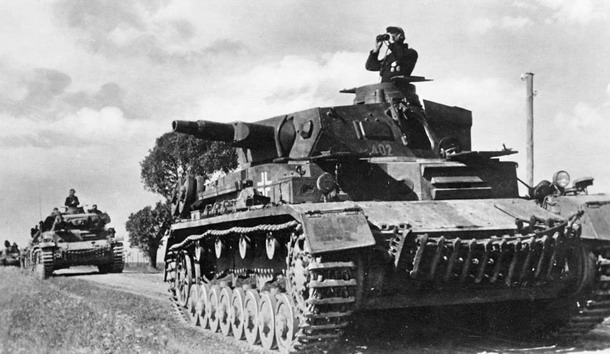
PzKpfw IV tanks at the front, source: Flickr.com with permission of the publishing user, edited
In 1941, the Wehrmacht entered the war in North Africa. In March of that year, the first 168 German tanks arrived on the continent as part of the newly formed 5th Light Division. Only 20 of them, however, were Panzer IVs. A further 146 tanks were brought in April and May 1941 by the 15th Panzer Division, again including a score of Panzer IVs. In Africa, German tanks faced primarily British armoured vehicles of the types Mk IV Cruiser, Mk VI Crusader, and Mk II Matilda. The situation for the Panzer IV was now essentially the same as it had been in France the year before. It still had its short-barrelled gun, with which it was often no match for its opponents' armour (especially the heavily protected Matilda). The situation changed only in May 1942, when Rommel's Afrikakorps received its first nine Panzer IV Ausf. G tanks (or Ausf. F2, as you prefer).
The German soldiers themselves nicknamed these tanks "PzKpfw IV Spezial." The new vehicles with their long guns went into action for the very first time during Operation Venezia in May 1942 in Libya. The British had also received reinforcements in the form of American M3 Grant tanks, but the Panzer IV Ausf. G was at that time unquestionably the most powerfully armed tank on the African battlefield. Its successes were therefore not long in coming. The Afrikakorps report from August 1942 was lavish in its praise of this tank — and above all of its new main weapon. The KwK 40 L/43 could penetrate the armour of all opponents it encountered on African soil without difficulty, at ranges of up to around 1,500 metres! Despite engineers' initial concerns, no problems were encountered in practice with terrain trafficability due to the long gun barrel extending well beyond the tank's outline. The report did also note a few negative findings — among them, the large quantity of propellant gases that entered the turret interior after each shot, making the crew's work more difficult.
The British too quickly took notice of the new long-gunned Panzer IV and referred to it as the "Mark IV Special" in their reports. They also described a change in German tactics. Whereas previously, Panzer IVs with short guns had been deployed more as artillery support for the Panzer III, the newer long-gunned versions were now being used in the lead, with the Panzer III covering the flanks.
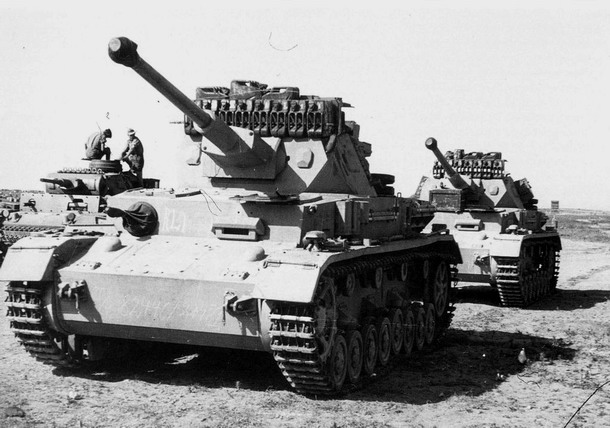
PzKpfw IV Ausf. G in Africa — on this battlefield, their gun had no equal, source: Flickr.com with permission of the publishing user, edited
Another theatre to which Panzer IV tanks were deployed was Yugoslavia and Greece. The attack on both countries was launched simultaneously on 6 April 1941. The conquest of Yugoslavia was entrusted to the German 2nd Army, which included among others the 8th and 14th Panzer Divisions. These two divisions had more than 320 tanks at their disposal, of which 50 were Panzer IVs. The main striking force for the attack on Greece was the 12th Army, under which fell the 2nd, 5th, 9th, and 11th Panzer Divisions with more than 490 tanks, including 72 Panzer IVs. In Yugoslavia and Greece the Germans lost a total of 56 tanks, of which 8 were Panzer IVs. Most fell victim to mines or anti-tank artillery. Despite the relatively low combat losses, the Balkan campaign placed an enormous strain on all the equipment committed. Movement through demanding mountain terrain left most tanks in need of engine, gearbox, and steering mechanism overhauls after the fighting ended, which further delayed the preparations for Operation Barbarossa.
The next destination for the majority of Panzer IV tanks — and indeed all other German tanks — was the Soviet Union, attacked on 22 June 1941. Into Operation Barbarossa the Germans brought between 3,350 and 3,500 tanks. Of this number, the Panzer IV accounted for somewhere between 417 and 439, roughly 12 percent of the total. Against this invasion force, however, stood the Soviet army, which at the time had between 22,000 and 23,000 tanks at its disposal. It must be noted that only 18,000 to 19,000 of these were in fighting condition — the rest were in various stages of repair. Of this number, "only" 10,000 to 11,000 were stationed in the western military districts where they could actually be committed against the Germans. And of this number again, up to three-quarters were light tanks of the T-26 and BT types.
The Red Army moreover lacked a developed doctrine for the use of tanks and their coordination with other arms; most Soviet tanks were not equipped with radio sets; and their crews were nowhere near as well trained or battle-hardened as the German ones. The overall state of the Red Army in June 1941 also had a profound influence on the course of fighting in the early months of Barbarossa. Its officer corps had endured brutal political purges; the entire army was in the midst of reorganisation, with widespread confusion and uncertainty; all-powerful political commissars interfered in purely military matters; and a rigid command system prevailed in which every subordinate commander was afraid to issue any order without explicit authority from above. The Germans, by contrast, gave lower-level commanders a great degree of autonomy in field decision-making at operational and tactical levels — results were what mattered.
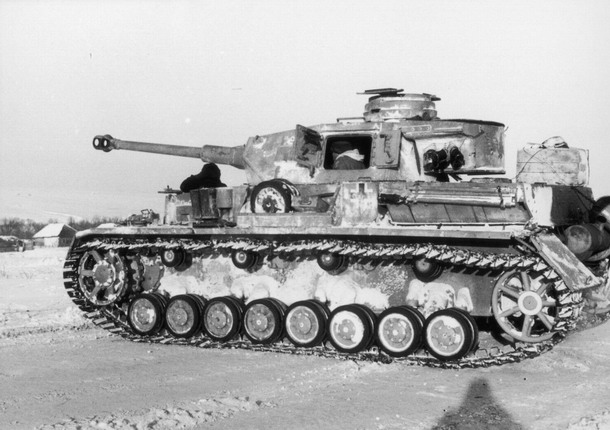
the Russian winter and a PzKpfw IV Ausf. G fitted with wide winter tracks, source: Waralbum.ru with permission of the operator, edited
Panzer IV tanks had no trouble dealing with the light Soviet T-26 and BT types. The medium T-34 and heavy KV-1, however, presented real problems. Against these the Panzer IV stood a chance only under similar circumstances as it had faced the French heavy tanks — when it managed to strike a vulnerable spot such as the tracks, the turret ring, the gun barrel, and so on. Fortunately for the Germans, the Russians deployed their most valuable tanks only in small numbers and without proper coordination with infantry or artillery, so they were generally dealt with one way or another. But this too was beginning to change.
From the start of Operation Barbarossa to the end of 1941, the Germans lost 378 Panzer IVs in Russia. During the same period, the factories produced only 330 new Panzer IVs, meaning the Germans were clearly unable even to replace their losses, and soldiers desperately called for the production of new and more powerful weapons. They had to wait until spring 1942, when the first Panzer IV Ausf. G tanks began to arrive in the east. To distinguish all older vehicles with short barrels (regardless of specific variant) from the new ones with long guns, the terms Kurz (short) and Lang (long) came into use. The number of new tanks grew only slowly, however, and units had to make do for a long time with a mixed establishment combining older and newer Panzer IV variants.
As an example, consider the state of tanks in German Army Group South. When it set out in June 1942 on its advance toward the Caucasus and Stalingrad as part of Operation Fall Blau, it had a total of 1,286 tanks available. Of these, 206 were Panzer IVs, and of those 124 had short guns and only 82 had long guns. But even so, when properly employed, the new Panzer IVs with the KwK 40 L/43 were a literal godsend to the Germans — they could deal with both the T-34 and the KV-1. German tankmen's battered confidence began to return. The 1942 balance sheet was somewhat better for the Panzer IV than the previous year. During 1942, 480 Panzer IVs were lost, but the factories delivered approximately a thousand new ones (figures of 994 to 1,004 are cited).
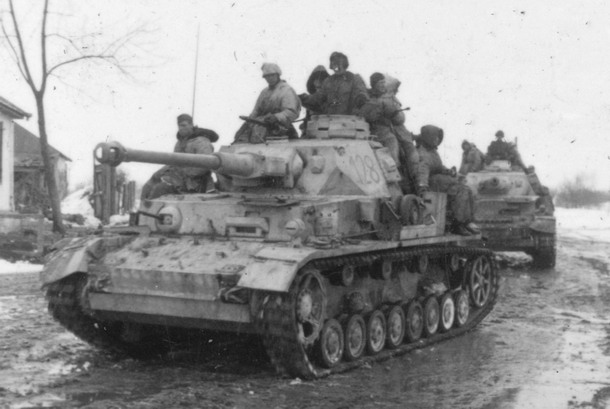
PzKpfw IV Ausf. G during the battle for Kharkov in the winter of 1943, source: Flickr.com with permission of the publishing user, edited
The defining event of 1943 on the Eastern Front was undoubtedly the Battle of the Kursk Salient, which began with a German attack on 5 July. As for the total number of German armoured vehicles committed to this operation, widely varying figures are quoted, but it was probably around 2,800 vehicles. Of these, Panzer IV tanks accounted for 740 (roughly a quarter), and a full 682 of them carried the long gun (other sources say 913 Panzer IVs were committed, of which 54 had short barrels and 859 long ones). I was unable to establish the definitive number of Panzer IVs lost during Operation Zitadelle. For the entire month of July 1943, however, the German army lost a total of 290 of these tanks. It can be estimated that roughly 240 to 250 Panzer IVs fell during the Kursk fighting. Nor were the following months of 1943 much better (average monthly losses in Panzer IVs between August and December 1943 reached 248 tanks!). By the end of 1943, Soviet units had begun to receive a new variant of the T-34 with an 85 mm gun, capable of penetrating the 80 mm frontal armour of the latest Panzer IVs without difficulty. When early in 1944 the first heavy IS-2 tanks with 122 mm guns began to appear on the Soviet side, the combat superiority of the German "Fours" on the Eastern Front was definitively a thing of the past.
When in June 1944 the Allies landed in Normandy, the Germans had somewhere between 748 and 863 Panzer IVs available in the west (sources differ). Over the most numerous American tank, the Sherman with its 75 mm M3 gun, the German vehicle had a clear advantage. Less straightforward was the situation against Shermans armed with the 76.2 mm M1 gun or the British Sherman Firefly with its effective 17-pounder. On the Western Front, German units also had to face an overall numerical inferiority — especially in the air. It is no surprise therefore that losses of Panzer IVs in the west were enormous, and when in December 1944 the Germans prepared for their offensive in the Ardennes, they could muster only between 349 and 391 of these tanks (sources differ). The last recorded Panzer IV strength figures on both fronts date from February 1945 and speak of a total of 1,571 vehicles. Around a thousand of them may have survived to see the very end of the war.
Other Operators
Besides the Germans themselves, Panzer IV tanks were used by a number of other armies. Primarily these were allies of the Third Reich, who received these vehicles with German approval — usually in exchange for raw materials, military cooperation, or through straightforward purchase. These countries included Romania, Hungary, Spain, Turkey, Italy, and Finland. Captured vehicles were occasionally also used by Red Army soldiers, who of course turned them against their original owners.
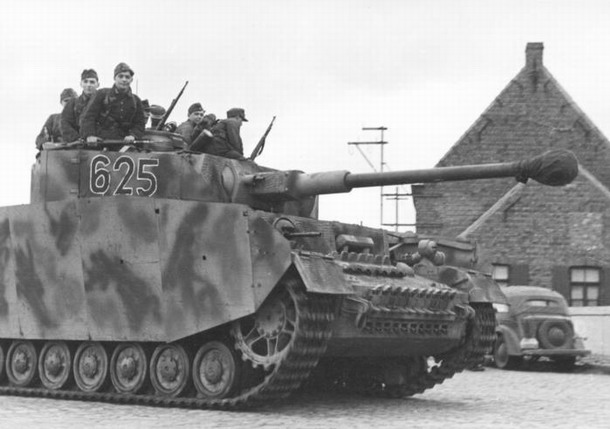
PzKpfw IV Ausf. H or J loaded with infantry, France 1944, source: Bundesarchiv_Bild_101I-297-1722-29, Wikimedia, Creative Commons, edited
The armies of several countries continued to operate the Panzer IV long after 1945, including the Czechoslovak army. The military commission tasked with collecting and cataloguing surviving wartime equipment on Czechoslovak territory managed to secure a full 102 Panzer IV tanks of various variants. The army subsequently decided to place the Ausf. G, H, and J variants (those with long guns) into service. The vehicles were put through necessary repairs (primarily at the Prague ČKD plant) and under the new official designation T-40/75 were assigned to the IV Battalion of the 23rd Tank Brigade at Milovice. When the army withdrew these vehicles from service at the end of 1950, it had 82 of them. A small number were placed in reserve storage, and 3 examples were apparently even handed over to the Svazarm paramilitary organisation (for reasons I cannot determine). The vast majority, however, were sold to Syria in 1955 — 64 vehicles in total: 45 as fully functional tanks and a further 19 in disassembled form for spare parts. The tanks placed in army reserve storage were gradually scrapped during the 1960s. Only 3 vehicles survive on the territory of the former Czechoslovakia to this day — one in the Military Technical Museum at Lešany and two in Slovakia.
Syria appears to be the only post-war operator that actually used these tanks in combat. It deployed its Panzer IVs (with apparently minimal modifications) against Israel during the Six-Day War of 1967 — which was also the last documented combat use of this tank type altogether.
Overall Assessment
Production of the Panzer IV ran from November 1937 until the very end of the war. As repeatedly noted above, assembly of the tanks was carried out by the firms Krupp Grusonwerk, Vomag, and Nibelungenwerke. Beyond these main factories, many other subcontractors were involved in production (more than a hundred), supplying armour plates, engines, gearboxes, guns, optics, electrical systems, and a host of other components.
From as early as August 1943, when he received the analysis of the fighting at Kursk, Hitler began to harbour doubts about the combat value of the Panzer IV. The Führer saw much greater potential in converting the tank into an assault gun with more powerful armament. When in June 1944 Hitler received a report from the ordnance office comparing the capabilities of the Panzer IV with the latest Soviet types, his mind was made up. In July 1944 he decided that production of the Panzer IV was to be phased out entirely and replaced by mass production of the new Jagdpanzer IV tank destroyer. Fortunately for the German army, this idea was ultimately not carried out, thanks to strong opposition both from senior army commanders (especially Heinz Guderian) and from the production plants themselves. Panzer IV production therefore continued, but certain changes were unavoidable. Both Krupp (in order to concentrate on producing the StuG IV assault gun) and Vomag (in order to concentrate on the Jagdpanzer IV tank destroyer championed by Hitler) were gradually forced to withdraw from tank production.
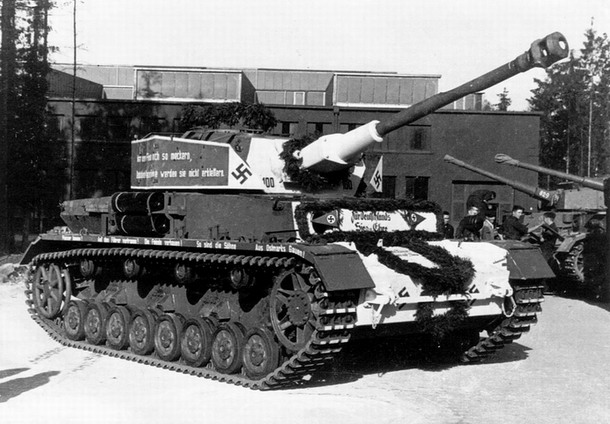
the decorated 100th PzKpfw IV Ausf. J produced by the Nibelungenwerke factory, source: Waralbum.ru with permission of the operator, edited
Total production of the Panzer IV is generally quoted as between 8,515 and 8,566 units — by far the highest of any German tank (the second most numerous, the Panzer III, fell short by approximately three thousand units). The peak production year was 1944, when the army took delivery of 3,125 new tanks. The single highest monthly output was achieved in December 1943, with 354 units. Also worth noting is the fact that more chassis were produced than tanks (over nine thousand), as they were also used for building the Jagdpanzer IV tank destroyer, the StuG IV and Brummbär assault guns, and the anti-aircraft tanks Möbelwagen, Ostwind, and Wirbelwind (and, in more or less modified form, served as the basis for a number of further vehicles).
A quick glance at the seven and a half years of the Panzer IV's production history — and a comparison of the parameters of its first and last production variants — makes clear what a fundamental evolution this vehicle underwent. The Ausf. J was roughly 40% heavier than the Ausf. A, its frontal armour was more than five times as thick, and its gun was approximately two and a half times more powerful (in terms of armour penetration). When viewed with a more critical eye, however, one realises that this was not actually a particularly radical modernisation, and that virtually all the changes made were of only three kinds: a progressive increase in armour thickness, the installation of a more powerful weapon, and the progressive elimination of various design features in the interests of simplified and accelerated mass production. The running gear design, the hull, and the turret shape actually remained essentially unchanged throughout. In practice, the designers simply strengthened the existing tank to the limits that the chassis could bear.
Yet plans for more fundamental modernisation did exist. As early as 1938, the ordnance office was considering changing the running gear of the Panzer IV and at least partially unifying it with the Panzer III Ausf. E — but this plan was ultimately dropped. A similar fate befell the ambitious modernisation proposals considered for the Ausf. H. During planning of this variant in December 1942, proposals lay on the table for a complete redesign of the hull, using sloped armour plates similar to the then-developing Panther tank. There were also to be overall increases in armour thickness, widened tracks and road wheels, and a weight increase to around 28 tonnes. In February 1943, however, all these major innovations were rejected in favour of maximising production output.
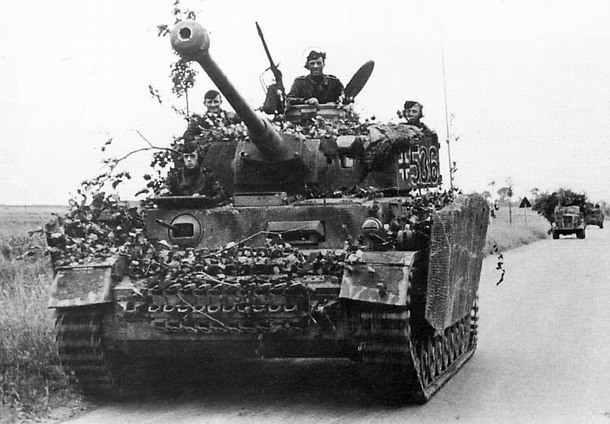
the Western Front, and a PzKpfw IV camouflaging itself with branches against Allied air power, source: Flickr.com with permission of the publishing user, edited
Nevertheless, one must tip one's hat deeply to this tank. A vehicle whose development began as early as 1934 managed to keep pace with battlefield demands until at least 1943, and even afterwards it remained an opponent that should by no means be underestimated. Draped in supplementary armour it looked more imposing than it really was, and Allied soldiers sometimes confused it with the heavy Tiger tank.
Technical Data
|
|
Ausf. A |
Ausf. B |
Ausf. C |
Ausf. D |
Ausf. E |
Ausf. F |
Ausf. G |
Ausf. H |
Ausf. J |
|
|
weight: |
18 t |
18.5 t |
18.5 t |
20 t |
22 t |
22.3 t |
23.6 t |
25 t |
25.0 t |
|
|
length: |
5.92 m |
5.92 m |
5.92 m |
5.92 m |
5.92 m |
5.92 m |
6.63 |
7.02 m |
7.02 m |
|
|
width: |
2.83 m |
2.83 m |
2.83 m |
2.84 m |
2.84 m |
2.88 m |
2.88 |
2.88 m |
2.88 m |
|
|
height: |
2.68 m |
2.68 m |
2.68 m |
2.68 m |
2.68 m |
2.68 m |
2.68 |
2.68 m |
2.68 m |
|
|
engine: |
HL 108 TR |
HL 120 TR |
HL 120 TR/TRM |
HL 120 TRM |
HL 120 TRM |
HL 120 TRM |
HL 120 TRM |
HL 120 TRM |
HL 120 TRM |
|
|
engine power: |
250 hp |
300 hp |
300 hp |
300 hp |
300 hp |
300 hp |
300 hp |
300 hp |
300 hp |
|
|
max. speed: |
32.4 km/h |
42 km/h |
42 km/h |
42 km/h |
42 km/h |
42 km/h |
42 km/h |
38 km/h |
38 km/h |
|
|
fuel capacity: |
470 l |
470 l |
470 l |
470 l |
470 l |
470 l |
470 l |
470 l |
680 l |
|
|
road range: |
210 km |
210 km |
210 km |
210 km |
210 km |
210 km |
210 km |
210 km |
320 km |
|
|
cross-country range: |
130 km |
130 km |
130 km |
130 km |
130 km |
130 km |
130 km |
130 km |
210 km |
|
|
hull armour: |
||||||||||
|
- front: |
14.5 mm |
30 mm |
30 mm |
30 mm |
50/30+30 mm |
50 mm |
50+30 mm |
80 mm |
80 mm |
|
|
- sides: |
14.5 mm |
14.5 mm |
14.5 mm |
20 mm |
20+20 mm |
30 mm |
30 mm |
30 mm |
30 mm |
|
|
- rear: |
14.5 mm |
14.5 mm |
14.5 mm |
20 mm |
20 mm |
20 mm |
20 mm |
20 mm |
20 mm |
|
|
turret armour: |
||||||||||
|
- front: |
16 mm |
30 mm |
30 mm |
30/35 mm |
30/35 mm |
50 mm |
50 mm |
50 mm |
50 mm |
|
|
- sides: |
14.5 mm |
14.5 mm |
14.5 mm |
20 mm |
20 mm |
30 mm |
30 mm |
30 mm |
30 mm |
|
|
- rear: |
14.5 mm |
14.5 mm |
14.5 mm |
20 mm |
20 mm |
30 mm |
30 mm |
30 mm |
30 mm |
|
|
crew: |
5 men |
|||||||||
|
armament: |
KwK 37 L/24 75 mm gun 2 × MG 34 7.92 mm |
KwK 37 L/24 75 mm gun 1 × MG 34 7.92 mm |
KwK 37 L/24 75 mm gun 1 × MG 34 7.92 mm |
KwK 37 L/24 75 mm gun 2 × MG 34 7.92 mm |
KwK 37 L/24 75 mm gun 2 × MG 34 7.92 mm |
KwK 37 L/24 75 mm gun 2 × MG 34 7.92 mm |
KwK 40 L/43 75 mm gun 2 × MG 34 7.92 mm |
KwK 40 L/48 75 mm gun 2 × MG 34 7.92 mm |
KwK 40 L/48 75 mm gun 2 × MG 34 7.92 mm |
|
ARTICLE
CONTENTS:
Reproducing text from the Panzernet website without the written consent of the operator is prohibited.