KARL GERÄT
an uncompromising destroyer of fortifications
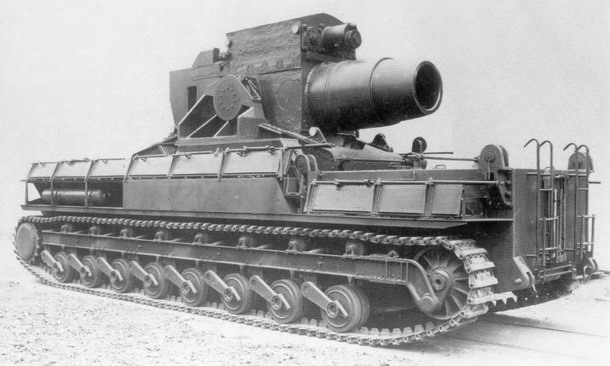
self-propelled gun Gerät 040 (also known as Mörser Karl or Karl Gerät), this is vehicle Nr. I or Nr. II with the original running gear fitted with eight rubber-tyred road wheels, source: flickr.com with the permission of the publishing user, edited
Origins of the vehicle
France — Germany's "eternal" rival and the most radical of the victorious powers of the First World War when it came to punishing and breaking a defeated Germany. Signatory of the humiliating Treaty of Versailles and recipient of the enormous reparations Germany was forced to pay. A thorn in the side not only of many ordinary Germans, but also of the German army's leadership and of Hitler himself. It comes as no surprise that once Germany began, under its new leader, to shed the shackles of the Versailles Treaty, army representatives started thinking about how France might be dealt with militarily as well. There was, however, one problem. France was well aware of its neighbour's antipathy and had left nothing to chance. From the late 1920s, the French had been constructing a line of fortifications running the entire length of their border with Germany — and, to a lesser extent, further westward along the border with Belgium.
In 1935, therefore, the German generals began addressing the question of a new and powerful weapon capable of destroying even the strongest reinforced-concrete bunkers — not just French ones. The generals approached the matter in a thoroughly old-fashioned way, as the specification they passed to Rheinmetall at the end of that year called for a static, super-heavy mortar. Rheinmetall complied and in March 1936 presented the Weapons Office with its first design for a muzzle-loading gun that would fire two-tonne shells to a range of around 2,000 metres from the safety of a dug-in position. The army refined its requirements, and by January 1937 a new design was ready. Rheinmetall proposed a muzzle-loading gun of 60 cm calibre, capable of sending a two-tonne shell to a range now extended to three kilometres. The weapon, expected to weigh around 55 tonnes, was to be transported to its firing position in seven or eight sections, each carried by a single vehicle. Setting up for firing at the designated location would therefore be an extremely laborious and time-consuming process. The army nevertheless insisted that the entire operation must take no more than six hours.
Rheinmetall therefore reconsidered the entire design and concluded that the army's requirement could only be met if the weapon was mounted on its own tracked chassis from which it would not only be transported but also fired directly. There was, however, one catch. Such a chassis would have to withstand the enormous stresses imposed on it during firing of such a heavy weapon — stresses that the designers estimated to be equivalent to several hundred tonnes. Rheinmetall's engineers therefore devised a special chassis that could be lowered to the ground before firing, essentially resting on its belly. The running gear would thus not have to bear the full force of the recoil on its own, and preparing the vehicle for firing took only 30 minutes. As a further measure to protect the chassis, the designers conceived a horizontally sliding gun mount fitted with a recoil mechanism. During firing, the mount — together with the gun — slid rearward, absorbing part of the energy generated. In February 1937 the Weapons Office approved this design, and Rheinmetall continued its work.
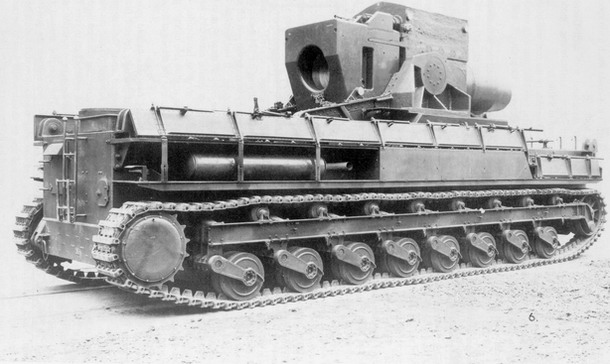
view of the vehicle's bow and the gun's enormous breech chamber; the vehicle is in travelling configuration — the chassis is raised and the crew working platforms are folded, source: wikipedia.org, Public domain, edited
In August 1937 the development moved to the next phase. Rheinmetall abandoned muzzle loading in favour of the conventional breech-loading system at the rear of the weapon. The designers also now settled on the direction the gun would face: it would fire to the rear relative to the direction of travel, meaning the vehicle would have to reverse into its firing position. The reason cited was the vehicle's ability to withdraw more quickly if it came under enemy fire — this was, after all, a rather expensive piece of equipment. Based on new calculations, the expected maximum range was increased from 3,000 to 4,000 metres. The weapon itself was estimated to weigh 64.5 tonnes, with the chassis adding another 32.5 tonnes, giving a total estimated weight of 97 tonnes for the complete vehicle — we can reveal immediately that this estimate proved to be considerably too low. The shell was to weigh 2 tonnes and carry 350 kg of explosive. It was probably from this development phase that Rheinmetall began referring to the new weapon internally as "Projekt 4".
In March 1938, the new head of the Weapons Office, General of Artillery Dr. Ing. Karl Becker, visited Rheinmetall and took a personal interest in the state of Projekt 4. Having studied the vehicle's technical documentation, Becker stated that in addition to working on the first pre-production prototype, Rheinmetall should also make preparations for the manufacture of six further "series" vehicles. General Becker certainly deserves a mention in this article, as most historians believe the later combat name of the vehicle under development was inspired by the man himself. The designation Karl Mörser (Karl Mortar) appeared in the spring of 1940, and it was at the very beginning of April of that year that General Karl Becker took his own life — driven to it, according to many accounts, by the Gestapo. Karl Mörser, or sometimes Karl Gerät, was not, however, the weapon's official designation. That was simply Gerät 040 (Gerät meaning "device" or "equipment").
As the design details were progressively refined, two awkward problems emerged. The first was a very high ground pressure — the ratio of the vehicle's weight to the contact area of the tracks with the ground. On existing German tracked fighting vehicles, ground pressure had been kept at around 0.7, or at most 0.8 kilograms per square centimetre of contact area. Projekt 4, however, was clearly heading towards a significantly higher figure. What effect would this have on the vehicle's driving characteristics? Would it be capable of moving sensibly off paved roads at all? Both the designers and the soldiers lacked practical experience in this area, and so it was decided to verify the figures experimentally. For this test, the Neubaufahrzeug tank was used, its ground pressure being progressively increased by means of additional ballast weights until it reached 1.43 kg/cm². To the designers' relief, it was confirmed that even under this load the Neubaufahrzeug could still move reasonably well off hard road surfaces.
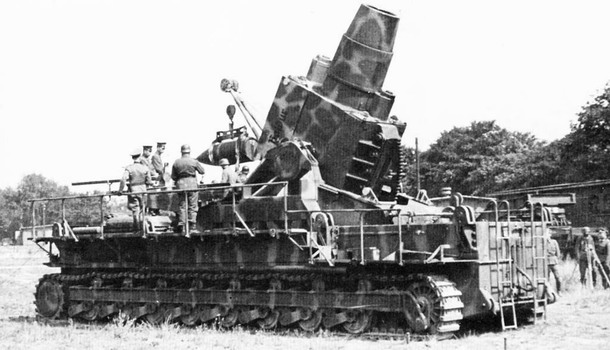
Karl Nr. I (here already renamed from Adam to Baldur) in firing configuration — the chassis is lowered, the crew working platforms are deployed and the ammunition carrier is presenting a shell to the loading ramp, source: flickr.com with the permission of the publishing user, edited
The second problem was the ratio of the track contact length to the track gauge — i.e. the distance between the two tracks. Here too the Germans lacked practical experience with a vehicle where this coefficient exceeded 1.8, and contemporary theory held that the maximum permissible value was 2.0 — beyond which a tracked vehicle would be essentially incapable of turning. Yet calculations for Projekt 4 yielded a track length-to-gauge ratio of 2.64! Again, experimentation was necessary. In August 1938 a scaled-down model of the tracked chassis was built for this purpose (at a scale of 1:10), electrically driven, with a track length-to-gauge ratio of 2.65 and a ground pressure of 1.1 kg/cm². Turning through angles of 3, 6 and 9 degrees was tested on asphalt, concrete, grass and bare earth. The tests showed that turning was relatively difficult but manageable, and work on Projekt 4 could therefore continue.
In June 1939 the time came for firing trials of the gun itself — at this stage still mounted on an enormous concrete base. The 60 cm weapon was fitted with a recoil mechanism with a recoil stroke of 92 cm, capable of absorbing a force equivalent to 450 tonnes. In May 1940 the first chassis was completed and driving trials were conducted. The first complete vehicle, including its weapon, was then ready on 2 July 1940. The problem of breaching the Maginot Line was by then already a thing of the past, but the Gerät 040 project had progressed so far that it simply continued, and following a demonstration of the first example to the military, an order was immediately given to begin production of the six previously announced additional vehicles.
Design description
The running gear of the first completed Karl Gerät mortar consisted of eight road wheels on each side. These wheels were fitted with rubber-tyred rims and each was suspended on its own swinging arm. The arms were sprung by torsion bars mounted transversely across the hull tub. The upper run of the track was supported by eight small return rollers. At the front was a toothed drive sprocket and at the rear an idler wheel. On the outer side, the wheel assembly was reinforced by a beam running from the first road wheel all the way to the rear idler. The tracks were 500 mm wide, each consisting of 133 links. The length of the track contact surface with the ground was 700 cm.
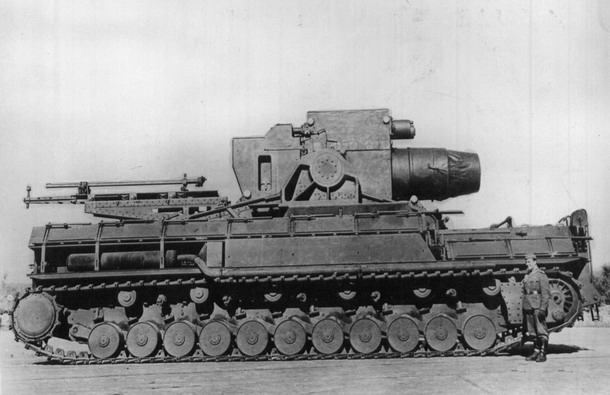
Karl Gerät with eleven all-steel road wheels; the vehicle is in travelling mode but has the loading ramp installed for some reason, source: wikipedia.org, Public domain, edited
The vehicle's hull was essentially a large hollow rectangular box divided into three sections. At the front was the section housing the engine, gearbox, fuel tank and the vehicle's controls. In the left front corner of the hull was the driver's position, where the driver operated the vehicle using conventional steering brakes. The driver's position was open at the top and the seat was positioned so that the driver's head and shoulders protruded above the hull, giving him an unobstructed view. With his head more than two metres above the ground, his forward visibility was genuinely excellent. During movement he was also assisted by his co-driver, who monitored the various blind spots around the vehicle and advised the driver accordingly. The driver accessed his position by a ladder mounted on the front wall of the hull. As part of the preparation for firing, both the driver's position and the ventilator beside it were covered with steel plates, and the massive loading ramp was then installed on the hull roof (more on that later). Along the sides of the hull ran folding platforms on which the gun crew moved during firing. For safety, the platforms were fitted with handrails. During travel the platforms were folded flat and only deployed as part of the preparation for firing.
The powerplant chosen for the first Gerät 040 was the Daimler-Benz MB 503 A, a twelve-cylinder petrol engine with an astonishing displacement of 44.5 litres, developing 580 horsepower at a mere 1,850 rpm — a super-heavy armoured vehicle needed torque, not high engine speeds. Large exhaust pipes were housed on both sides of the engine compartment. As part of the preparation for firing, additional piping was fitted to the exhausts and routed along the sides of the vehicle almost to the stern. Their precise purpose is not stated in the literature. The most obvious explanation is that the pipes were intended to direct exhaust fumes away from the gun crew — but why would the engine be running at all in a firing position? The powerplant drove an Ardelt gearbox with four speeds for forward travel, and apparently also for reverse. The fuel tank held 1,200 litres of petrol. Some uncertainty exists in the literature regarding fuel consumption, but the vehicle's range on a full tank is generally stated as a mere 42 km — implying an astronomical consumption of 2,857 litres per 100 km. It should be noted, however, that the vehicle was intended to travel under its own power only to the minimum extent possible.
Behind the engine section was a large open space for the installation of the weapon, which effectively consisted of three main parts: the barrel itself with its massive breech chamber, the mounting with the barrel recoil mechanism, and the sliding gun carriage with its own recoil mechanism. The gun barrel measured just 5,068 mm in length — incidentally only twice the length of the shell itself. The mounting allowed the weapon to be elevated between 0 and 70 degrees, though firing was only possible in the range between 55 and 70 degrees. The horizontal traverse was a mere two degrees to each side, meaning that at maximum range of 4,000 metres the gun could cover a lateral span of only around 280 metres. Beyond that, the entire vehicle had to be turned — which was by no means a simple task. As already mentioned, the gun itself had a recoil mechanism with a stroke of 92 cm. The sliding gun carriage allowed a further horizontal recoil of 78 cm. Even so, a substantial portion of the firing recoil was transferred to the hull and running gear.

Karl ready to fire; the ammunition carrier based on a Panzer IV tank presents the next two-tonne shell, source: flickr.com with the permission of the publishing user, edited
Shells against concrete
Initially, only one type of ammunition existed for the heavy gun, designated schwere Betongranate. This shell measured 251 cm in length and weighed 2,170 kg, of which 280 kg was the explosive charge. Handling a round of such weight was naturally a rather complex undertaking. A special loading ramp was therefore provided, along which shells were pushed into the barrel — but first the barrel had to be depressed to the horizontal position. The accompanying ammunition vehicle (described in more detail below) then placed the shell on the ramp, from which it was rammed into the chamber using a hand-operated mechanism with the assistance of a further six or seven men. The separate propellant charge was then loaded and the breech closed. The size of the propellant charge was selected according to the required range. Charges of strength 1 to 4 were available, with the strongest allowing a maximum range of 4,320 metres. In 1942 a second type of ammunition was introduced — the leichte Betongranate — which weighed "only" 1,700 kg, carried 220 kg of explosive and had a maximum range of 6,640 metres.
Because the gun fired at high elevation angles, the shell followed a high arc and struck the target from above. Thanks to its mass and the velocity it accumulated during its descent, it was capable of penetrating up to 250 cm of reinforced concrete. The gun crew consisted of an extraordinary 18 men, giving the Gerät 040 a total complement of 21 soldiers — a driver, his co-driver, 18 "artillerymen" and the vehicle commander. The maximum rate of fire was one round every ten minutes. As already noted, the entire vehicle was lowered to the ground as part of the preparation for firing. This meant that the firing position had to be thoroughly levelled and cleared before the vehicle drove in, to avoid damaging the hull tub.
The Karl Gerät measured 11.15 metres in length, 3.16 metres in width and 4.78 metres in height. The vehicle's total weight was as formidable as its armament: 123 tonnes. While sources broadly agree on this overall figure, they diverge when it comes to how the weight was distributed between the weapon and the chassis. According to the Panzer Tracts series, the chassis alone weighed 54 tonnes and the weapon 69 tonnes. The Tank Power series, on the other hand, gives the chassis weight as just under 60 tonnes and the weapon with its accessories as 63.9 tonnes. It is quite possible that one author includes the loading ramp in the weapon's weight while another counts it as part of the chassis. Either way, both sources effectively agree that the weapon and its mount were heavier than all the rest of the vehicle put together. The maximum speed of the Gerät 040 was a mere 10 km/h, and its normal travelling speed was evidently somewhat lower still.
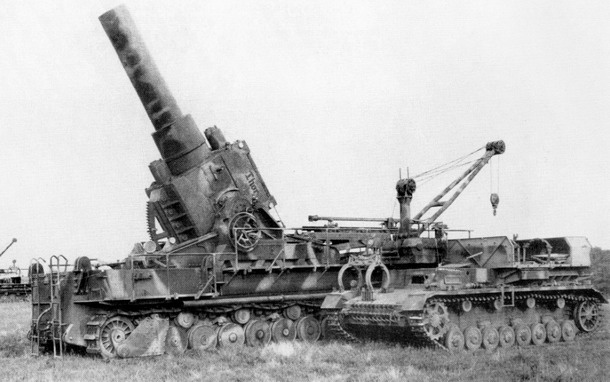
the mortar Thor rearmed with the newer 54 cm gun — the Gerät 041 version, source: wikipedia.org, Public domain, edited
Rail transport
Given the enormous dimensions and weight of the vehicle under development, the designers also had to address the question of how to transport it over longer distances. Rail was of course the primary option, but the use of standard freight wagons was out of the question. In October 1938 the development of a special railway transporter — designed solely for this vehicle — was therefore initiated. It consisted in fact of two bogies, each with five axles. At the centre of each bogie was a rotating platform carrying an enormous supporting arm. The Karl Gerät itself was then suspended from these arms and hung above the rails between the two bogies. Hydraulic pistons on each bogie raised the arms to the required height. Loading and unloading the vehicle was far from straightforward — exact timings are not given in the sources, but a report from Artillery Battalion 833 describing the unloading of two of these guns at the station in Terespol in Poland states that the entire operation could not be completed in a single night. It is worth noting that during rail transport the lower run of the tracks was secured to the upper run by metal clamps to prevent it from sagging and scraping against the rails.
Trains cannot, of course, reach every destination, and if the Gerät 040 always had to travel the last stretch from the nearest railway station to its firing position under its own power, that would have meant a very long and very taxing journey. At the end of 1940, the Weapons Office therefore commissioned Rheinmetall to develop a special loading platform for transporting the Gerät 040 on the Culemeyer Strassenroller road trailer. This trailer had been designed in the 1930s by engineer Johann Culemeyer for transporting railway wagons by road. In its six-axle, 24-wheel version it had a payload capacity of 80 tonnes — a respectable figure, but still far too little for the 123-tonne Gerät 040. For road travel the Gerät 040 therefore had to be broken down into components.
In theory, it would have been sufficient to remove the weapon from the chassis and use two Culemeyer Strassenroller trailers each rated at 80 tonnes. There was, however, another problem: as noted above, the complete weapon weighed somewhere between 63.9 and 69 tonnes, so loading and unloading it — as well as assembling and disassembling it — would have required a fairly powerful crane. The Karl Gerät was therefore broken down into four separate loads for road transport. The largest component was naturally the chassis, which presented no difficulty when it came to loading onto the Culemeyer trailer, as it could drive onto it under its own power. The next component was the gun barrel itself, which weighed approximately 28.5 tonnes and could therefore be carried on the lighter 16-wheel, 40-tonne version of the Culemeyer trailer. The third component consisted of the barrel mounting with its recoil mechanism together with the sliding gun carriage, which weighed approximately 27.4 tonnes — again within the capacity of the lighter 16-wheel trailer. The fourth and final component, comprising the loading ramp and other accessories, weighed approximately 8 tonnes. Breaking the vehicle down into four separate loads meant more work at every loading and unloading, but both operations could be handled by a crane with a capacity of "only" 30 tonnes, which could travel with the Karl Gerät wherever it was needed. The Culemeyer Strassenrollers carrying the disassembled Gerät 040 were towed by Kaelbe Z6 A2 heavy lorries.
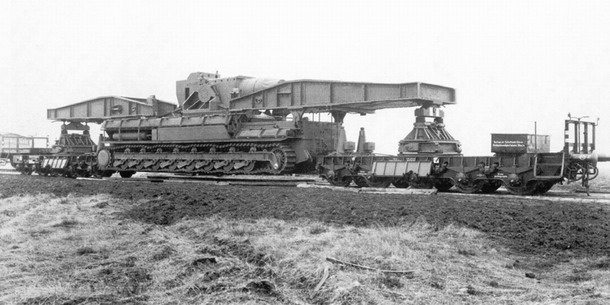
special railway transporters with enormous supporting arms were developed for moving the Karl mortar by rail; the Karl was suspended from these arms, source: wikipedia.org, Public domain, edited
Ammunition vehicle
Not only was the Gerät 040 itself extremely heavy — so was its ammunition. A special ammunition vehicle therefore had to be designed and built that could not only transport the enormous shells but also lift them onto the loading ramp. The only viable basis for such a vehicle was the chassis of the PzKpfw IV medium tank. The development of this vehicle was — for reasons that are unclear — entrusted to Rheinmetall-Borsig in October 1939. The first version of the ammunition carrier (Munitionsschlepper) was built on the chassis of the Ausf. D tank. The original turret was removed and the opening beneath it was plated over. A cargo area was created on the hull, enclosed on all sides by a metal framework and covered by a folding roof. The cargo area could accommodate four 60 cm shells and four propellant charges.
To the right of the cargo area, on the hull roof, a simple rotatable crane with a payload of 2.5 tonnes (though considerably higher figures are also cited) was fitted with a grab for handling the shells. The crane was electrically powered by a generator connected to a twin-cylinder DKW engine — the same system used in the standard Panzer IV tank to electrically rotate the turret. Using this crane, the ammunition carrier was able to place a shell directly onto the loading ramp, from where the gun crew pushed it into the barrel. In normal travelling configuration, the crane arm was folded flat onto the roof of the cargo area. The disconnected grab was then stored on the front of the ammunition tank's hull. The Munitionsschlepper thus described weighed 25 tonnes and had a crew of four men. A total of 13 were built. It should also be noted that the Culemeyer road trailers mentioned above were used to transport larger stocks of ammunition — up to 10 shells could be loaded onto a single trailer, towed by Sd.Kfz. 8 or Sd.Kfz. 9 half-track tractors.
"Series" production
As already noted, the first complete Gerät 040 was finished on 2 July 1940. The army did not formally accept it until 5 November 1940, however, following the completion of thorough testing. For record-keeping purposes, this vehicle was designated simply Nr. I. The second Karl (Nr. II) was accepted on 7 November 1940, the third on 20 February 1941, the fourth on 17 April 1941, Nr. V on 11 June 1941, and the sixth and last on 28 August 1941. Each vehicle was also given an unofficial combat name. The first to be built was fittingly named Adam, followed by — what else — Eva. The subsequent vehicles received names from Norse mythology: Odin (Nr. III), Thor (Nr. IV), Loki (Nr. V) and Ziu (Nr. VI). The two oldest guns were reportedly later renamed after Norse gods as well — Adam became Baldur and Eva became Wotan.
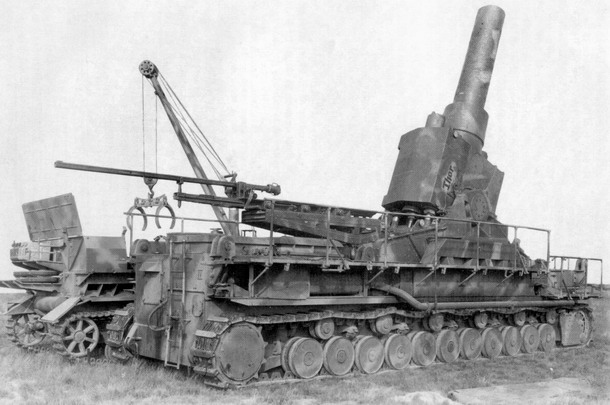
Thor again, this time as Gerät 041 with the 54 cm gun, source: flickr.com with the permission of the publishing user, edited
Talk of series production would be inappropriate not only because of the negligible number of vehicles built, but also because each one was to a considerable extent a unique machine. Even after completing the first Gerät 040, Rheinmetall continued to experiment and seek ways to improve the whole vehicle. These efforts resulted in the introduction of a new three-speed Voith Turbo gearbox, the adoption of a new Daimler-Benz MB 507 C diesel engine (which produced the same output as the petrol-powered MB 503 A), and finally a revised running gear with 11 all-steel road wheels (again sprung by torsion bars). The diesel engine reduced the vehicle's maximum speed from 10 km/h to a mere 6 km/h, but in return its range increased from 42 km to 60 km.
Two different engines, two different gearboxes, two different running gear configurations — quite a variety. Let us look at the individual Gerät 040 vehicles in order: Karl Nr. I (Adam) had the eight rubber-tyred wheel running gear, the MB 503 A petrol engine and the four-speed Ardelt gearbox. Karl Nr. II (Eva) received the new three-speed Voith Turbo gearbox. Karl Nr. III (Odin) and Nr. IV (Thor) both retained the original four-speed Ardelt gearbox but received the new MB 507 C engine and the new eleven-wheel running gear. Karl Nr. V (Loki) combined the MB 507 C diesel with the Voith gearbox and eleven road wheels, and finally Karl Nr. VI (Ziu) had the MB 503 A petrol engine, the Voith gearbox and eleven wheels.
Gerät 041
In February 1941, reportedly Hitler himself demanded that the range of the Karl mortar be increased to 10 km. The means to achieve this was to be a 54 cm gun with a longer barrel and lighter ammunition — a new weapon that could also be installed on the existing vehicles in place of the original 60 cm guns. The new weapon received the designation 54 cm Rohr 041, and the Karl Gerät fitted with this gun was designated Gerät 041. Its development proved protracted and ran into numerous problems, so that the first successful firing trials did not take place until May 1944. The 54 cm Rohr 041 had a barrel length of 7,108 mm and used shells designated leichte Betongranate 041, weighing "only" 1,250 kg. With the strongest propellant charge No. 6, this shell could reach the required range of 10 km and penetrate a reinforced concrete slab 3 to 3.5 metres thick. The rate of fire remained a leisurely six rounds per hour, and the number of men required to serve the gun fell from 18 to 15. The complete Gerät 041 weighed 2,350 kg more than the older Gerät 040 and was also overall longer due to the gun barrel's overhang. The Gerät 041 was the seventh Karl mortar to be built and accordingly received the designation Nr. VII. Incidentally, the ammunition carriers had to be fitted with a second, somewhat smaller grab to handle the 54 cm shells.
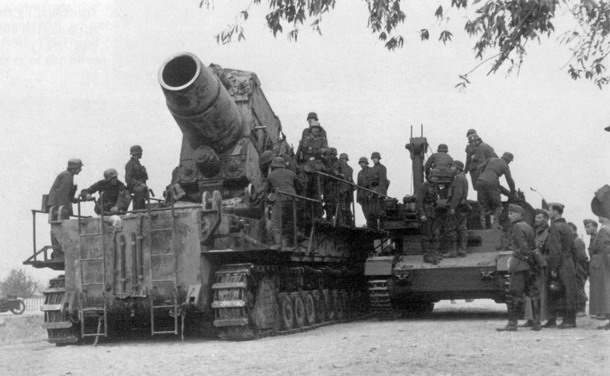
Karl Gerät Nr. III from 2nd Battery of Schwere Artillerie-Abteilung 833, during the bombardment of the Brest-Litovsk fortress in June 1941, source: flickr.com with the permission of the publishing user, edited
Organisation
The first unit to be equipped with the new Gerät 040 was Batterie 833, officially formed on 3 January 1941. In April 1941 the parent formation schwere Artillerie-Abteilung 833 was established (referred to by some sources as schwere Mörser Abteilung 833), and the previously independent Batterie 833 was reorganised as its 1st Battery — with the addition of a 2nd Battery following shortly thereafter. Such a battery comprised two Karl Gerät guns and an enormous quantity of supporting equipment: specifically four of the ammunition tanks described above, 16 motorcycles, 16 cars, 11 lorries, 12 half-track tractors and 12 Culemeyer Strassenroller road trailers. The 1st Battery of schwere Artillerie-Abteilung 833 received Gerät 040 Nr. I and II — Adam and Eva. The 2nd Battery had vehicles Nr. III and Nr. IV — Odin and Thor.
Brest-Litovsk 1941
The Karl Gerät — at that point only in its Gerät 040 version — made its combat debut in the opening phase of Operation Barbarossa. Schwere Artillerie-Abteilung 833 was for this operation split between two armies. The 1st Battery was attached to the 17th Army under Army Group South. The 2nd Battery was assigned to the 4th Army under Army Group Centre. The deployment of the 2nd Battery, tasked with destroying the fortifications at Brest-Litovsk, is particularly well documented. This battery, it will be recalled, had guns Nr. III and IV — Odin and Thor — on its strength. The equipment was loaded onto a train and dispatched to the Polish town of Terespol, just across the border from Brest. The first train to arrive at the destination station carried the ammunition, the ammunition tank and the crane — arriving on the evening of 18 June 1941. The first Karl Gerät arrived during the night of 19 to 20 June, and the second during the following night. During the night of 21 to 22 June, both fighting vehicles moved under their own power to their designated firing positions and went into action first thing the following morning.
On the first day of the operation — 22 June 1941 — Odin fired a total of four shells. Thor was to keep pace, but the fourth shell became stuck in the barrel during loading and had to be laboriously extracted using a winch. Thor therefore fired only three rounds on the first day of fighting. The following day (23 June), Thor fired seven rounds in total, while Odin did not fire a single shot, having suffered a fault in its electrical firing mechanism. On the third day of the operation, Odin fired six shells and Thor as many as eleven. After Brest was captured, an inspection of the fortifications was carried out to assess the effect of the bombardment. It emerged that two of the 31 shells fired had failed to detonate. One shell that landed in a courtyard created a crater 15 metres in diameter and 5 metres deep. The conclusion of the assessment report was that the Gerät 040 had delivered what the army had demanded of it.
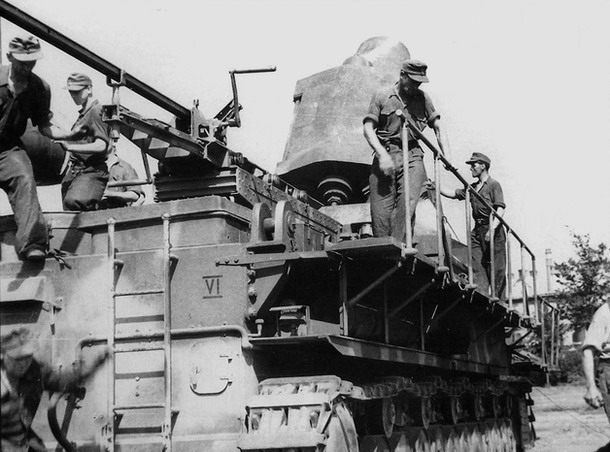
Karl Nr. VI — Ziu — during the bombardment of Warsaw in August or September 1944, source: wikipedia.org, Bundesarchiv Bild 101I-695-0424-30A, Creative Commons, edited
Sevastopol 1942
The Gerät 040 mortars had to wait almost a year for their next combat deployment. Their target this time was to be the fortifications of Sevastopol. Preparations for this operation had in fact begun as early as February 1942, when schwere Artillerie-Abteilung 833 received orders to detach an independent battery from its ranks, designated "Karl Batterie" and equipped with three Gerät 040 guns. In April 1942 there was intensive communication between the officers of "Karl Batterie" and the command of the 11th Army, to which the battery was to be subordinated at the front. The 11th Army was tasked with identifying a suitable location within range of the selected targets and preparing three dug-in firing positions there. Each was to be 10 metres wide, 15 metres long and 3 metres deep — and work on excavating them was to begin immediately, both because of the time required and to allow the enemy to "get used" to the change in the terrain as seen on reconnaissance aircraft photographs.
Karl Batterie, with guns Nr. II (Eva), Nr. III (Odin) and Nr. IV (Thor), arrived by rail at the station in Simferopol. From there the guns were transported dismantled on Culemeyer trailers for approximately 70 km southward. The last 3.5 km to the firing positions were covered by the mortars under their own power, fully assembled. On 20 May 1942, the 11th Army reported that all three Karl guns were in position, together with a supply of 72 heavy and 50 light shells. On 2 June 1942 the Gerät 040 guns were in position and opened fire on the Maxim Gorky and Bastion fortifications. The bombardment continued until 13 June, when the last shell was fired and the battery ran out of ammunition. On 19 July the battery received orders to return to Germany. Soviet prisoners from the captured fortifications later testified that the detonations of the 60 cm shells shook not only the fortifications themselves but, above all, the morale of the soldiers sheltering inside.
The next planned deployment of the Gerät 040 was to be in the area around Leningrad. On 7 July 1942, Batterie 628 (Karl), equipped with two guns, was detached from schwere Artillerie-Abteilung 833. The battery reached the front during 1 and 2 September 1942. Due to the evolving situation on the front, the deployment of both guns was repeatedly postponed until it was eventually cancelled altogether, and on 4 December 1942 the battery received orders to return home. In 1942 the Germans also considered deploying the Karl guns at Stalingrad, but safe rail transport to the city was not feasible and the plan was abandoned.
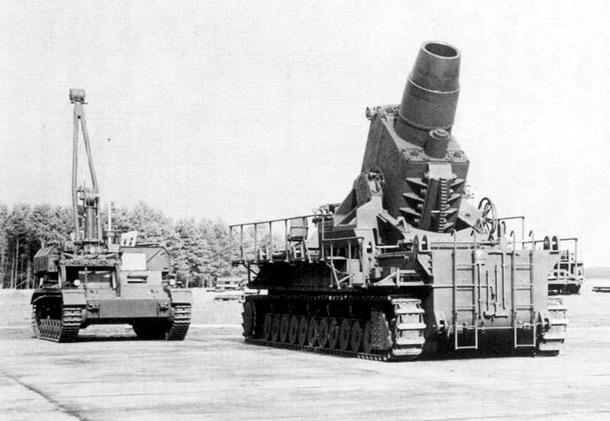
Gerät 040 and its ammunition vehicle, source: wikipedia.org, Public domain, edited
Warsaw 1944
The prolonged pause in the Karl mortars' combat career was finally broken by the outbreak of the uprising in Polish Warsaw on 1 August 1944. On 13 August, the formation of another special battery — No. 638 — was once again ordered. By this time the first example of the Gerät 041, the Karl with the 54 cm gun, already existed. According to the original order, this vehicle was also to be included in the special battery, but in the end this did not happen because the vehicle was still undergoing calibration firing and the firing tables for its gun were not yet ready. Only one Gerät 040 — Ziu, Nr. VI — therefore made the journey to Warsaw, arriving at Warsaw West railway station on 17 August. From there it moved under its own power to the nearby Józef Sowiński Park, whose flat expanse close to the city centre provided an ideal firing position. On 7 September 1944 another Karl arrived in Warsaw — Nr. IV, Thor. Ziu, however, had to end its service in Poland on 22 September 1944 due to mechanical problems.
During the bombardment of Warsaw, a high proportion of shells failed to detonate. The reason was fairly straightforward. The Karl Gerät's shells were designed to destroy reinforced concrete bunkers. The brick buildings of the city, with their wooden roofs and often wooden floor structures, were simply too soft a target — and so it sometimes happened that a shell simply fell straight through an entire building and came to rest on the ground floor, or in the cellar. The literature records at least 11 unexploded 60 cm shells found in Warsaw — not only during the uprising and the remainder of the war, but long after it as well, with the most recent discovery in 2007.
At some point during October and November 1944, all trials of the new 54 cm gun were completed. Subsequently the gun was used to rearm vehicle Nr. IV Thor and then Nr. V Loki. On 1 December 1944 a new organisational table was issued for the Karl self-propelled gun battery, providing for one gun and three ammunition vehicles per battery. Listing the full complement of additional supporting equipment would serve little purpose here. It may be worth noting that a full-strength battery had an establishment of 3 officers, 30 non-commissioned officers and 122 other ranks.
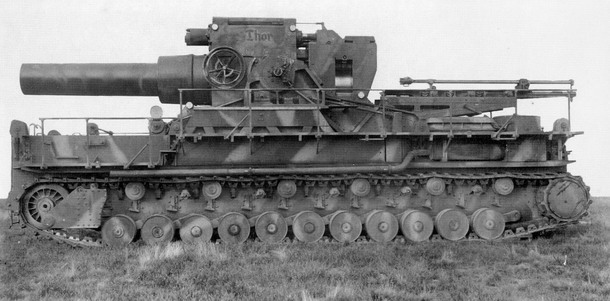
Gerät 041 with the chassis raised in the travelling position; the loading ramp is nonetheless installed, as is the pipe extending the exhaust outlet, source: flickr.com with the permission of the publishing user, edited
Wacht am Rhein
During November and the early days of December 1944, feverish preparations were under way for the involvement of the Karl mortars in the planned offensive against the Allies, codenamed Wacht am Rhein. Within two batteries (Karl-Batterie 428 and Karl-Batterie 638), probably three guns were sent to the Western Front: Nr. II Eva (or Wotan), Nr. IV Thor — converted to Gerät 041 with the 54 cm gun — and Nr. VI Ziu. Little is known about the combat successes or failures of these vehicles in the west. All returned to Germany, probably during January 1945, with two of them damaged in action.
On 11 March 1945, Battery No. 638 received orders to move urgently to the Remagen area. The guns selected for this task were Nr. II Eva/Wotan (Gerät 040) and Nr. V Loki (Gerät 041). One or both of them fired a total of 14 shells against the Allied bridgehead on the Rhine and against the famous Ludendorff Bridge itself. The effect was negligible, however. During the withdrawal from the area, both guns were damaged by enemy fire. Their wrecks, still suspended on their railway transporters, subsequently fell into the hands of American troops. What became of the remaining vehicles? The details are unfortunately not known for all of them, but we do know that Karl Nr. III (Odin) was largely destroyed as early as January 1945 when a shell exploded inside the barrel. Nr. VII was reported on 19 January 1945 as out of service pending repairs for which the necessary spare parts were unavailable. And Karl Gerät Nr. I (Adam / Baldur) was captured by the Red Army at Jüterbog in April 1945 and is today part of the collection of the museum at Kubinka.
ARTICLE
CONTENTS:
Reproducing text from the Panzernet website without the written consent of the operator is prohibited.