FAHREN MIT SPW
manual for armoured personnel carrier crews
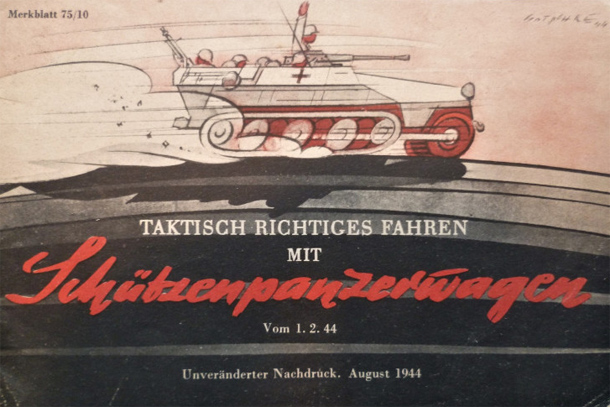
Cover of the Taktisch richtiges fahren mit Schützenpanzerwagen manual, August 1944 reprint
The half-tracked armoured personnel carrier Sd.Kfz. 251 became one of the enduring symbols of the German Wehrmacht. Known in German nomenclature as the Schützenpanzerwagen (abbreviated SPW), it served not only as a troop carrier but in a wide range of other roles as well. Its tracked rear section allowed it to travel off paved roads, its armour held up against small-arms and machine gun fire, and it could carry fairly substantial armament – including a 37 mm anti-tank gun or even a short-barrelled 75 mm cannon. Armoured personnel carriers lent attacks an unprecedented punch while at the same time significantly reducing casualties among their own troops. Heinz Guderian is said to have called the vehicle a "blood-saver".
Over the course of the entire war, somewhere between 15,000 and 16,000 examples of the Sd.Kfz. 251 were produced in four production variants (Ausf. A through D) and 23 official specialised versions (engineer vehicles, command vehicles, radio communication vehicles, ambulances, artillery tractors, observation and fire direction vehicles, fire support vehicles, and so on). Despite this impressive production record, demand for these machines consistently outstripped supply. The desire to minimise "unnecessary" losses of this valuable fighting vehicle was one of the factors that led to the creation of a dedicated manual for their drivers and commanders – a manual given the official title Taktisch richtiges fahren mit Schützenpanzerwagen, meaning literally "tactically correct driving with the armoured personnel carrier". It was first issued in February 1944, with at least one subsequent reprint in August of the same year.
The manual was designed to explain the correct procedure in various situations – whether on the march, halted, crossing obstacles, or conducting an attack – in an entertaining format using illustrations and rhymes. Each page presented a specific situation and used a pair of cartoon drawings to show the correct and incorrect approach... with the incorrect one typically ending in the death of the crew (how motivating). Please do not treat the summaries below as literal translations – they are interpretations of each page's content.
SELECTION OF CONTENTS:
Page 1
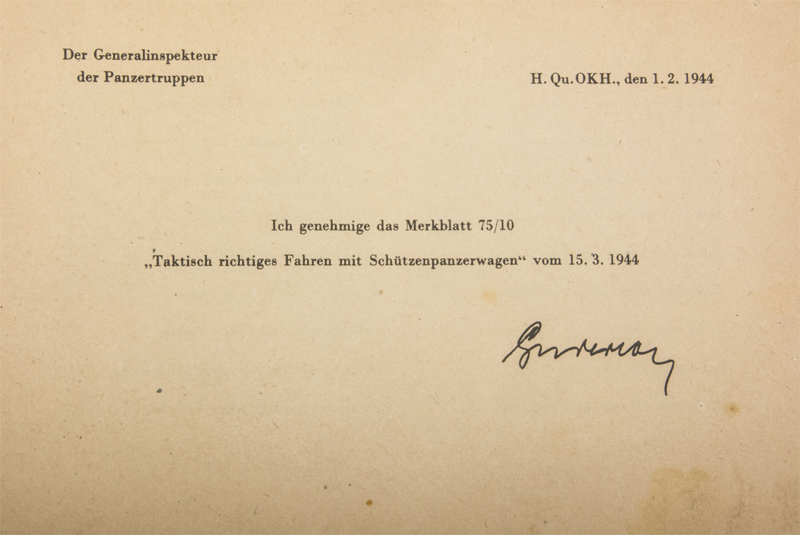
The validity of manual Merkblatt 75/10 was confirmed by the signature of the Inspector General of Panzer Troops, Heinz Guderian.
Page 2
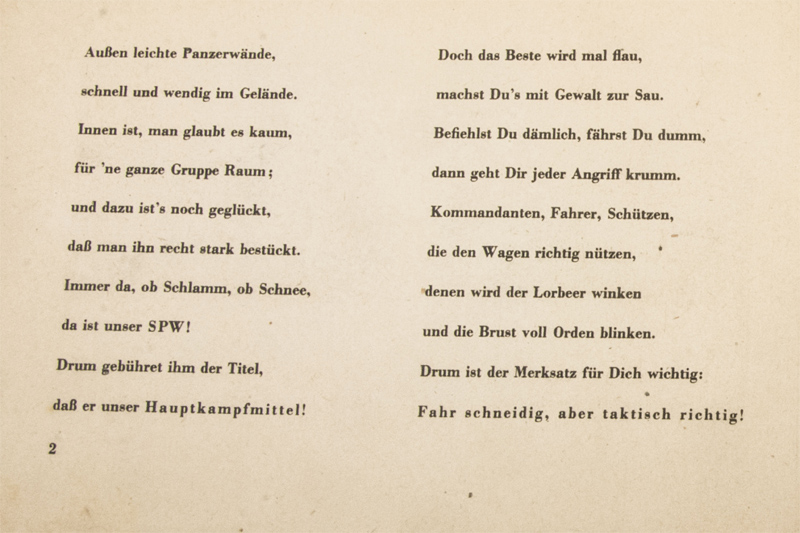
Lightly armoured on the outside, nimble in the field, and inside – hard to believe – enough room for an entire battle group. In mud or snow, our SPW is always there! But even the finest equipment won't get you anywhere if you give stupid orders and drive the way you shouldn't. Those who know how to handle an armoured half-track properly wear laurel wreaths and have chests full of medals. Remember: drive hard, but drive tactically!
Page 3
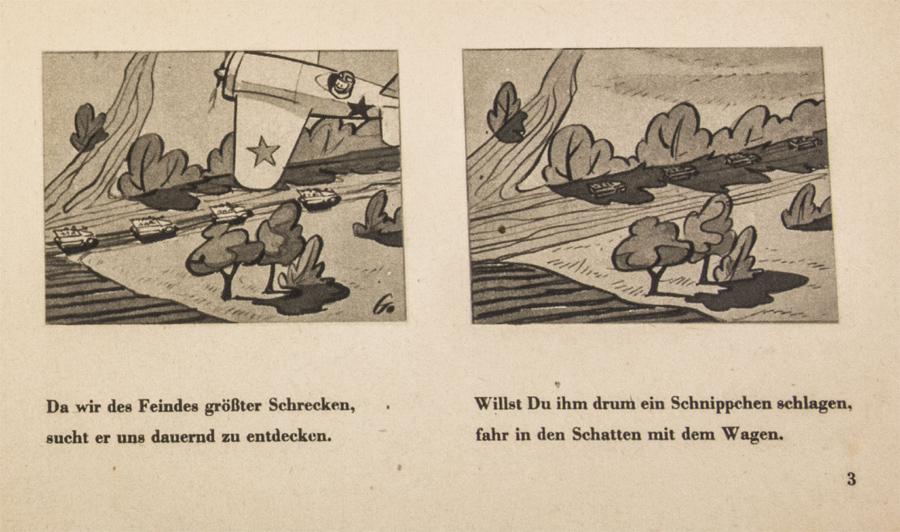
Since we are the enemy's greatest fear, he is constantly trying to spot us. If you want to outwit him, pull your vehicle into the shade.
Page 4
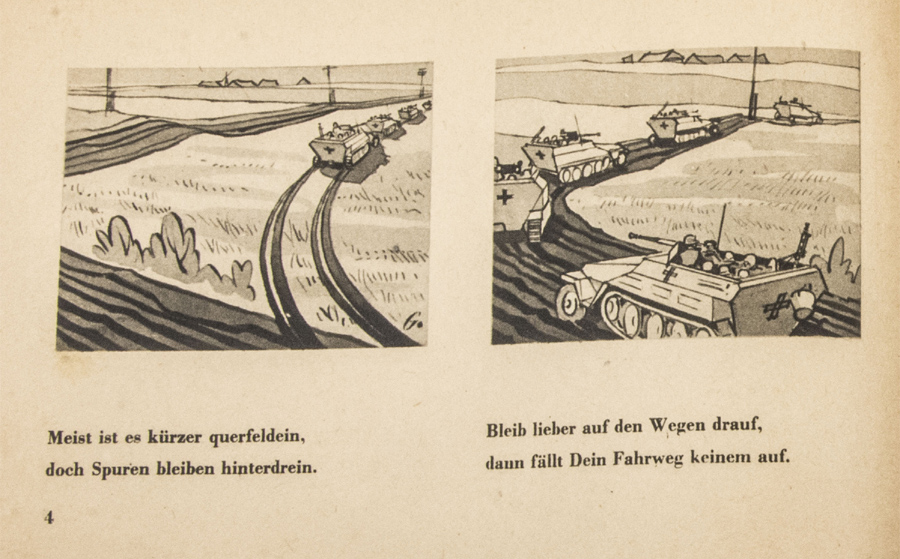
Even if going cross-country is sometimes shorter, you leave clearly visible tracks across a field behind you. It is better to stick to the road so as not to give away which route you are taking.
Page 5
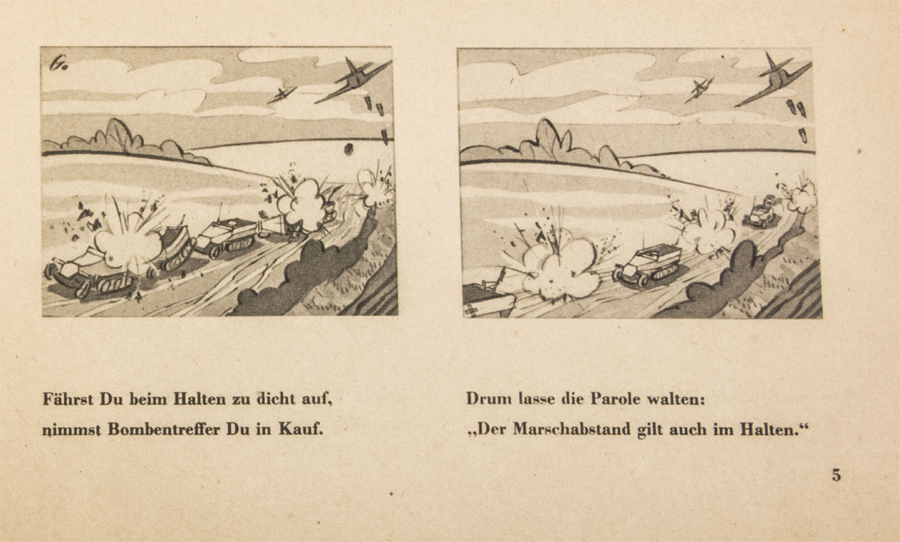
If you halt your vehicles too close together, you risk being caught by enemy bombs. Remember that march spacing must be maintained even when halted.
Page 6
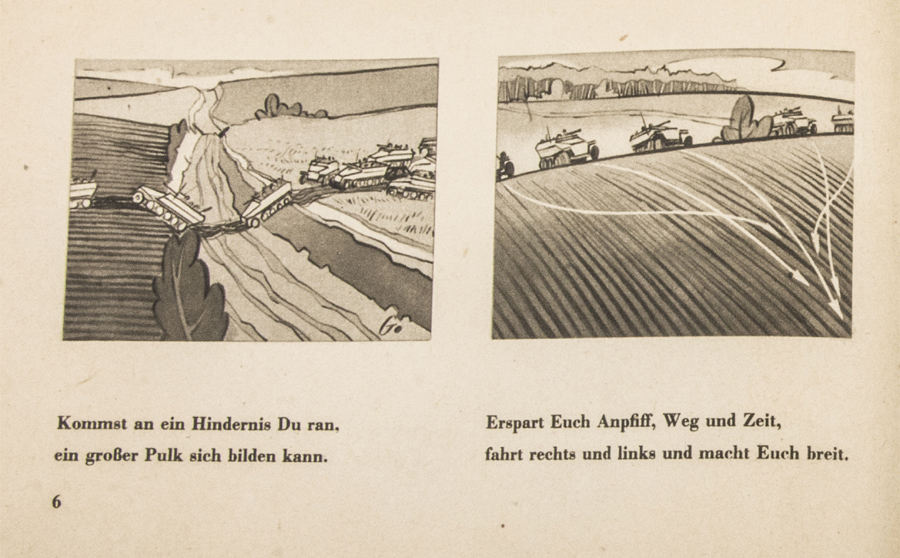
When a column runs into a terrain obstacle, a traffic jam can easily build up. Save yourselves time and trouble by fanning out to either side before the obstacle so you can all cross at once. Then form up into column again on the other side.
Page 7
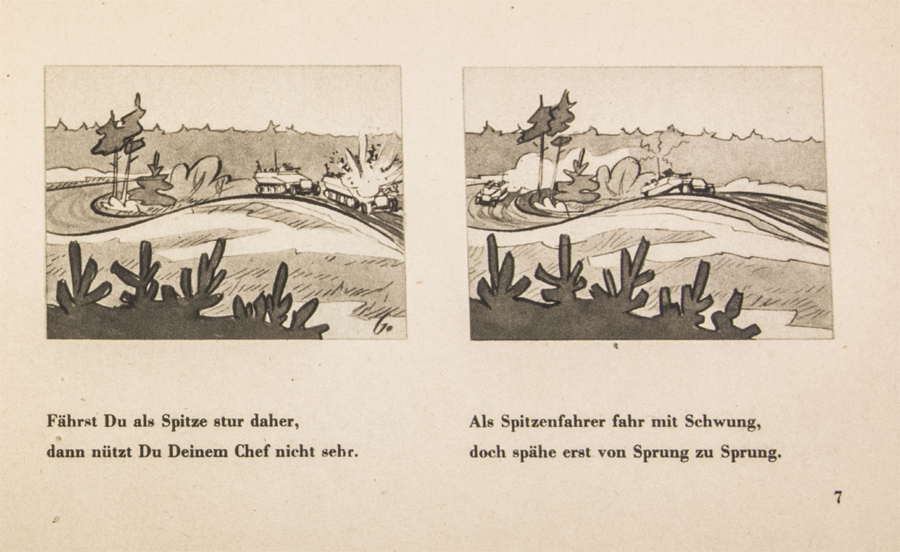
If you are driving at the head of a column, you cannot afford to be reckless. Drive boldly, but keep a careful eye on the road ahead at all times.
Page 8
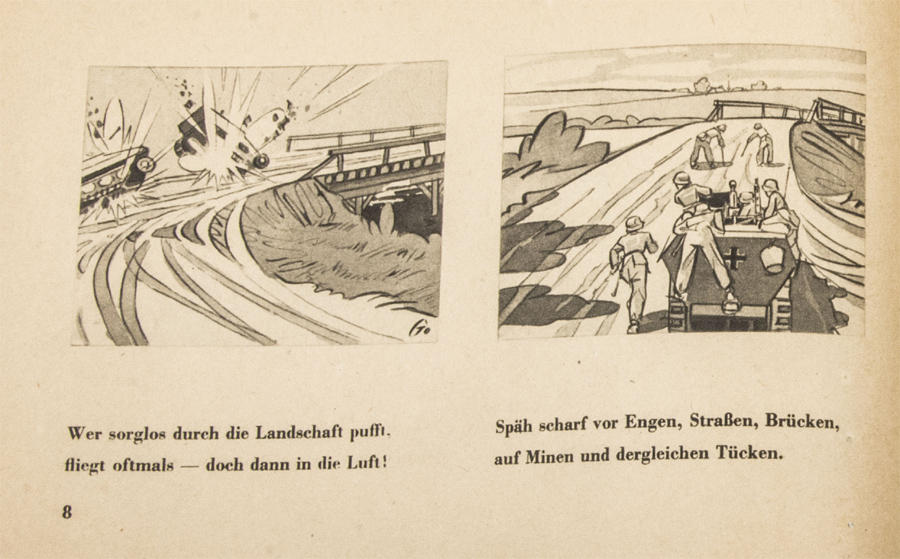
Those who just wander carelessly through the countryside sometimes end up blown sky-high. If there is a bridge or a bottleneck ahead, scout it thoroughly before you drive into it – such places are ideal for mining.
Page 9
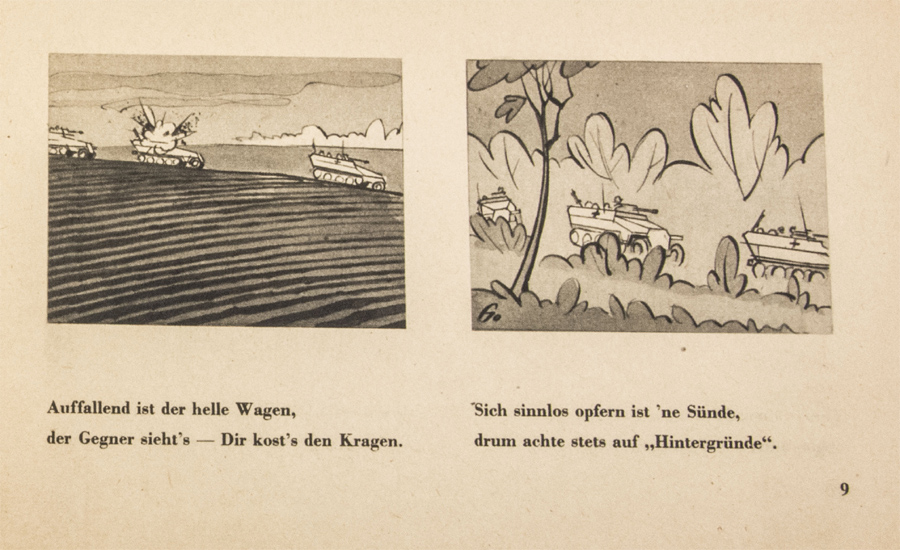
A light-coloured vehicle against a dark background stands out a mile – the enemy will spot you easily and it will cost you your neck. That is a needless sacrifice, so always think about what "backdrop" the surrounding terrain will create for you in the enemy's eyes.
Page 10
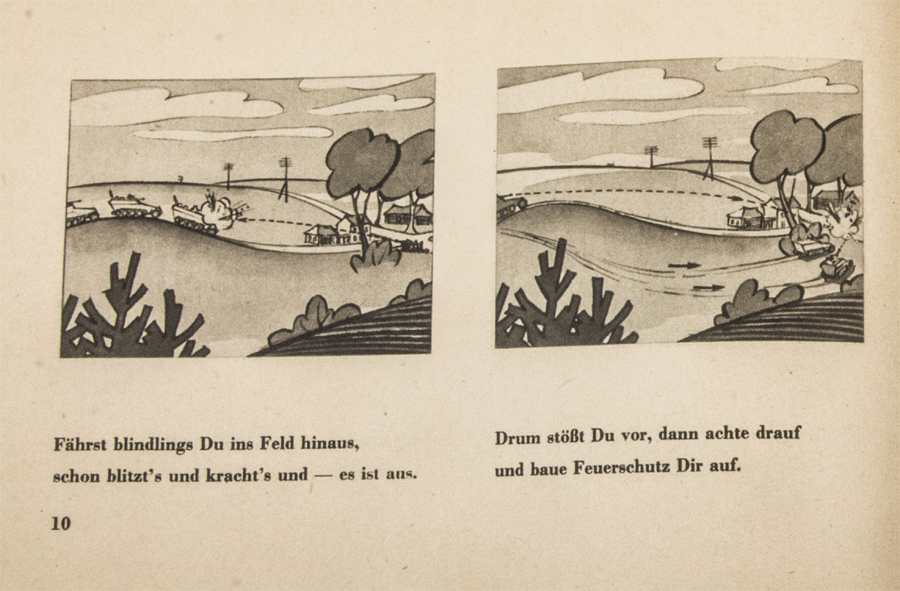
Drive blindly without reconnaissance and all that awaits you is a flash, a bang, and oblivion. Advance cautiously and make sure you have fire support in place.
Page 11
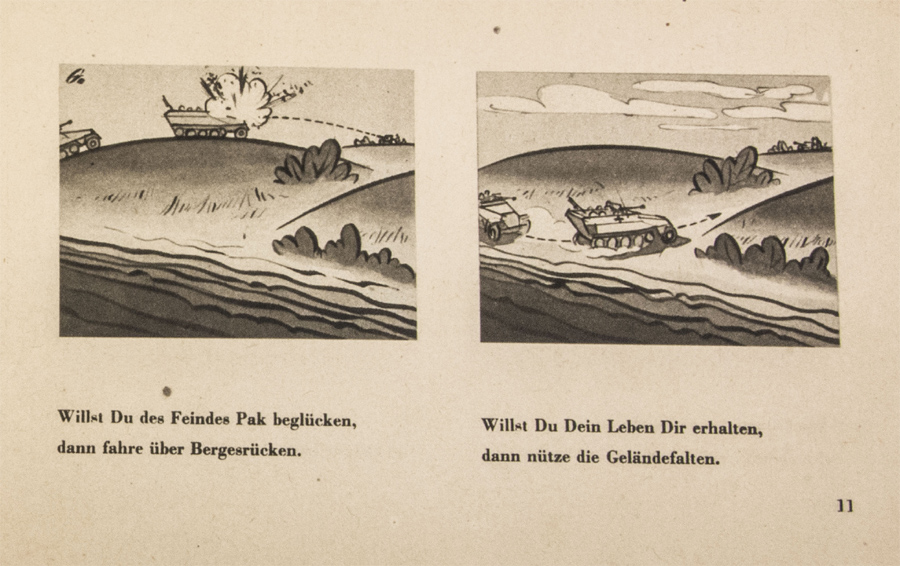
If you want to make the crew of an enemy anti-tank gun very happy, drive along ridge lines. If you want to stay alive, drive through the valleys between the hills instead.
Page 12
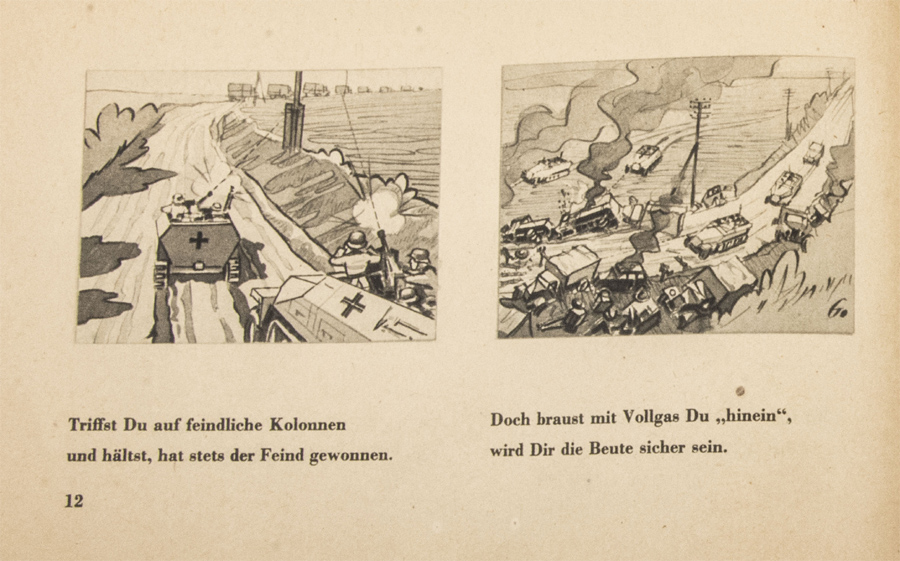
When you run into an enemy supply column, don't stop, don't hesitate. Drive straight into it at full speed and victory is yours.
Page 13
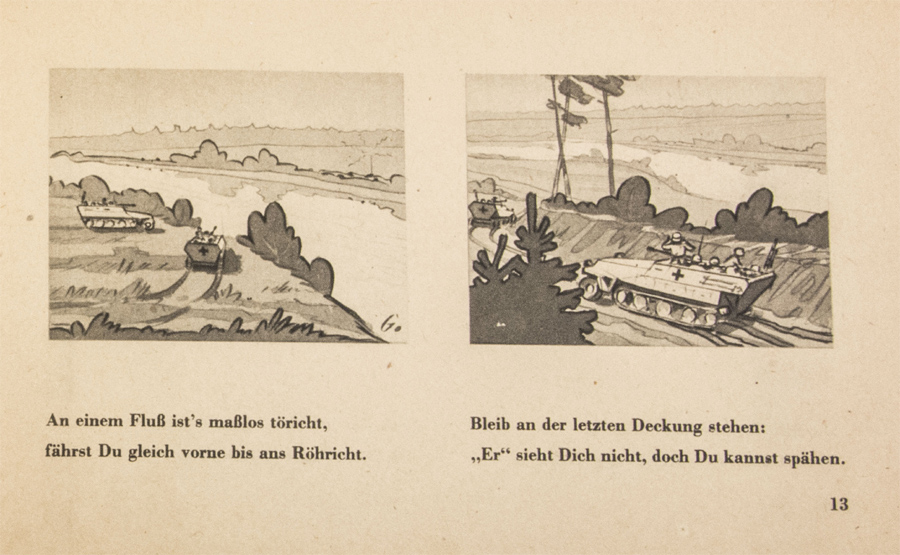
When you approach a river, driving straight up to the bank would be madness. First find cover somewhere the enemy on the far bank cannot see you, and take a good look around.
Page 14
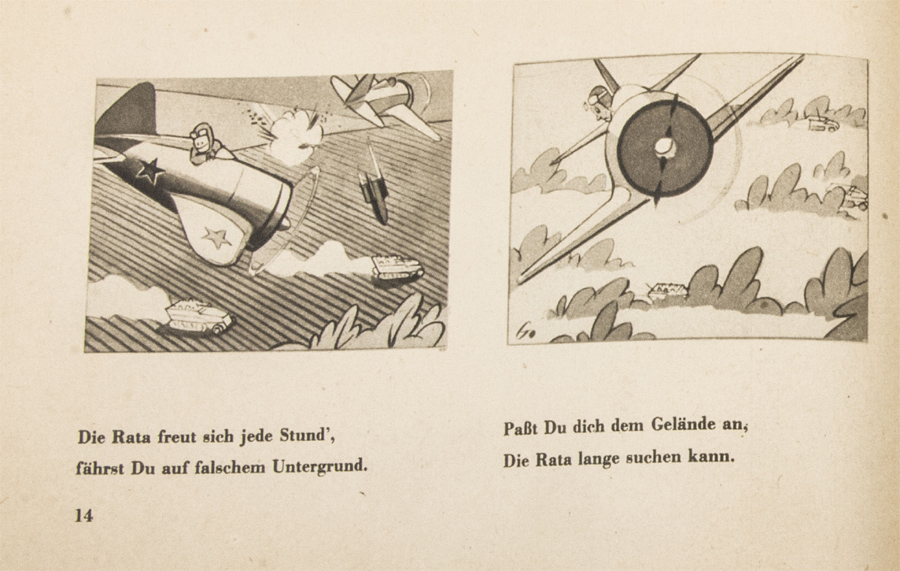
Driving over open ground will put a smile on every Rata's face (Rata was the nickname for the Soviet Polikarpov I-16 fighter). But if you adapt your route even slightly to follow the surrounding terrain, the Rata will search for you in vain.
Page 15
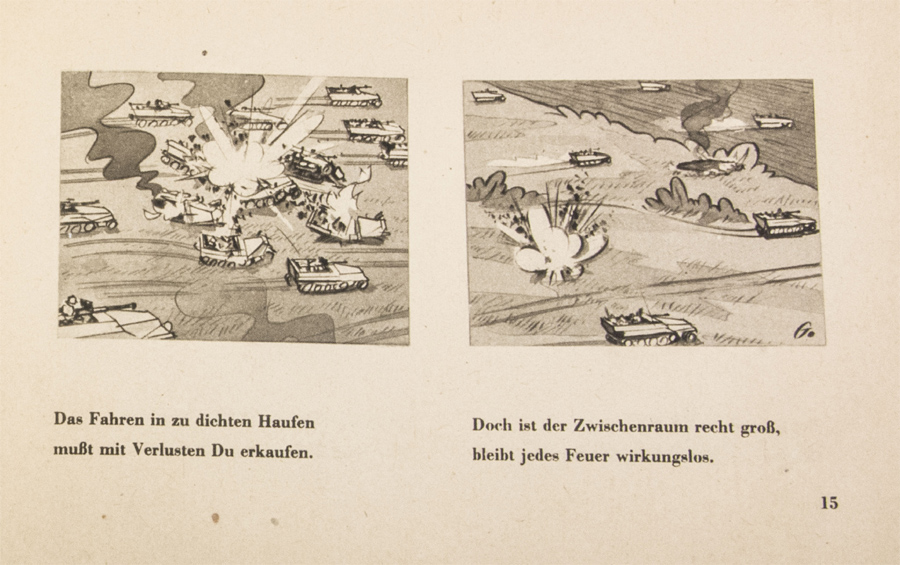
Driving bunched up in a tight group will cost you casualties. Simply maintain greater spacing between vehicles and the effect of enemy fire becomes negligible.
Page 16
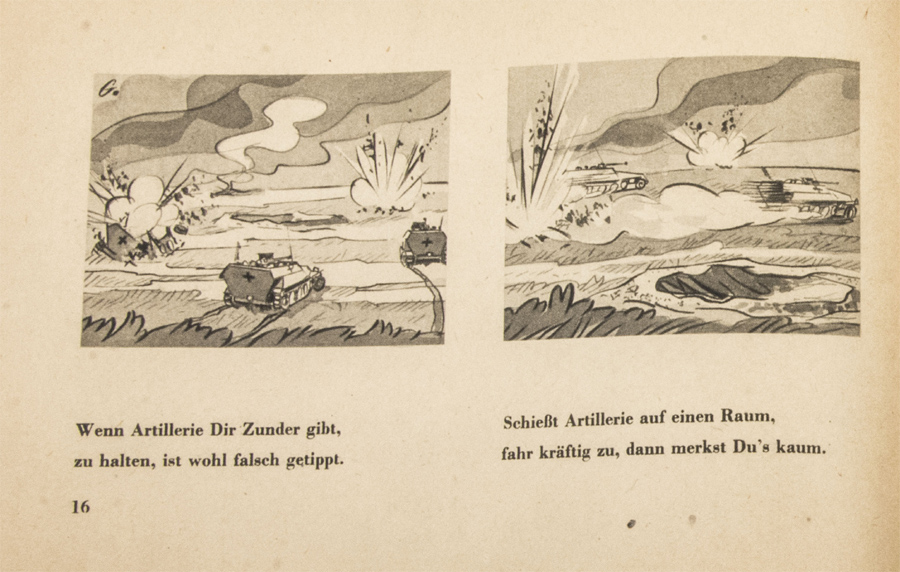
When the artillery starts drumming, stopping is not a wise move. When an area is under fire, put your foot down and get out of it at full speed.
Page 17
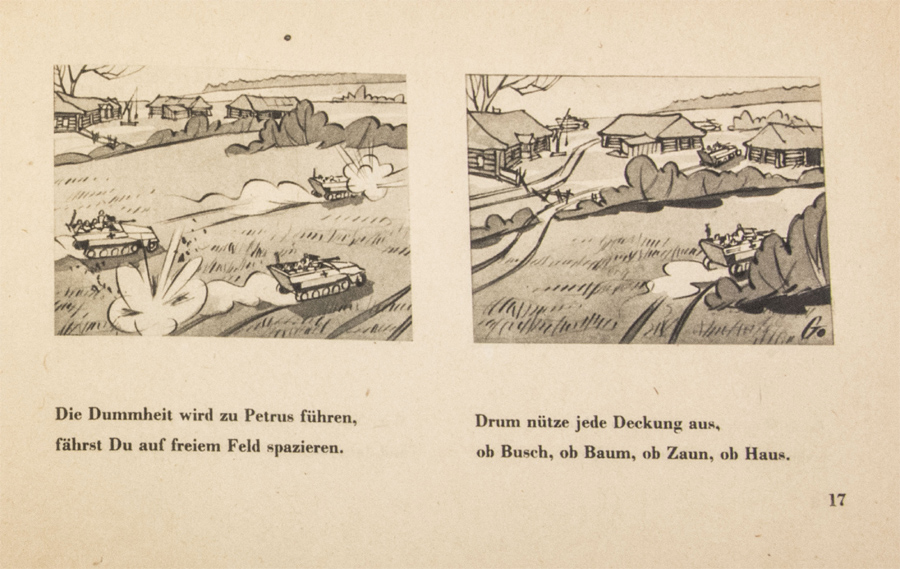
A leisurely drive across open ground will send you straight to St Peter. Use every available scrap of cover, whether it is a bush, a tree, a fence or a building.
Page 18
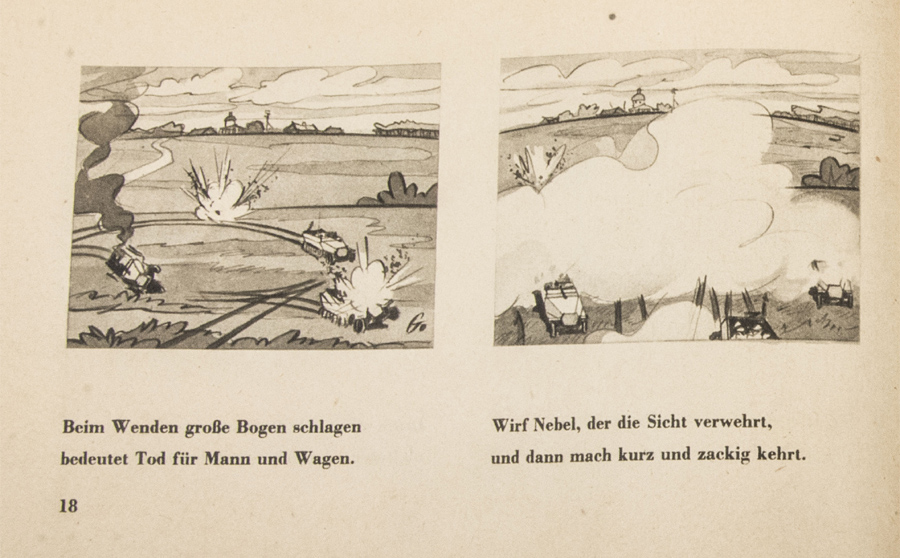
Turning to withdraw in a wide arc will cost you men and machines. Turn quickly with a short, sharp manoeuvre and fire smoke grenades at the same time to deny the enemy a clear aim.
Page 19
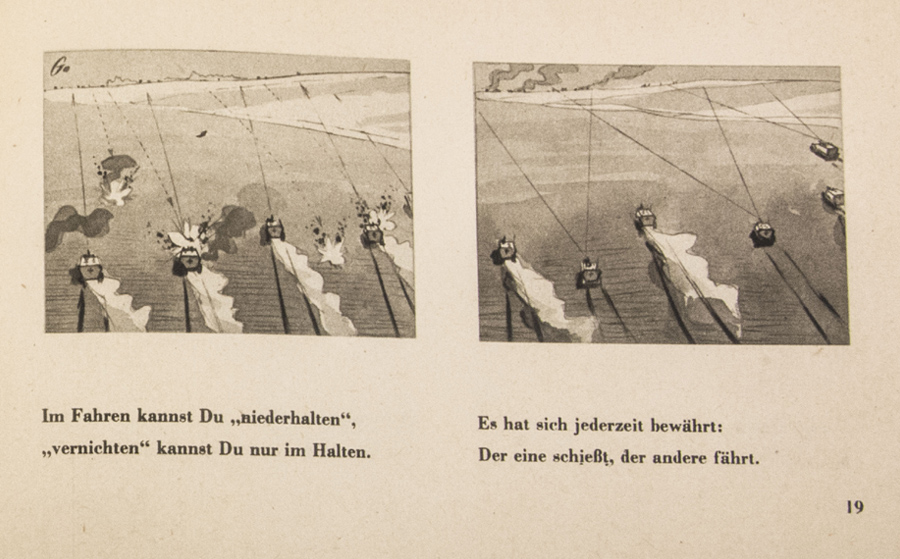
To protect yourself from fire you must keep moving. But to shoot accurately you must stop. The best approach is to alternate: one vehicle fires while the other moves, then they swap.
Page 20
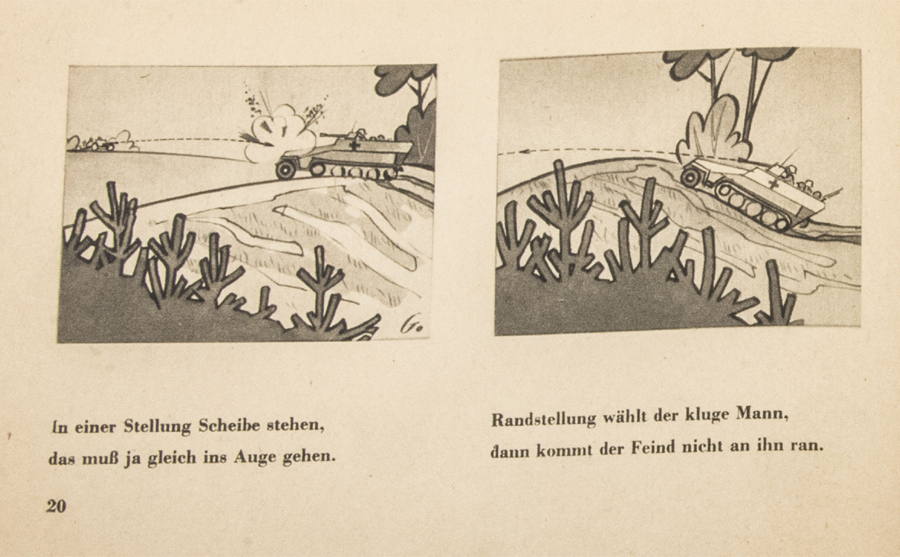
In the middle of open country you will be easily spotted. The wise man keeps to the edges, where he is out of sight.
Page 21
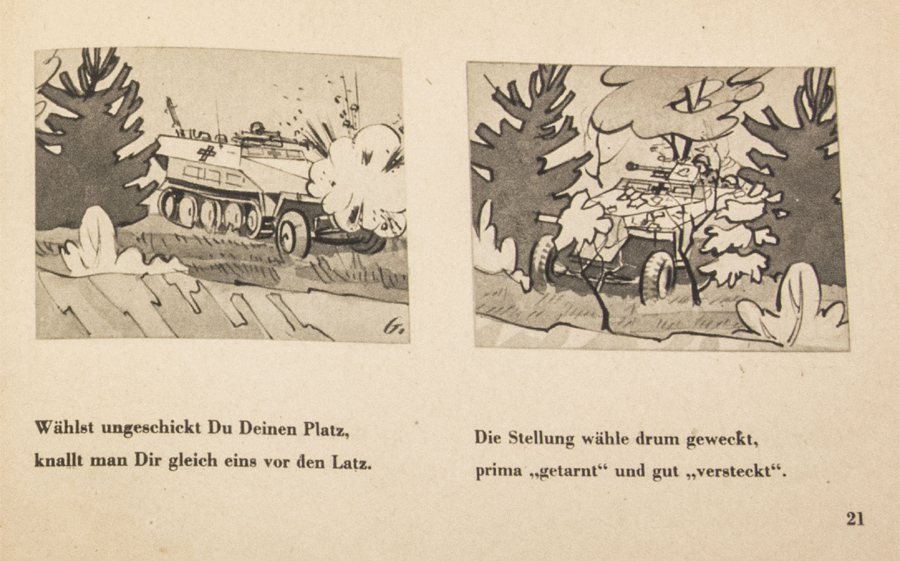
If you choose a firing position carelessly, you can expect a slap straight in the face. Always choose a position that is well hidden and well camouflaged.
Page 22
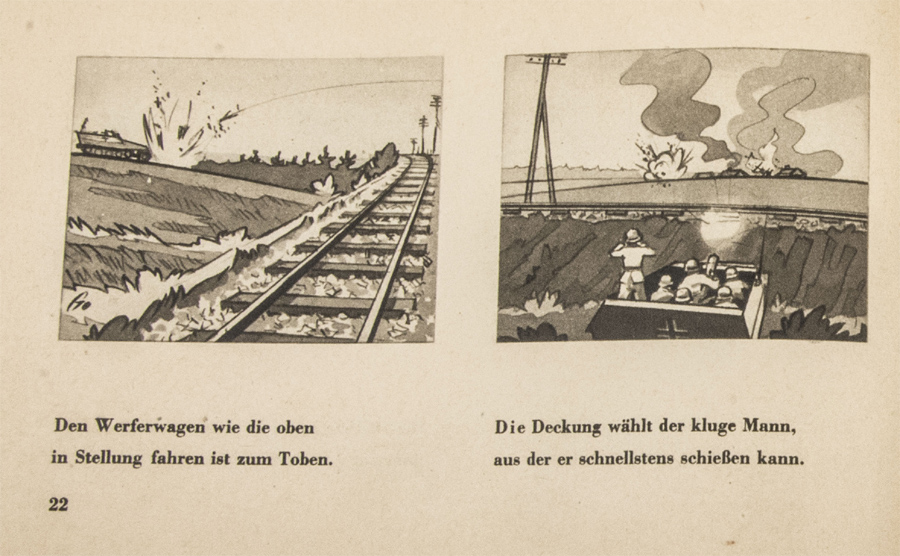
This page appears to be aimed specifically at crews of half-tracks armed with a mortar (Werferwagen). Putting your vehicle in a position like the one shown is pure madness. The smarter approach is to choose a concealed position and fire as quickly as possible.
Page 23
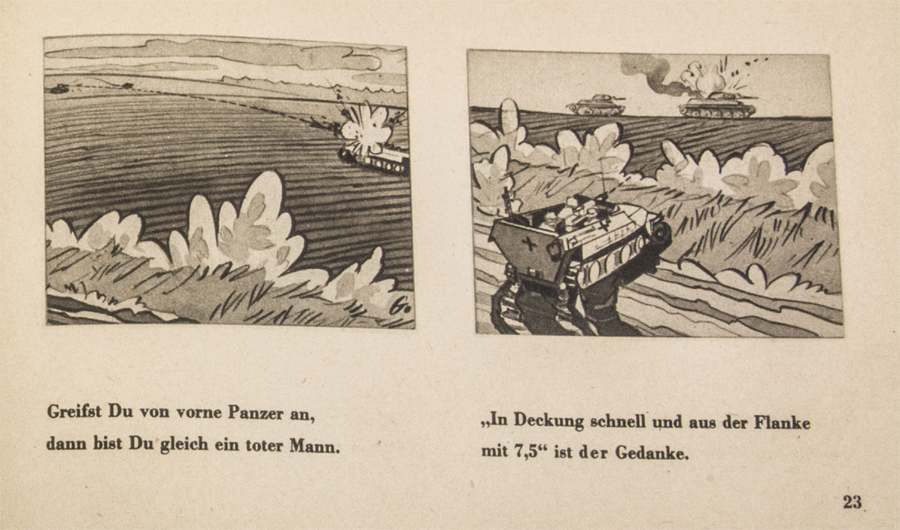
If you attack enemy tanks head-on, you are a dead man. So when you spot tanks, quickly take cover and hit them from the flank with your "seventy-five".
Page 24
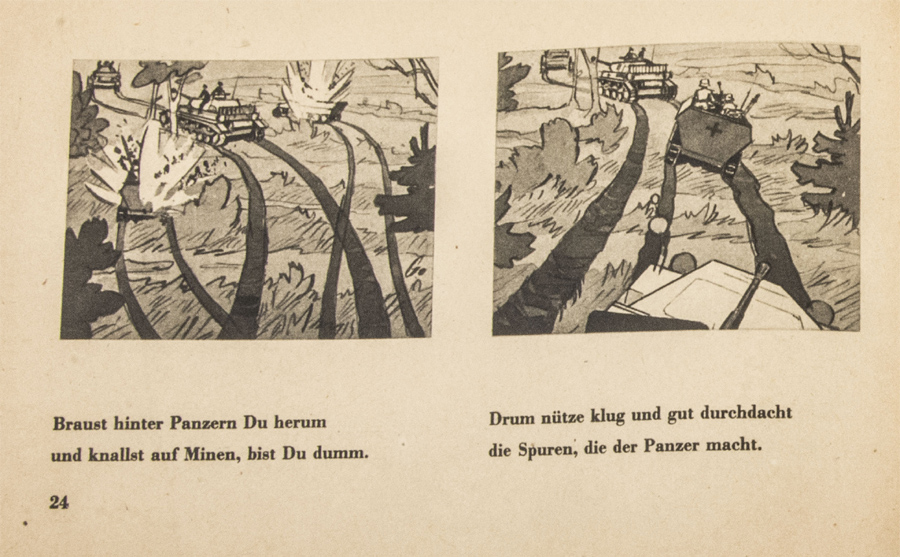
When driving in column with tanks, don't rush ahead and try to overtake them – you risk running onto a mine. Stay in column and drive in the tracks of the vehicles ahead of you.
Page 25
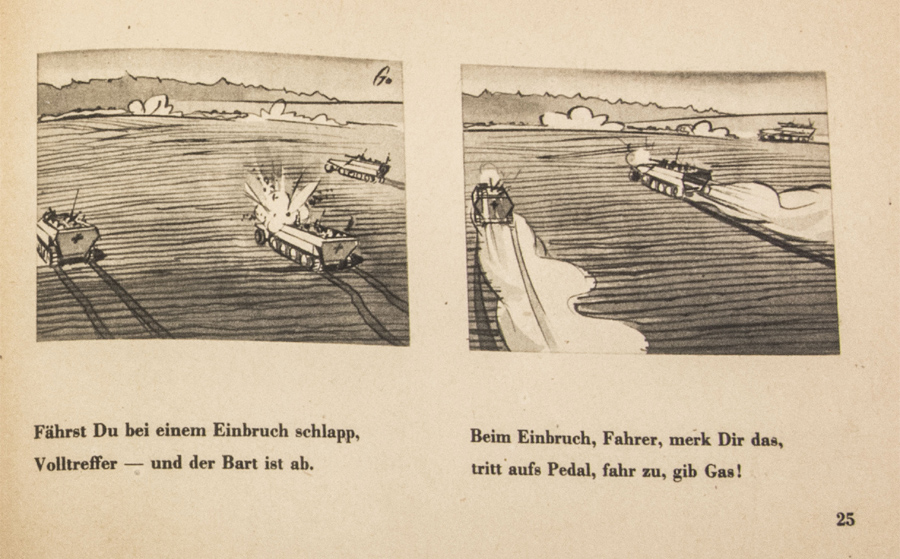
If you crawl along during an attack, you are asking to be hit. So remember, driver: when attacking, put your foot down and charge forward!
Page 26
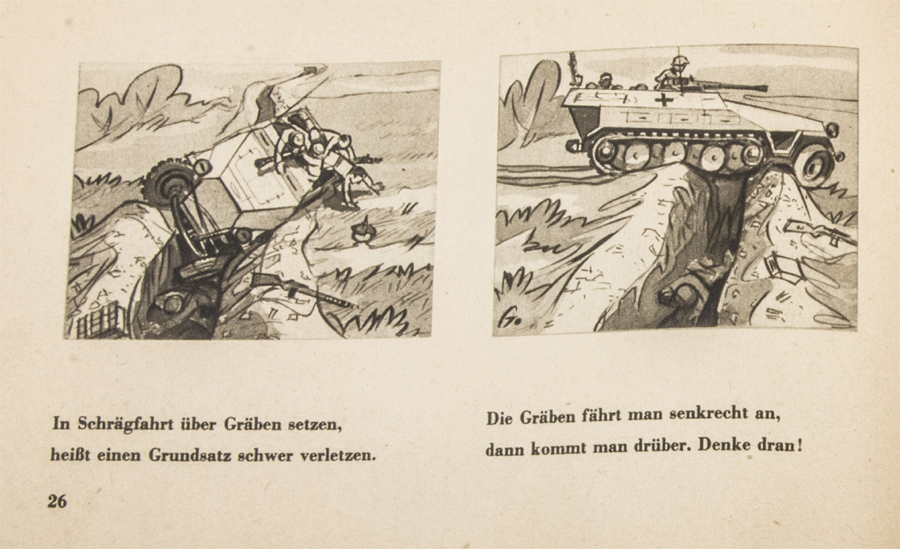
Trying to cross a trench at an angle goes against all common sense. You must always cross a trench at a right angle!
Page 27
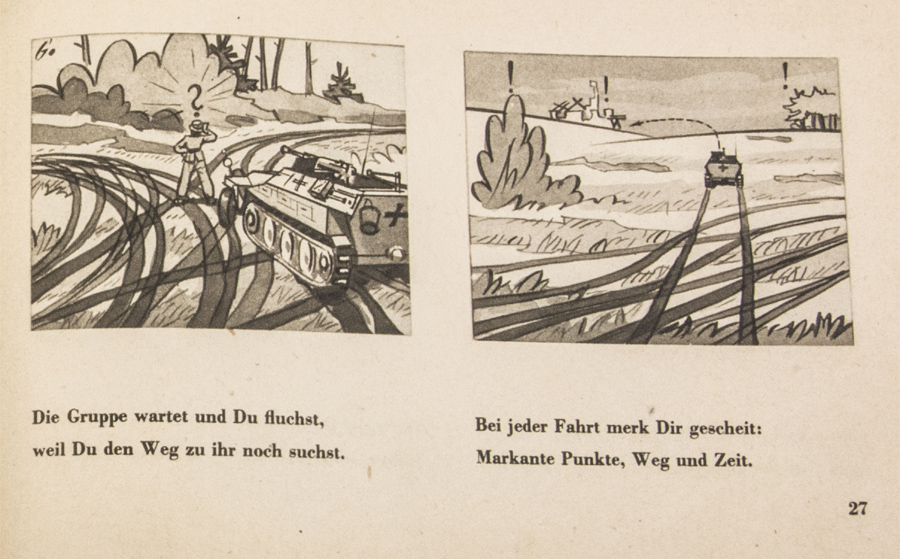
The whole group is waiting for you and you have no idea which way to go. Whenever you drive, keep three things in mind: landmarks, direction, and journey time.
Page 28
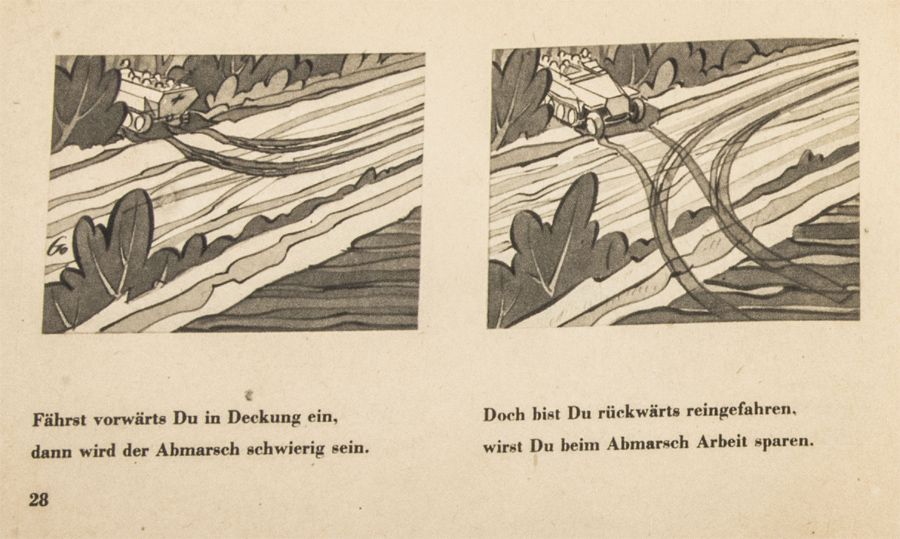
If you pull into cover nose-first, it will be difficult to get out again quickly. It is better to reverse into cover so you can pull straight out at speed.
Page 29
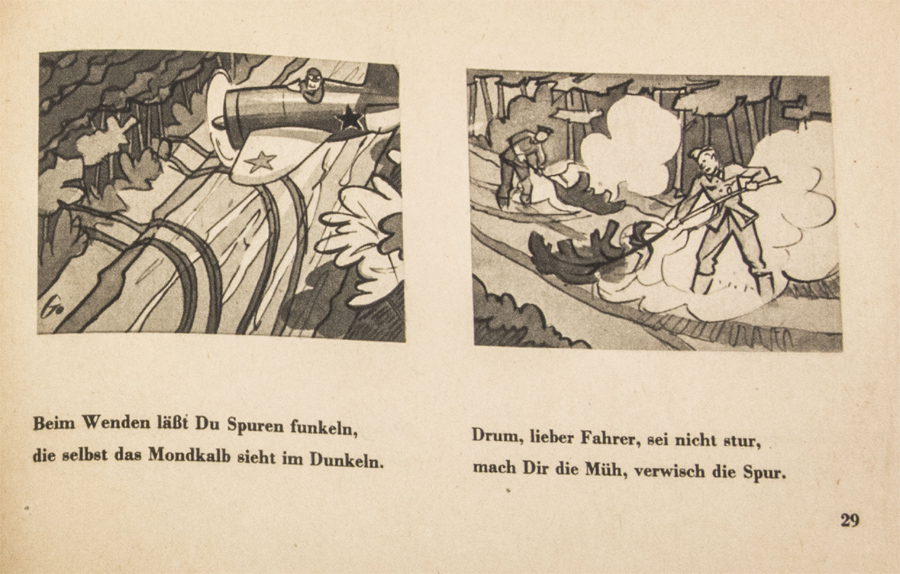
When you turn, you leave tracks so obvious that even a fool would notice them in the dark. Driver, don't be lazy – take a little trouble and conceal your tracks.
Page 30
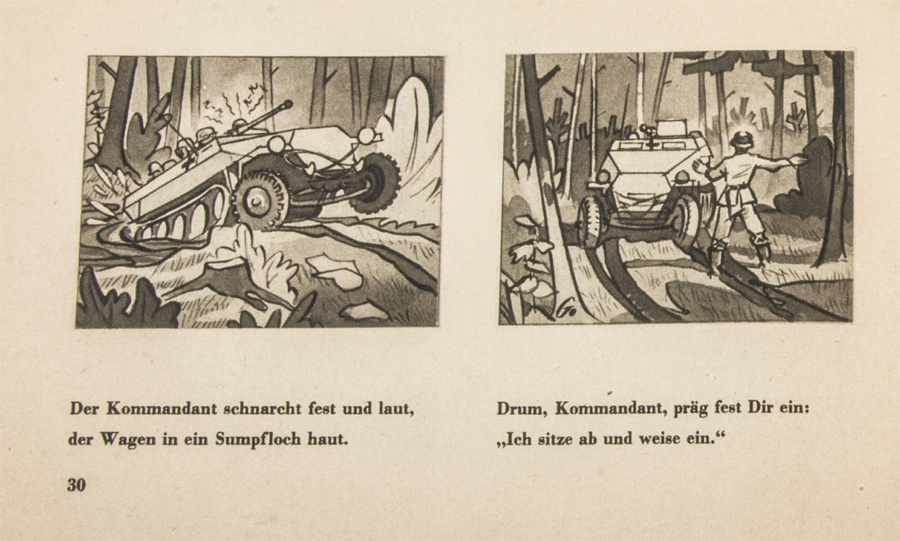
While the commander was snoring away, the vehicle drove straight into a boggy hole. So, commanders: in difficult terrain, get out and guide the driver!
Page 31
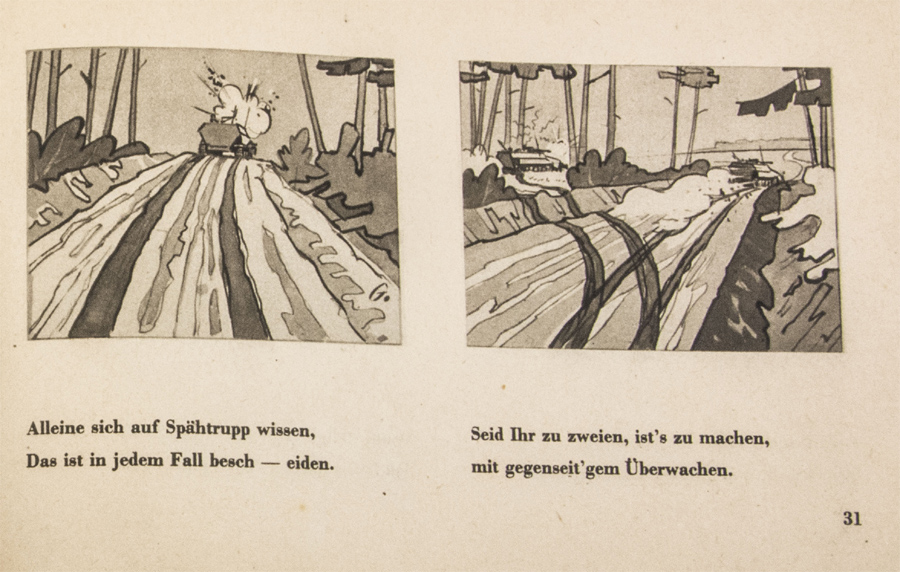
Going out on reconnaissance alone is excessive modesty. Two is better, because you can cover each other's backs.
Page 32
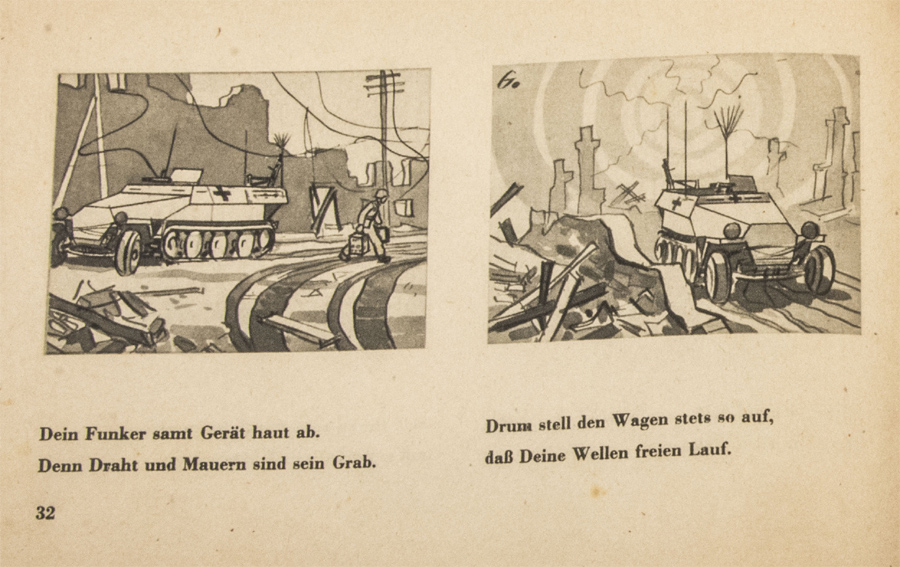
Does your radio operator have to dismount with his equipment to transmit? Then those walls and wires around him will most likely become his grave. Always find a position with your vehicle where nothing will block your radio waves.

Reproducing text from the Panzernet website without the written consent of the operator is prohibited.