OPERATION WINTER STORM
the attempt to rescue the encircled 6th Army
somewhere out there in the distance lies Stalingrad, and a quarter of a million comrades waiting to be rescued — Operation Winter Storm begins, source: Flickr.com used with the publishing user's permission, edited
The Encirclement of Stalingrad
It was Monday, 23 November 1942, around 15:30. Soldiers and tanks of the Soviet 4th Mechanized Corps were approaching the village of Sovetsky near Kalach-on-Don from the south when they spotted an enemy force advancing on them from the northwest. It had to be the enemy, since had these been Soviet units, green flares would already have been fired into the air — that was the agreed recognition signal. The Russian tanks therefore opened fire. The engagement that broke out around the village lasted nearly half an hour. Only around 16:00 did the situation become clear, and commanders on both sides realized that no enemy stood before them after all.
At the village of Sovetsky, troops of the 36th Brigade of the 4th Mechanized Corps (Stalingrad Front) had just linked up with the 45th Tank Brigade of the 4th Tank Corps (Southwestern Front). This meeting sealed the encirclement around Stalingrad for good. The public would never learn of the mix-up, nor of the half hour of fratricidal fighting that preceded it. The moment the two Red Army units linked up was later restaged for the newsreel cameras, complete with embraces, jubilation, and ushankas thrown high into the air.
At this point, no one yet knew exactly how many German soldiers had been trapped inside the pocket. Soviet estimates worked with a figure of 80,000; the German high command feared the number could run as high as 400,000; the chief quartermaster of the 6th Army put it at 300,000; and General Paulus himself would name a figure of 200,000. In reality it was something in the region of 260,000 men. They were trapped in a pocket roughly 60 km long and 37 km wide, with a perimeter of about 171 km.
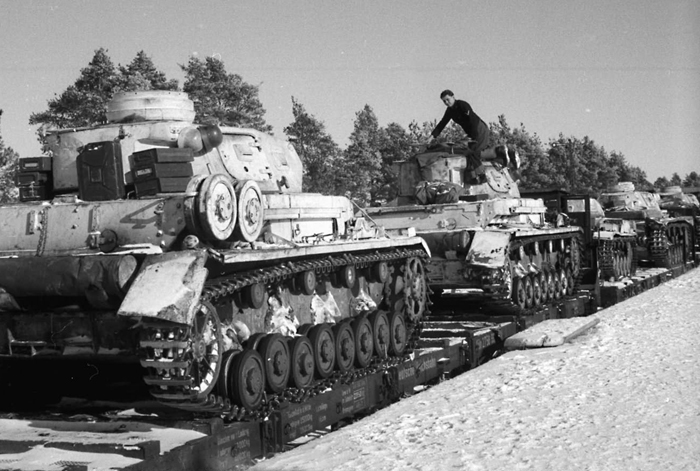
units selected to take part in the relief operation move up to their assembly area, source: worldwarphotos.com used with the operator's permission, edited
Hitler Calls In von Manstein
At 21:30, General Paulus, commander of the encircled 6th Army, sent Hitler a radio message asking for "freedom of decision." In plain language, Paulus was asking for permission to evacuate the city, should the situation make that necessary. Hitler refused. Paulus's men were to remain in the "Festung Stalingrad," supplied by an air bridge, and await a relief offensive that would fight its way through to them from outside. In Hitler's conception, this was not to be a mere breakout operation, but a full restoration of the front to its position before the Soviet encirclement. The Führer, in short, had no intention of giving up the city on the Volga.
Hitler entrusted command of this offensive to one of his most capable generals, Erich von Manstein. Manstein was appointed commander of the newly formed Heeresgruppe Don, which had under its command the Romanian 3rd and 4th Armies, the German 6th Army, and the 4th Panzer Army. On paper this sounds like a formidable force, but it was anything but. The 6th Army itself was, after all, trapped inside the Stalingrad pocket, and both Romanian armies had been badly thinned out and worn down. The only real striking force available was the 4th Panzer Army under Colonel General Hermann Hoth, and above all its XXXXVIII Panzerkorps.
For the planned offensive, however, Manstein also received a significant reinforcement in the form of LVII Panzerkorps. This corps consisted of the 23rd Panzer Division, transferred to Manstein from Heeresgruppe A, and the 6th Panzer Division, which had just returned to Russia after a period of rest in France. For Field Marshal Manstein, command of Heeresgruppe Don turned out to be something of an unexpected 55th birthday present, which he celebrated on 24 November 1942 aboard a train on his way to his new headquarters in Novocherkassk.
tanks and infantry advance across the frozen Russian steppe toward Stalingrad, source: Bundesarchiv_Bild_101III-Bueschel-090-39, Wikimedia, Creative Commons, edited
Von Manstein effectively took command of Heeresgruppe Don on 27 November 1942. Unlike Hitler, he was acutely aware of the strategic gravity of the situation. He understood that at stake was not merely the 6th Army and Stalingrad, but, without exaggeration, the fate of the entire southern wing of the Eastern Front and of all the units of Heeresgruppe A operating in the Caucasus. The field marshal's plans were accordingly far more sober than Hitler's.
Manstein regarded restoring the front line to its pre-encirclement state as out of the question. The goal of his offensive, codenamed Operation Winter Storm (Wintergewitter), was therefore "merely" to fight through as close to the city as possible and, at the right moment, order Paulus's 6th Army to abandon Stalingrad, pack up, and break out to meet him. This second phase of the plan was named Operation Donnerschlag. All German units would then withdraw together to safety in the southwest. At the same time, von Manstein asked Hitler to also order the withdrawal of Heeresgruppe A from the Caucasus while it was still possible.
The Air Bridge
The airlift supplying the encircled Stalingrad pocket began operating as early as 25 November 1942. The 6th Army's command calculated its minimum daily requirement at 600 tons of ammunition, fuel, food, and horse fodder (the Germans still had some 50,000 horses inside the pocket). The daily bread requirement alone came to 40 tons! Representatives of the Luftwaffe, however, calculated that they could deliver only 300 tons of supplies into the pocket per day. The first two days of the airlift showed even this to be wishful thinking, as only 65 tons of material actually made it into the pocket per day.
the relief army set out from the Kotelnikovo area, roughly 130 km from the edge of the Stalingrad pocket, source: Flickr.com used with the publishing user's permission, edited
The Germans began pulling every available transport aircraft into the region. Even bombers were pressed into service, dropping supply containers in place of bombs. The Soviets, however, left nothing to chance. Five Soviet fighter divisions operated in the area west of Stalingrad, and 1,100 anti-aircraft guns were deployed in a 10-km-wide ring around the edge of the pocket. The Luftwaffe suffered dramatic losses. In response to the shortfall in supplies, on 8 December 1942 the 6th Army announced a reduction in the daily ration for each soldier to 200 g of bread, 200 g of horsemeat, 50 g of cheese or 75 g of sausage, 30 g of butter or 120 g of jam, three servings of drinks, and three cigarettes.
Manstein's Plan
Meanwhile, Manstein and his staff pored over maps, working out the details of the operation. The German lines to the west and southwest of the encircled Stalingrad pocket ran essentially along the Chir and Don rivers. The Germans' closest point to the edge of the Stalingrad pocket lay around the village of Nizhne-Chirskaya, near the confluence of these two rivers. Manstein therefore assumed that the Soviets would expect any German counteroffensive to come from exactly there. And naturally, Manstein had no intention of doing what the enemy expected. He wanted to catch the Soviets off guard, and so he planned the offensive to come from two directions.
The first thrust was to come from the area around the town of Kotelnikovo, which lay further south and was therefore much farther from Stalingrad than Nizhne-Chirskaya. LVII Panzerkorps, comprising the 6th and 23rd Panzer Divisions, was to launch this attack. It was meant to catch the Soviets by surprise and force them into hastily shifting units toward the threatened area. Once that had happened, XXXXVIII Panzerkorps, with its 11th and 22nd Panzer Divisions, would join the offensive from the Nizhne-Chirskaya area — and thanks to the surprise created by the initial attack from Kotelnikovo, it would stand a much better chance of success.
along the way, the Germans had to cross two major rivers: the Aksai and the Myshkova, source: Flickr.com used with the publishing user's permission, edited
Under the original plan outlined above, Operation Winter Storm was to involve a total of four panzer divisions (the 6th and 23rd under LVII Panzerkorps, and the 11th and 22nd under XXXXVIII Panzerkorps). They were to be supported by a further four infantry divisions, plus three Luftwaffe field divisions, whose combat value was not particularly high but which could at least be used to secure the flanks. Manstein is said to have originally planned the start of the attack for as early as 2 December 1942, but soon pushed the date back to 8 December, and then again to 12 December, as the concentration of forces kept running into delays.
Manstein's reasoning proved entirely correct. The Soviets did anticipate some German attempt to break through to the encircled city, and indeed expected it to come from along the Chir river. That was why they kept hammering away at the German positions on this river, to prevent the Germans from preparing any operation there — and they largely succeeded. Units of XXXXVIII Panzerkorps had to fend off one Soviet breakthrough attempt after another and were therefore unable to concentrate on the planned offensive. Manstein was consequently forced to fundamentally revise his original plan. XXXXVIII Panzerkorps would remain on the defensive along the Chir, and Operation Winter Storm would now be carried out solely by LVII Panzerkorps, attacking from the Kotelnikovo direction.
This meant, however, that only two panzer divisions, rather than the originally planned four, could take part in the offensive. Manstein therefore asked the high command for additional reinforcements. The Chief of the Army General Staff, General Zeitzler, wanted to give Manstein the 17th Panzer Division, withdrawing it from Heeresgruppe Mitte for this purpose. Hitler, however, ordered that the 17th Panzer Division remain where it was for the time being, since Soviet attempts to break through the front also threatened Heeresgruppe Mitte's sector.
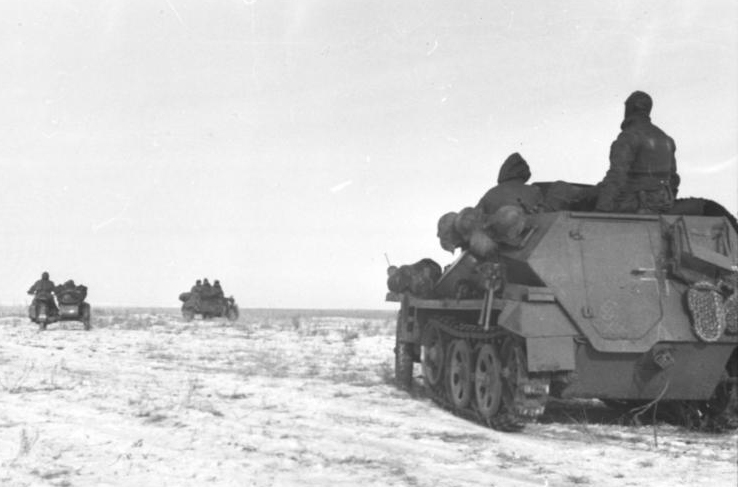
the endless frozen steppe, source: Bundesarchiv_Bild_101I-218-0545-15, Wikimedia, Creative Commons, edited
Winter Storm Begins
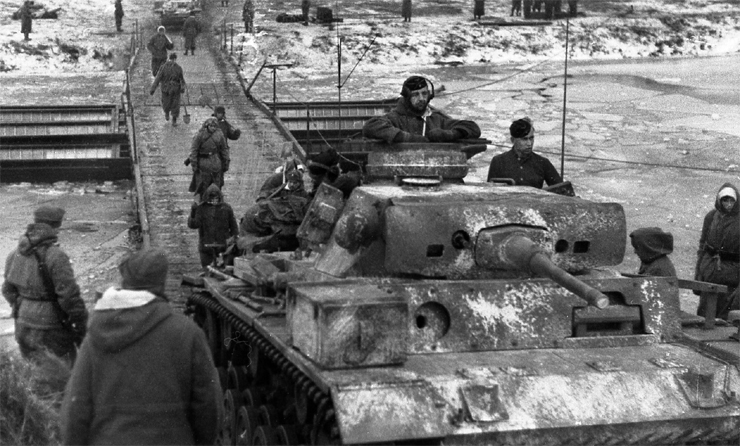
Manstein was likely tearing his hair out in frustration, but he could wait no longer. As soon as the 6th Panzer Division reported that it had fully secured its assembly area, he gave the order to attack. On Saturday, 12 December 1942, LVII Panzerkorps set out from Kotelnikovo with its 6th and 23rd Panzer Divisions. Ahead of them lay a 130-km march across the snow-covered, frozen steppe, and two major rivers — the Aksai and the Myshkova — that had to be crossed. The 6. Panzer Division went into action with 160 Panzer III and Panzer IV tanks, 42 self-propelled guns, and around twenty other armored vehicles. The 23. Panzer Division sent a total of 96 tanks into the attack.
Behind the combat units rolled columns of trucks carrying 3,000 tons of fuel, ammunition, and food. These, however, were not intended for the attacking LVII Panzerkorps, but for the encircled 6th Army — supplies for its breakout march from the pocket. Alongside these trucks were also artillery tractors meant to help haul out anything of use from the encircled city, plus 30 buses to evacuate the wounded.
Manstein's calculations regarding the attack from Kotelnikovo proved entirely correct. The Russians were indeed caught completely off guard by an attack from this direction. As a result, the German advance during the first few days was very rapid. Immediately after the operation began, the 6th Panzer Division simply rolled over the Russian positions around the railway station at Gremyachaya, some 17 km from Kotelnikovo. From there the division pushed on toward the village of Verkhne-Yablochny, where it destroyed somewhere between 10 and 14 Russian tanks, while German losses were negligible.
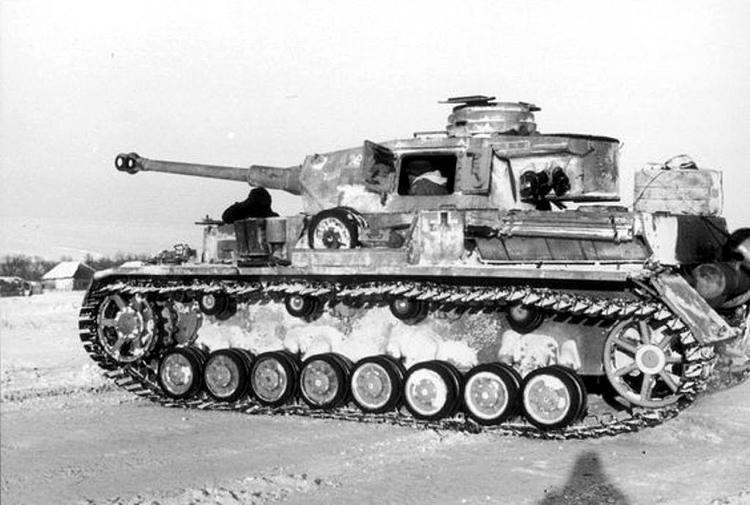
a Panzer IV fitted with wide winter tracks, source: Flickr.com used with the publishing user's permission, edited
To the right of the 6. Panzer Division advanced the 23. Panzer Division. Before ten o'clock in the morning, this division captured the village of Pimeno-Cherny, and around half past one in the afternoon the village of Nebykov, where it took roughly 250 Red Army soldiers prisoner. From there the division continued north and, shortly before nightfall, halted its advance not far from the railway station at Chilekovo. By the end of the first day of Operation Winter Storm, the Germans had thus punched roughly 30 km deep into the Russian positions.
The German soldiers trapped in the Stalingrad pocket followed the progress of their rescuers through radio messages. The successes of the first day of Winter Storm filled them with a warm sense of hope. "See you soon!" read one of the radio messages exchanged between the command of Heeresgruppe Don and the staff of the 6th Army. Inside the pocket itself, feverish preparations for the breakout were already underway. Every vehicle still capable of moving was being gathered, along with fuel for it. The plan for Operation Donnerschlag called for the roughly 50 remaining combat-ready tanks to punch a way out at the southwestern edge of the pocket, near the village of Karpovka. The tanks were then to protect the corridor through which the infantry would withdraw. German aircraft were tasked with dropping 200-liter fuel drums along the withdrawal route so that the 6th Army's vehicles could refuel along the way.
On 13 December, before dawn, LVII Panzerkorps pushed forward once again. Early in the morning, the battle group of Colonel Walther von Hünersdorff, from the 6th Panzer Division, reached the Aksai river. At the village of Zalivsky, German engineers threw up a bridge, over which the troops and tanks crossed the river and continued northeast toward Verkhne-Kumsky. During the morning, the 23rd Panzer Division captured the railway station at Chilekovo and pushed on northwest toward the Aksai river. Part of the division, however, had to switch to the defensive to repel Russian counterattacks launched against its right flank, among other places at the village of Ternovoy. By the end of the second day, the spearhead of the German offensive stood 50 km deep into Russian positions, with roughly 80 km still to go to reach the edge of the pocket.
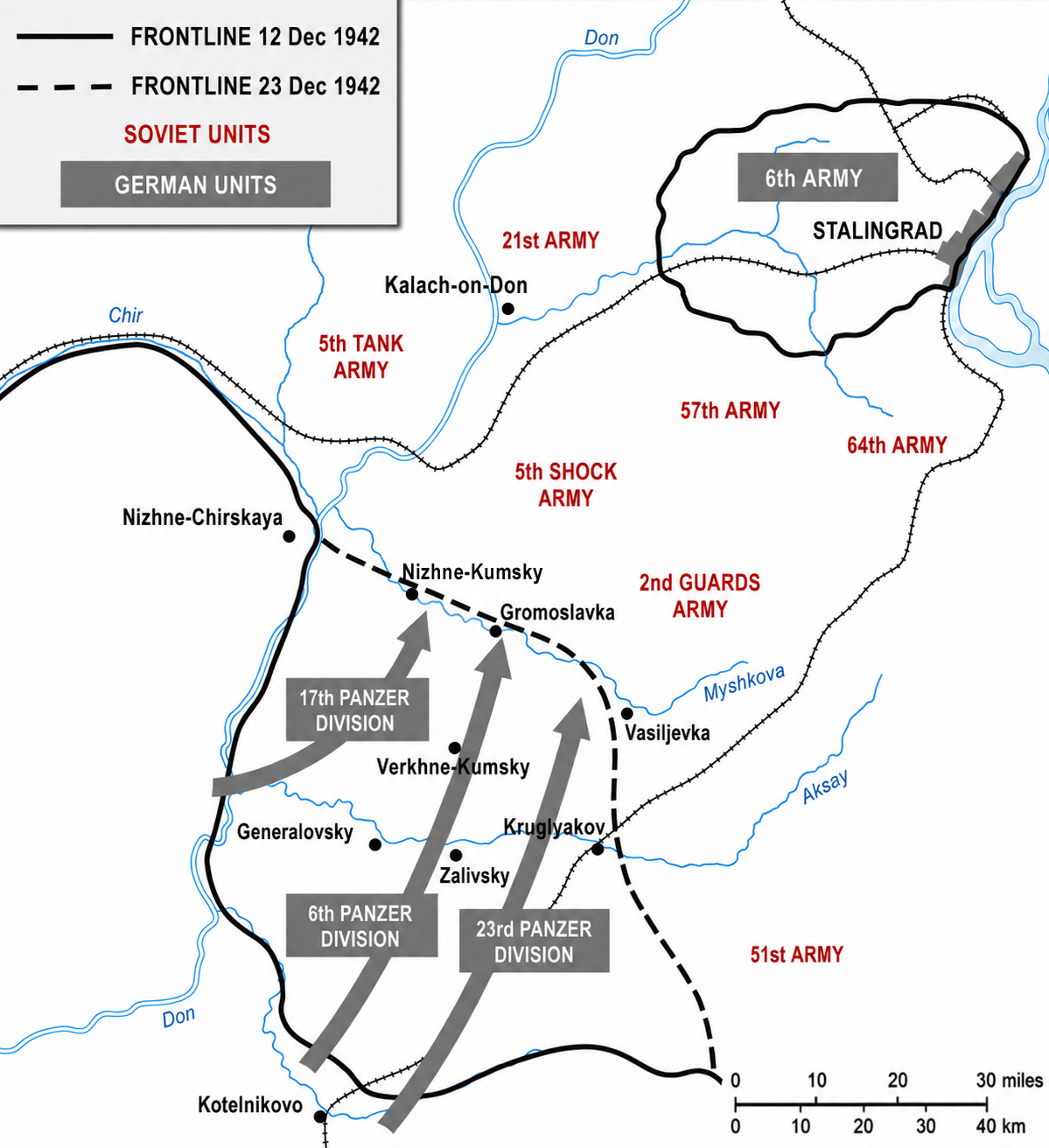
the situation in the area and the advance of Manstein's forces toward Stalingrad between 12 and 23 December 1942, source: Panzernet
Tank Massacre at Verkhne-Kumsky
On 14 December, troops of the 6th Panzer Division approached the village of Verkhne-Kumsky. German reconnaissance discovered that a substantial number of Russian tanks had gathered in a valley near the village, apparently intending to block the path of the German offensive. The Russians, however, were evidently not on alert, since they had not expected the Germans to arrive so soon. The task of eliminating this force fell to the 2nd Battalion of the 11th Panzer Regiment under Major Bäke. The rest of the division pushed on toward Verkhne-Kumsky. Bäke managed to catch the Russians in the valley completely by surprise, so that the ensuing engagement resembled a hunt more than a battle. In roughly an hour of action, the Germans destroyed between 30 and 70 Soviet tanks (accounts vary), at negligible cost to themselves.
While Bäke's 2nd Battalion was clearing out this "nest" of Russian tanks, the 1st Battalion of the 11th Panzer Regiment (6th Panzer Division) occupied the village of Verkhne-Kumsky itself. The Russians immediately dispatched two of their tank brigades to storm the village and its surroundings. These brigades, however, did not arrive together but in succession, and so they attacked not as a coordinated whole but separately — allowing the German 6th Panzer Division to beat back a numerically superior enemy (the Russians committed as many as 300 tanks in total around Verkhne-Kumsky). German losses in the fighting for the village came to around 30 tanks, though nearly two-thirds of these were later repaired.
Although the Russian attacks were repulsed, the German tanks had used up most of their fuel and ammunition in the process, and shortly before dusk the 6th Panzer Division was forced to withdraw from Verkhne-Kumsky back to the bridgehead at Zalivsky. For the Germans this meant a very unwelcome loss of time — and time was clearly working in the Soviets' favor. The commander of the 4th Panzer Army, Colonel General Hoth, is said to have remarked that day of the 6th Panzer Division: "They're fighting instead of hurrying forward."
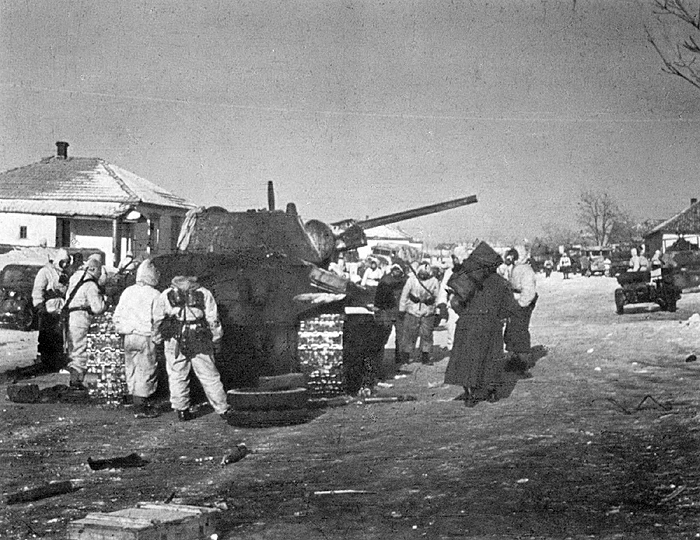
during their advance, Manstein's units managed to inflict considerable losses on the Soviets — here German soldiers inspect the wreck of a Russian T-34 destroyed during the fighting for a village, source: Flickr.com used with the publishing user's permission, edited
Russian resistance kept growing. Even the bridgehead at Zalivsky itself came under uncomfortable pressure. Manstein therefore pressed Hitler once again, arguing that his men could not advance on Stalingrad while simultaneously having to secure their flanks against Russian attacks. If the operation was to have any chance of success, the 17th Panzer Division would have to be committed as well. Hitler finally acknowledged that there was no longer any point in keeping the 17th Panzer Division effectively in reserve with Heeresgruppe Mitte, and ordered its immediate commitment to Operation Winter Storm. The division accordingly began moving to an area south of the village of Nizhne-Chirskaya, where it was to cross the Don and go into action on the left flank of the 6th Panzer Division as soon as possible.
The spearhead of the German 23rd Panzer Division reached the Aksai river on the afternoon of 14 December and occupied the village of Kruglyakov (present-day Oktyabrsky). Here the Germans captured an intact railway bridge, which they used to cross the river.
On 15 December, the 6th Panzer Division spent the entire day around Zalivsky repairing its tanks and consolidating its strength, so as to set out the following day to retake the village of Verkhne-Kumsky. It turned out, however, that the Soviets had by then dug themselves in thoroughly in the village. The Germans therefore postponed the attack until nightfall. After dark, German infantry crept quietly into the village. The timing was perfect, since the Red Army soldiers were just then drawing their evening rations and had no time to keep watch. Thanks to the element of surprise, the Germans succeeded in capturing the village during the night of 16–17 December. Around 250 Russians were taken prisoner, along with a considerable quantity of captured weapons.
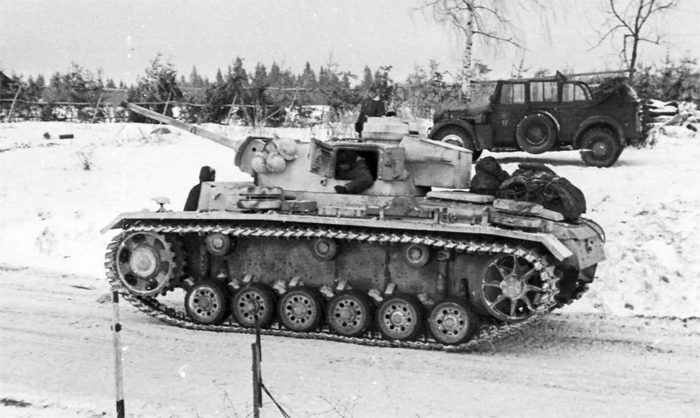
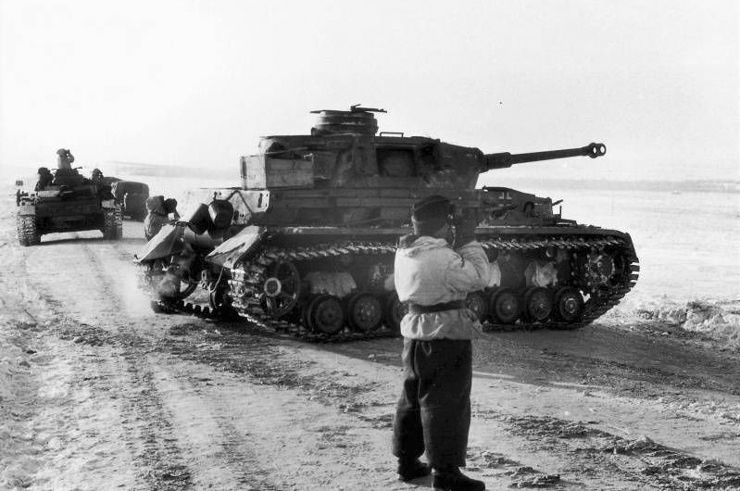
the Panzer III formed the backbone of the armored forces committed to Operation Winter Storm, source: Flickr.com used with the publishing user's permission, edited
After the capture of Verkhne-Kumsky, the 6th Panzer Division was preparing to press on toward its objective — but it could not. It had received a call for help from the 23rd Panzer Division, whose bridgehead on the Aksai river near the town of Kruglyakov (present-day Oktyabrsky) had come under heavy Russian pressure from the direction of the village of Zhutovo. The tanks of the 6th Panzer Division therefore had to rush to its aid. Only once the enemy around Kruglyakov had been defeated and driven off could the 6th Panzer Division resume its advance toward Stalingrad. The next stop on this road was to be the Myshkova river. On 17 December, the 17th Panzer Division finally went into action as well, relieving the 6th Panzer Division of the burden of securing the left flank of the entire offensive.
The Farthest Point Reached: The Myshkova River
The spearhead of the 6th Panzer Division reached the Myshkova river on the afternoon of 19 December, near the village of Gromoslavka. The Russian garrison in the village was caught by surprise and failed to blow the bridge in time, so the Germans captured it intact. That same day, the spearhead of the 17th Panzer Division also reached the Myshkova, near the village of Nizhne-Kumsky.
The crossing of the Myshkova by the 6th and 17th Panzer Divisions, however, marked the farthest point of the German advance. Simply put, it could go no further. Russian resistance grew stronger by the day. The only remaining hope was that the encircled 6th Army would launch Operation Donnerschlag and break out of the pocket to meet its rescuers. Already on the night of 18–19 December, von Manstein had flown his intelligence officer, Major Eismann, into the encircled pocket to discuss the breakout plan in person with General Paulus.
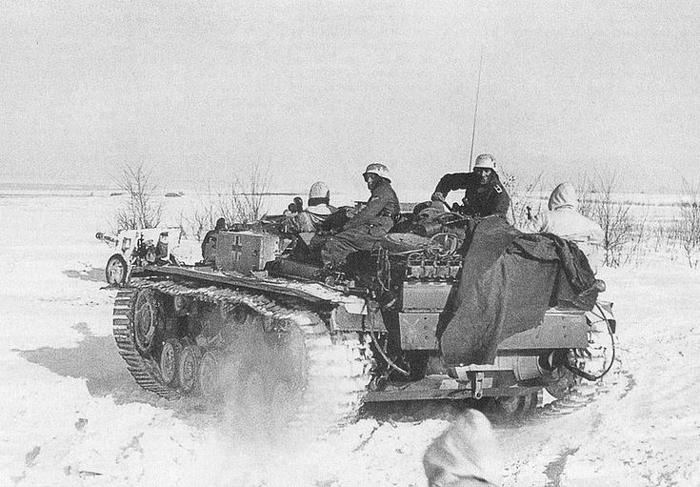
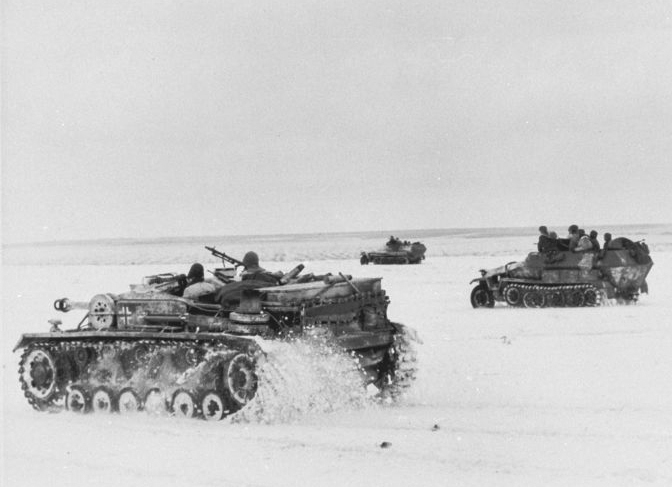
a StuG III Ausf. F assault gun fitted with winter tracks, source: Flickr.com used with the publishing user's permission, edited
Paulus told Eismann that his remaining tanks had fuel for only about 20 km of movement. Yet the distance from the edge of the pocket to the leading positions of the relief force was roughly 50 km. Paulus stated that he would need another three or four days to gather enough fuel. At the same time, he noted that he still had no clear idea how to get an estimated 8,000 wounded out of the pocket. At that point, some 230,000 German soldiers still remained trapped inside. On the afternoon of 19 December, von Manstein sent word to Hitler that his forces were incapable of any further advance, and asked the Führer to authorize Paulus to break out of Stalingrad. Hitler hesitated.
The Soviet Operation Little Saturn
The Russians, by contrast, did not hesitate. The original Soviet plans had assumed that eliminating the German forces trapped in Stalingrad would be a fairly straightforward matter, after which the Red Army could quickly resume its strategic offensive toward Rostov-on-Don (Operation Saturn). The sheer scale of the encircled forces, however, together with the subsequent German attempt to rescue them, upset the Soviets' calculations. Reducing the pocket proved slow and costly, and the same was true of halting von Manstein's offensive. The Soviets were forced, however reluctantly, to scale back their grand design. In place of Operation Saturn came Operation Little Saturn.
Its objective was no longer the capture of Rostov-on-Don, but rather breaking through the front along the Don and Chir rivers and destroying the German rear area northwest of Manstein's forces. This included the two main airfields supplying the Stalingrad pocket — Morozovsk [Millerovo] and Tatsinskaya. Operation Little Saturn began as early as 16 December 1942. The Soviet 3rd Guards Army struck the German positions on the Chir river, while the 1st Guards Army attacked the Italian positions on the Don. At the same time, the Soviets dispatched the 2nd Guards Army south, to help finally halt and reverse von Manstein's relief expedition.
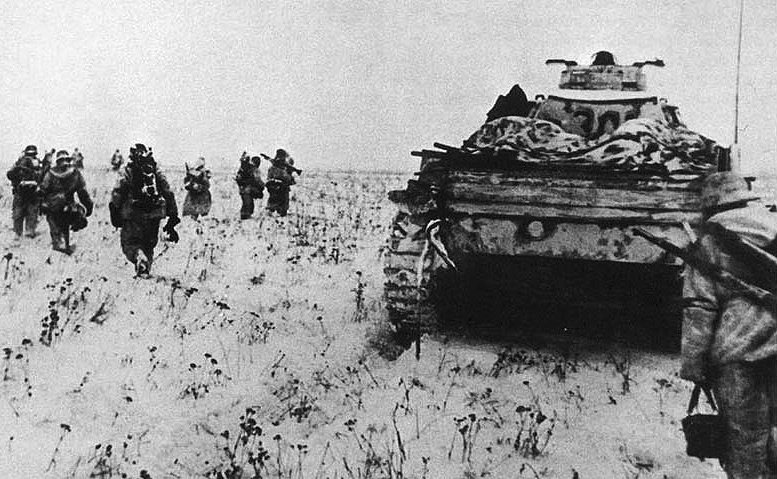
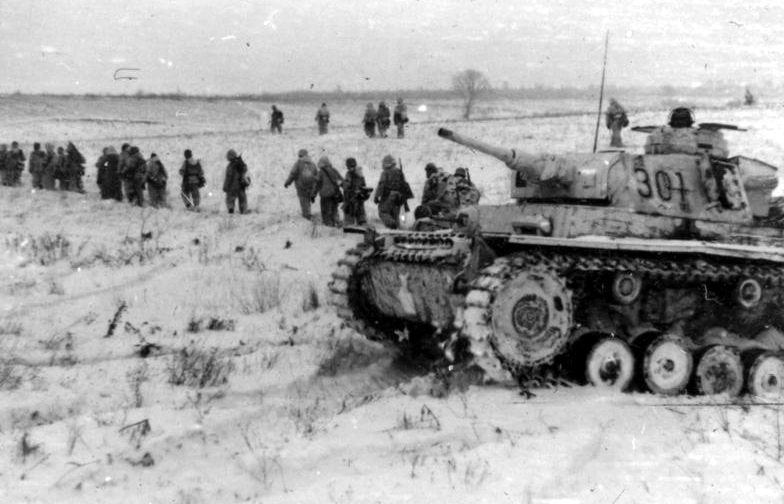
a Panzer III and infantry push through the snow-covered steppe, source: Flickr.com used with the publishing user's permission, edited
Within a few days of fierce fighting, the Russians managed to encircle and virtually annihilate the Italian 8th Army in the north (of its 130,000 men, only 45,000 escaped), and continued their advance westward. On 20 December, the Germans were forced to abandon the airfield at Millerovo. From that point on, the airlift supplying the Stalingrad pocket depended almost entirely on the airfield at Tatsinskaya. The Germans were aware that this airfield, too, was under threat, but did not expect the enemy to advance so quickly. As a result, on the morning of 24 December, Russian tanks caught the airfield personnel completely unprepared. German anti-aircraft guns positioned around the airfield opened fire immediately and destroyed a number of Bolshevik tanks, but the situation was untenable.
General Fiebig, commander of VIII. Fliegerkorps, on site at the time, immediately ordered the pilots to attempt takeoff and get away even under enemy fire. Thick fog blanketed the airfield that morning, so most of the German aircraft stood with their engines shrouded against the frost and were not ready to fly. Ground crews sprinted from one Junkers to the next, desperately warming up and starting engines. Aircraft lined up one behind another as pilots fought to get airborne as quickly as possible and vanish, almost blind, into the fog. In this scene of utter chaos, the Germans somehow managed to get an astonishing 124 aircraft airborne in just 20 minutes — one takeoff every 10 seconds!
The End of Hope
On 23 December, Manstein proposed to Hitler that his troops attempt one final "push" toward the pocket, and again asked the Führer to allow Paulus to break out and meet his rescuers. The 6th Panzer Division mustered its last roughly 70 combat-ready tanks and awaited the order for one final drive toward Stalingrad, as far as it could get. Hitler, however, refused the proposal, arguing that Paulus simply did not have enough fuel. Von Manstein, resigned to the fact that his relief operation was over, issued new orders to the 6th Panzer Division. Instead of attacking to the northeast, it was to withdraw to the northwest and secure the left flank against Soviet counterattacks.
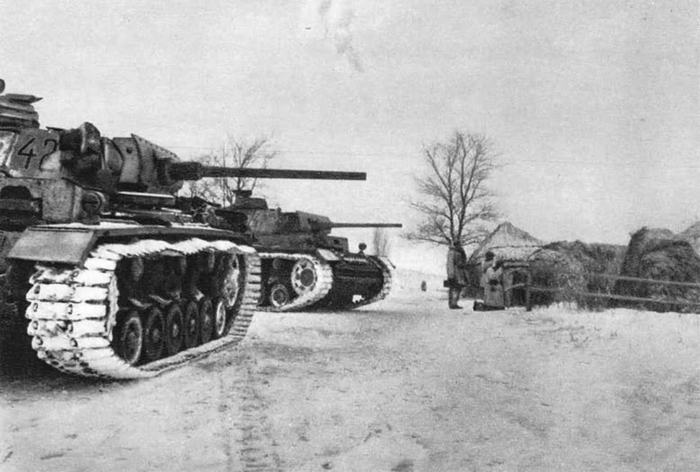
Panzer IIIs fitted with wide winter tracks take up firing positions at the edge of a village, source: Flickr.com used with the publishing user's permission, edited
Regardless of Hitler's refusal, it was in any case already too late. On Christmas Eve 1942, the Soviets were not only attacking the airfield at Tatsinskaya, but had also launched further offensives north and south of Manstein's positions, and General Malinovsky's 2nd Guards Army began hammering directly at Manstein's bridgehead on the Myshkova river as well. Such pressure could no longer be withstood. Operation Winter Storm was over, and the units that had taken part in it began a rapid withdrawal back to their starting positions. With the loss of the main supply airfields, the air bridge itself began to collapse, and Paulus's 6th Army was finally sealed to its fate.
Conclusion
It is extremely difficult to put a precise figure on the losses suffered by either side during Operation Winter Storm, since it was, in truth, only one chapter within the much larger sweep of events across southern Russia. The Germans themselves estimated their own losses at 3,700 killed and around 10,000 wounded. Soviet losses were undoubtedly higher — as was true of nearly every engagement on the Eastern Front — particularly in terms of tanks lost. This, however, had essentially no effect on the Red Army's overall numerical and material superiority.
Operation Winter Storm thus failed to save the encircled 6th Army. It did, however, help save other German forces belonging to Heeresgruppe A, deployed in the Caucasus. The unexpectedly early and determined German attack disrupted the Soviets' plans for carrying out Operation Saturn. Had the Russians managed to execute that operation as originally planned and captured Rostov-on-Don, it would have spelled a catastrophe for the Wehrmacht far greater in scale than the loss of Stalingrad.
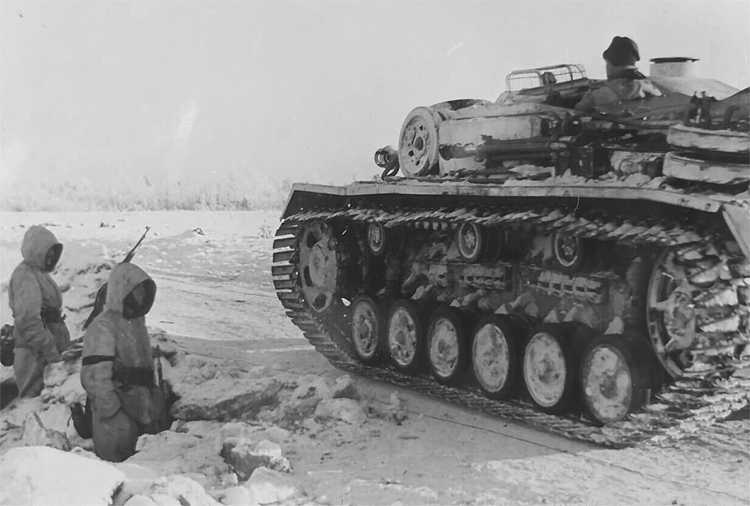
through snow and frost, toward Stalingrad..., source: Flickr.com used with the publishing user's permission, edited
Finally, for the sake of completeness, it should be added that among the reinforcements Hitler had originally promised Manstein for Operation Winter Storm was a company of Tiger tanks from schwere Panzer-Abteilung 502. Although some sources claim that nine Tigers actually took part in the fighting, this is not the case. These heavy tanks did not reach the southern sector of the Eastern Front until January 1943 — well after Manstein's offensive had already ended.

OBSAH ČLÁNKU:
Reproducing text from the Panzernet website without the written consent of the operator is prohibited.