PPG
a tracked machine gun nest
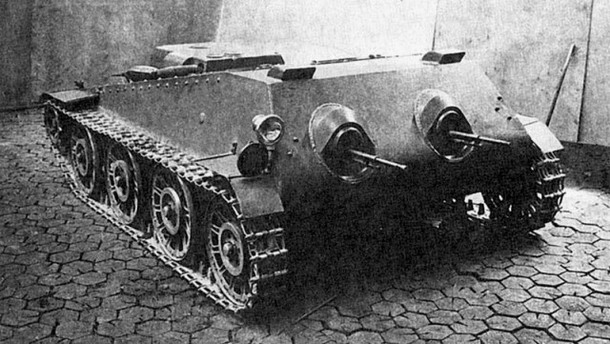
prototype of the PPG self-propelled machine gun nest, source: Aviarmor.net with permission of the operator, edited
In 1940 a prototype of a highly unusual vehicle was built in the Soviet Union: a self-propelled machine gun nest, developed under the project code PPG (Podvizhnoe Pulemyotnoe Gnezdo — mobile machine gun nest). The vehicle was intended to support attacking infantry, particularly during assaults on bunkers and other fortified positions.
The prototype, designated Objekt 217, was completed in March 1940 (some sources suggest more than one evaluation prototype was built). The running gear on each side consisted of four large spoked wheels, with a smaller toothed drive sprocket at the very rear. The vehicle's hull was fully enclosed, welded and riveted from steel plates. The front wall of the hull was curved and featured the ball mounts of two machine guns — DT type, 7.62 mm calibre — with an ammunition supply of 1,575 rounds.
The roof of the vehicle was at its highest at the front, where a pair of observation periscopes protruded upward. Even at the vehicle's highest point, however, the periscopes sat very close to the ground, giving the crew inside a distinctly limited field of view — particularly in broken terrain or long grass. The roof sloped sharply downward towards the rear, where a raised engine cover and exhaust outlet broke the otherwise low profile. The powerplant was a PM3 petrol engine with a maximum output of 16 hp, giving the 1.7-tonne vehicle a top speed of 18 km/h.
The PPG prototype was 2.5 metres long, 1.7 metres wide and just 86 centimetres tall. This extreme low height was achieved at the cost of a very unconventional crew arrangement: in combat conditions, both soldiers inside the hull had to lie flat on their stomachs side by side. At first glance this might sound like a reasonably comfortable position — but it was anything but. Lying motionless in the same posture for extended periods, with the head tilted sharply backwards, caused significant fatigue, discomfort and pain. For this reason the vehicle was never driven under its own power except in combat; for any longer journey the PPG was loaded onto the flatbed of a truck.
Armour thickness was 20 mm on the front, 10 mm on the sides and 8 mm on all other surfaces. As noted, the crew consisted of two men. There was no communications equipment of any kind on board. Military trials were conducted in the spring of 1940 and ended in rejection. The Objekt 217 failed to meet expectations in terms of cross-country mobility and manoeuvrability, but more fundamentally the entire concept was called into question: military officials concluded that such a lightly armed and vulnerable vehicle had little practical combat value. The PPG project was cancelled.

Reproducing text from the Tankist website without the written consent of the operator is prohibited.